
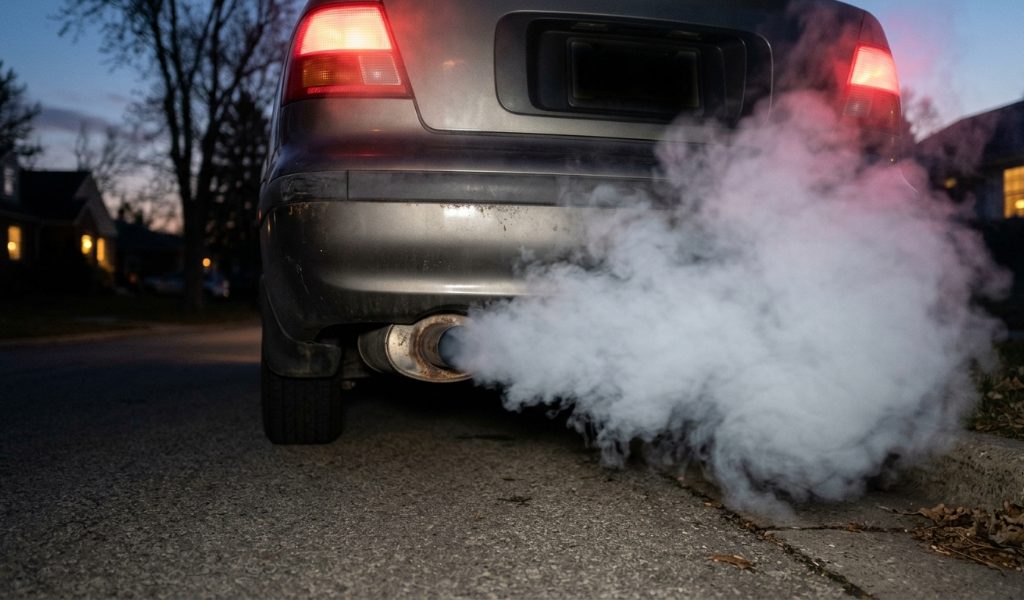
White smoke from exhaust on a cold morning usually means harmless condensation, not engine damage. Thick white smoke that lingers after warm-up usually means burning coolant, and that problem needs prompt attention. Therefore, watch the thickness, smell, and duration before you decide your next step.
This guide explains common causes in plain language, and it shows simple home checks. In addition, you will learn repair options, realistic price ranges, and clear stop-driving warnings. Meanwhile, remember that early action often saves an engine from far bigger damage. You will also learn when to call a mechanic immediately.
What White Smoke Actually Is?
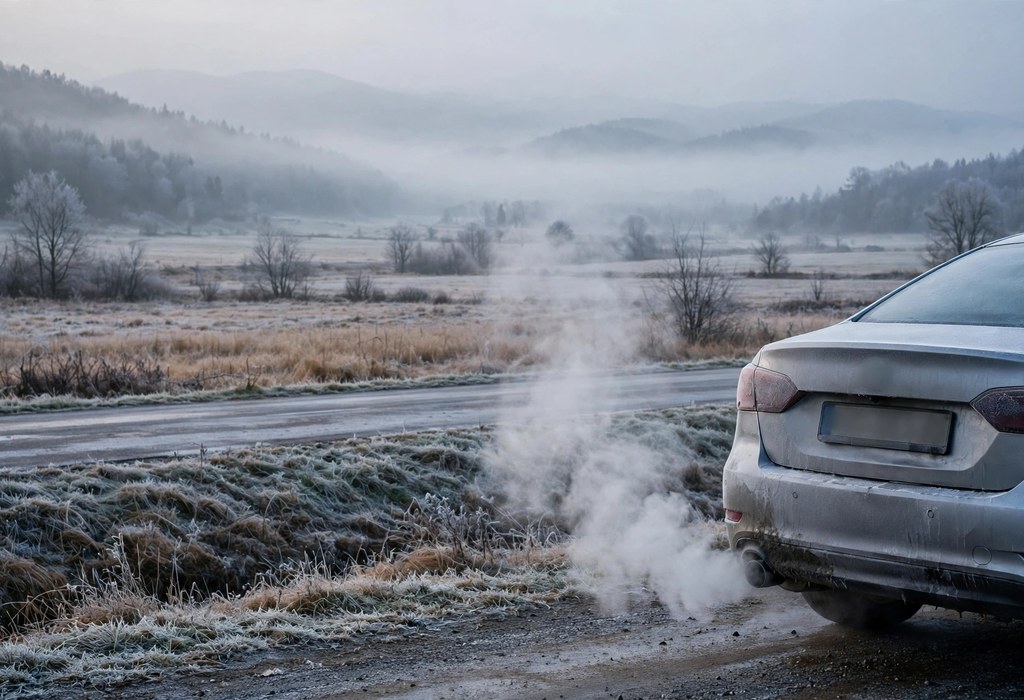
White smoke from exhaust looks like pale vapor or dense white clouds leaving the tailpipe. Hot combustion gases always carry water vapor, and cold air makes that vapor visible briefly. However, thick white smoke often means liquid coolant enters the cylinders and burns with fuel. Consequently, mechanics treat thin vapor and thick smoke as two very different symptoms.
Your engine burns fuel and air inside sealed cylinders, and coolant flows through separate passages nearby. A healthy gasket keeps those fluids apart, so exhaust stays mostly invisible after warm-up. For example, a small internal leak lets coolant seep into one cylinder during every combustion cycle. That coolant flashes into steam, and the tailpipe releases a steady white plume.
Color alone never proves the cause, so smart drivers check smell, timing, and fluid levels together. Sweet-smelling smoke points strongly toward coolant, while fuel-smelling smoke points toward incomplete combustion. In addition, smoke that appears only at startup tells a different story than smoke during highway driving. Therefore, note when the smoke appears, how long it lasts, and what else changes.
When Thin White Vapor Counts As Normal?
Most drivers first notice white vapor on chilly mornings, and that sight rarely signals trouble. Cold metal in the exhaust system condenses water from combustion gases overnight. Startup heat then vaporizes that moisture, and thin wisps drift from the tailpipe briefly. In addition, short trips can repeat this cycle because the exhaust never fully warms up.
Normal vapor looks thin and almost transparent, and it fades within a few minutes of driving. It carries no sweet smell, and coolant levels stay steady throughout the week. Many drivers ask one winter question during cold snaps. They ask: is white smoke from exhaust normal on cold mornings?
You can compare your car against a simple baseline by watching one full warm-up cycle. Let the engine reach normal temperature, then check whether the vapor thins and disappears. Meanwhile, glance at the temperature gauge and listen for rough idling or misfires. If vapor clears and gauges stay normal, you likely face ordinary condensation only.
Uncertain drivers benefit from one focused explainer during winter. Read normal or warning sign for common winter patterns and warning signs. In addition, it teaches you which small changes deserve a second look. Use that knowledge during your next cold start, and record anything unusual right away.
Warning Signs That Demand Attention
Thick white smoke deserves attention whenever it continues after the engine reaches full temperature. Dense clouds that follow you down the road signal burning coolant or unburned fuel. In addition, a sweet syrupy smell around the tailpipe strongly suggests coolant in the cylinders. Therefore, treat persistent thick smoke as a warning, not a cosmetic quirk.
Watch your coolant reservoir closely, because hidden internal leaks drain it without leaving puddles. Check the level when the engine feels completely cool, and mark the level with tape. Meanwhile, inspect the oil filler cap for a milky tan film that resembles a milkshake. That film means coolant mixes with oil, and that mixture damages bearings quickly.
Overheating often accompanies coolant leaks, and temperature spikes can warp metal parts fast. A climbing gauge, bubbling in the coolant reservoir, or steam under the hood all demand quick action. Furthermore, rough idling, misfires, or sudden power loss can reveal coolant fouling a spark plug. Consequently, never ignore a cluster of symptoms just because the car still moves.
White smoke plus any of these signs should push diagnosis to the top of your list. Coolant loss, milky oil, bubbling coolant, and overheating each point toward internal leakage. For example, one symptom alone might mislead you, but three together paint a clear picture. Therefore, gather evidence calmly before you spend money on any repair.
Blown Head Gasket: The Most Common Serious Cause
The head gasket seals the joint between the cylinder head and the engine block. It keeps coolant, oil, and combustion gases in their own separate passages. Overheating, age, or a manufacturing weakness can break that seal over time. Once the seal fails, coolant slips into a cylinder and burns as thick white smoke.
Drivers often notice several clues at once when a gasket starts failing. Coolant disappears without visible leaks, the engine runs hot, and white smoke thickens steadily. In addition, the exhaust may smell sweet, and the engine may misfire on cold starts. Meanwhile, coolant can also leak into oil passages and create that milky residue.
Small gasket leaks sometimes hide for weeks because symptoms appear gradually. Coolant may seep into a cylinder overnight, then cause a rough start and a large morning cloud. After warm-up, the smoke may thin, and that pattern can fool even careful owners. Therefore, track coolant level over several days instead of trusting one glance.
Ignoring a failing gasket invites far worse damage, including warped heads and scored cylinders. Hot combustion gases can also pressurize the cooling system and push coolant out violently. Furthermore, coolant in the oil strips lubrication from bearings and moving parts. Consequently, early repair usually costs far less than a full engine rebuild.
Cracked Cylinder Head Or Engine Block
A crack in the cylinder head or engine block creates a path much like a failed gasket. Coolant crosses that crack into the combustion chamber, then exits as white smoke. Repeated overheating causes most cracks, because extreme heat stresses cast metal unevenly. In addition, freezing coolant in a neglected system can crack metal during cold snaps.
Cracks often produce the same symptoms as gasket failure, so diagnosis needs care. Drivers see coolant loss, white smoke, overheating, and sometimes bubbles in the reservoir. However, crack repairs usually cost more than gasket work, and some cracks need part replacement. Therefore, a shop should confirm the exact failure before ordering expensive parts.
Pressure tests and dye tests help mechanics locate cracks that eyes cannot see. Technicians pressurize the cooling system, then watch for pressure drops or external seepage. Meanwhile, machine shops can inspect a removed cylinder head for hairline cracks. For example, a magnaflux or dye-penetrant check reveals flaws hidden under carbon deposits.
Owners facing a cracked block face a harder decision than owners facing a cracked head. Head replacement restores many engines, while block damage often makes replacement more sensible. In addition, age and mileage shape that choice, because older cars hold less repair value. Therefore, request a written estimate for both repair and replacement before committing.
Other Coolant Leaks That Cause White Smoke
Not every coolant leak comes from the head gasket, and other seals can fail first. An intake manifold gasket can leak coolant into intake passages on some engine designs. That leak often causes rough idling, coolant loss, and white smoke together. Meanwhile, a failing EGR cooler can leak coolant directly into the exhaust stream.
EGR coolers appear mainly on diesel engines and some modern gasoline engines. Exhaust gas flows through the cooler, and coolant surrounds those passages to lower temperatures. A cracked cooler lets coolant enter the exhaust, and white smoke follows immediately. In addition, drivers may notice coolant loss without any engine performance change at first.
Heater cores, hoses, and water pumps usually leak externally, so drivers spot puddles or steam. Those external leaks rarely cause white exhaust smoke by themselves. However, severe overheating from any external leak can damage the head gasket secondarily. Therefore, fix external leaks quickly, even when exhaust smoke looks normal.
Fuel Injector And Combustion Problems

Faulty fuel injectors can also produce white smoke, especially on diesel engines. A leaking injector drips excess fuel into a cylinder, and that fuel burns incompletely. Unburned fuel exits as white or gray smoke with a strong fuel smell. In addition, the engine may idle roughly and lose power under load.
Injection timing matters just as much as injector condition on diesel engines. Fuel injected too early or too late burns poorly, and white smoke follows. Worn glow plugs worsen cold diesel starts, because cold cylinders struggle to ignite fuel. Therefore, diesel drivers should suspect fuel delivery when smoke smells like raw fuel.
Gasoline engines rarely produce injector-related white smoke, but the fault still happens. A stuck-open gasoline injector floods one cylinder and washes oil from its walls. That flooding can trigger misfires, fuel odor, and white-gray exhaust smoke. Meanwhile, a scan tool often reveals misfire codes for the affected cylinder.
Contaminated fuel adds another wrinkle, because water in fuel burns as steam. Poor fuel quality or a failing water separator lets water reach the injectors. For example, diesel owners should drain the separator on schedule and buy reputable fuel. Consequently, clean fuel and healthy injectors prevent many confusing smoke episodes.
Turbocharger And Oil Seal Problems
Turbocharged engines add another smoke pathway through turbo seals and bearings. A turbo spins at extreme speed, and it relies on oil pressure and coolant for survival. Worn seals let oil or coolant slip into the exhaust side of the turbo. That leakage often appears as white-gray smoke during acceleration or after idling.
Drivers may also notice whining noises, lagging boost, or rising oil consumption. Blue-tinted smoke usually signals oil burning, while pure white smoke suggests coolant involvement. However, mixed leaks can blur that distinction, so inspection matters more than guessing. Therefore, check turbo hoses and intercooler pipes for oil residue during diagnosis.
Transmission Fluid And Other Rare Causes
Older automatic transmissions used a vacuum modulator that could leak fluid into the engine. That fluid burned in the cylinders and produced white smoke with shifting problems. Modern electronic transmissions rarely share that pathway, so this cause grows rarer each decade. Nevertheless, slipping shifts plus white smoke should prompt a transmission fluid check.
White, Blue, And Black Smoke Compared
Smoke color gives mechanics a fast first clue, and each color points toward a different fluid. White smoke usually means water or coolant trouble. Blue smoke usually means oil, while black smoke usually means excess fuel. Gray smoke sits between categories, so treat color as a starting clue, not a final diagnosis.
Blue smoke appears most often at startup or during hard acceleration. Worn valve seals leak oil overnight, and that oil burns off as blue smoke each morning. Worn piston rings leak oil continuously, so blue smoke persists during steady driving. In addition, turbo seal failure can feed oil into the exhaust at any speed.
Black smoke means the engine burns too much fuel or receives too little air. A clogged air filter, a faulty sensor, or a leaking injector can all enrich the mixture. Diesel engines puff black smoke under heavy load when fuel overwhelms available air. Meanwhile, black smoke often comes with poor fuel economy and sooty tailpipe deposits.
Drivers who study color patterns gain a useful diagnostic shortcut before visiting a shop. Compare white vs blue vs black exhaust smoke to name the fluid behind each color. That guide also explains gray smoke and mixed-color cases in plain terms. Use it alongside smell and timing clues, and your diagnosis grows far sharper.
One comparison still confuses many owners, because pale blue smoke can look white outdoors. Sunlight, distance, and background color all shift how smoke appears to the eye. Ask this: what does white blue black exhaust smoke reveal? Answer that question with smell and fluid checks, and color confusion fades quickly.
How To Diagnose White Smoke Step By Step?
Start With Simple Visual Checks
Begin diagnosis only when the engine feels cool enough to touch safely. Open the hood and inspect hoses, clamps, and the coolant reservoir for cracks. Look for white residue around connections, because dried coolant leaves chalky traces. In addition, check the ground under the car for fresh puddles or stains.
Start the engine and watch the tailpipe through a full warm-up cycle. Note the smoke thickness, color, and smell at startup, idle, and gentle acceleration. Meanwhile, watch the temperature gauge for climbing heat or unstable readings. For example, smoke that thickens with revs points toward an active internal leak.
A guide to diagnose it at home walks through each check in order. It covers visual inspection, fluid checks, and shop tests without jargon. In addition, it helps you record symptoms clearly for your mechanic. Bring those notes to the shop, and diagnosis usually moves faster.
Check Fluids Carefully
Check coolant level in the reservoir when the engine feels completely cold. Never open a hot cooling system, because pressurized coolant can spray and burn skin. Compare the level against marks on the reservoir, then recheck it after several drives. Meanwhile, note whether you must top up coolant repeatedly without visible leaks.
Pull the oil dipstick and inspect the oil color and texture closely. Healthy oil looks amber or dark brown, while coolant contamination creates milky tan foam. Also inspect the underside of the oil filler cap for the same milky film. Therefore, milky oil plus white smoke strongly suggests internal coolant leakage.
Sniff the exhaust cautiously from a safe distance, never with your face near the pipe. Sweet syrupy fumes point toward coolant, while harsh fuel fumes point toward injectors. In addition, check the coolant reservoir for bubbles while the engine idles. Bubbles can mean combustion gases pressurize the cooling system through a breach.
Use Shop Tests For Certainty
A cooling system pressure test reveals leaks that visual checks miss completely. Technicians pressurize the cold system, then watch the gauge for steady pressure loss. External drips show the leak location, while internal leaks drop pressure invisibly. Meanwhile, that test costs little compared with major engine work.
A combustion leak test, often called a block test, checks coolant for exhaust gases. Technicians draw air from the reservoir through a chemical fluid that changes color. A color change confirms combustion gases in coolant, and that result points toward gasket or crack failure. Consequently, this test separates gasket trouble from simpler cooling faults.
Compression tests and leak-down tests measure how well each cylinder seals pressure. Low compression in one cylinder can reveal gasket failure, cracks, or valve trouble. A leak-down test goes further by showing where escaping air travels. For example, air bubbling into coolant confirms a breach between cylinder and cooling passages.
An OBD2 scan adds useful data, especially when misfires or sensor faults accompany smoke. Codes can identify the misfiring cylinder and narrow the search dramatically. However, codes alone never prove a gasket failure, so pair them with physical tests. Therefore, treat scan results as clues, and confirm them with pressure or chemical tests.
How To Fix White Smoke By Cause
Fixing A Blown Head Gasket
Head gasket repair requires removing the cylinder head and replacing the failed seal. Technicians inspect the head for warping, then machine it flat when needed. They also replace head bolts, gaskets, coolant, and oil during the job. In addition, they pressure-test the head to rule out hidden cracks.
Skilled owners sometimes attempt smaller jobs at home, but gasket replacement suits professionals. The job demands torque specifications, clean surfaces, and careful timing alignment. One mistake during reassembly can cause immediate failure or fresh leaks. Therefore, most drivers save money long term by hiring an experienced shop.
Study a focused guide on fix blown head gasket white smoke before approving work. That guide explains machining, bolt replacement, and realistic shop timelines. In addition, it helps you compare quotes and spot incomplete estimates. Use that knowledge to ask sharper questions at the service counter.
Chemical sealants promise a cheap shortcut, but they rarely fix structural gasket failure. Sealants may slow a tiny seep temporarily, yet they can clog radiators and heater cores. Meanwhile, they can mask symptoms while internal damage continues quietly. Consequently, treat sealants as a last resort, never as a permanent repair.
Fixing Cracks, Coolers, And Injectors
Cracked cylinder heads often need professional welding or full replacement. Machine shops assess crack location and depth before recommending either option. A crack between valves or near combustion chambers usually rules out welding. Meanwhile, replacement heads restore reliability when welding looks risky.
EGR cooler replacement follows a simpler path, because technicians swap the failed cooler unit. They flush the cooling system, replace gaskets, and verify exhaust flow afterward. For example, diesel owners often see smoke vanish immediately after cooler replacement. In addition, shops should inspect nearby hoses for heat damage during the job.
Injector repair starts with testing, because cleaning fixes some injectors while others need replacement. Technicians measure spray patterns, leak rates, and electrical resistance for each injector. A single faulty injector costs far less than a full set, so targeted testing matters. Therefore, replace only confirmed faulty injectors unless mileage argues otherwise.
Turbo seal repair usually means rebuilding or replacing the turbocharger unit. Rebuilds suit moderate wear, while heavy shaft play favors full replacement. Technicians also clean oil feed lines, because sludge starves fresh turbos quickly. Meanwhile, fresh oil and a new filter protect the replacement from early failure.
Intake manifold gasket replacement restores sealing on engines with coolant-fed manifolds. Technicians remove the manifold, clean mating surfaces, and install fresh gaskets. They also torque bolts in sequence, because uneven torque invites fresh leaks. In addition, they inspect manifold passages for cracks during disassembly.
Repair Costs And What Shapes Them
Repair costs vary widely, because cause, engine design, and labor rates shape every bill. Condensation costs nothing, while injector cleaning costs far less than engine disassembly. Head gasket jobs usually rank among the pricier common repairs for passenger cars. Meanwhile, cracked heads and blocks can exceed gasket costs substantially.
Shops often quote head gasket replacement in a broad range for standard four-cylinder engines. Complex V engines, turbocharged engines, and tight engine bays raise labor hours sharply. Machining adds cost when heat warps the cylinder head surface. In addition, related parts like thermostats, hoses, and belts add modest amounts.
A clear breakdown of cost to fix white exhaust smoke helps owners compare quotes without confusion. That breakdown separates parts, labor, machining, and fluid costs for each repair type. In addition, it explains why two shops can quote very different totals. Use it before authorizing work, and ask shops to itemize their estimates.
Always request a written estimate that lists parts, labor hours, and machining separately. Ask whether the quote includes coolant flush, oil change, and new head bolts. Meanwhile, confirm warranty terms for parts and labor before work begins. For example, a longer warranty often signals stronger shop confidence in the repair.
Consider vehicle value before approving major engine work on older cars. Compare repair totals against replacement value, remaining mileage, and overall condition. A sound body and strong transmission may justify a pricey gasket job. Conversely, rust, worn suspension, and high mileage may favor replacement instead.
When To Stop Driving Immediately?
Stop driving promptly when thick white smoke comes with overheating or rapid coolant loss. Pull over safely, switch off the engine, and let temperatures fall before inspecting anything. Never open a hot radiator cap, because pressurized steam can cause severe burns. Meanwhile, call for a tow when the gauge stays high or smoke thickens.
Stop immediately when milky oil, violent bubbling, or loud knocking joins the smoke. Those signs mean internal damage progresses with every additional mile. Coolant in oil destroys lubrication, and combustion pressure can crack already weakened metal. Therefore, a tow bill costs far less than a replacement engine.
Drivers sometimes wonder about short trips to a nearby shop during minor smoke episodes. A brief careful drive may suit thin smoke with normal gauges and steady coolant. Use stop driving white exhaust smoke for gauges, smells, and fluid levels. However, thick smoke with any warning sign should end the trip before it starts.
Keep an emergency plan ready before trouble starts, because decisions feel harder roadside. Store your roadside assistance number in your phone and glove box. Carry coolant and water only for topping a cool system after a safe stop. In addition, keep a flashlight and basic tools for roadside inspection.
Cold Weather And White Vapor
Cold weather magnifies normal vapor, so winter mornings confuse many careful drivers. Frigid air condenses exhaust moisture instantly, and vapor clouds look dramatic. Short winter trips worsen the effect, because exhaust parts never reach full temperature. Therefore, winter vapor alone rarely justifies a shop visit.
Watch for differences between ordinary winter vapor and coolant smoke during cold months. Ordinary vapor fades after warm-up, smells neutral, and leaves fluid levels unchanged. Coolant smoke persists, smells sweet, and drains the reservoir steadily. In addition, coolant smoke often thickens during acceleration even after long drives.
Diesel engines face extra winter challenges through glow plugs and fuel gelling. Weak glow plugs cause rough cold starts with white fuel-smelling smoke. Winter fuel blends and additives reduce gelling, but extreme cold still strains starting. Meanwhile, block heaters help many diesel owners start cleanly on frigid mornings.
Seasonal guidance on cold weather white exhaust smoke explains warm-up times and winter checks in detail. It helps drivers judge vapor duration against temperature and trip length. In addition, it covers block heaters, glow plugs, and winter fuel care. Use those benchmarks during your next cold snap before worrying.
Hybrid Cars And White Exhaust Smoke
Hybrid cars produce white vapor through the same physics as conventional cars. Their gasoline engines start and stop frequently, so exhaust parts cool between runs. Cool exhaust parts condense moisture, and restarts release visible vapor often. Therefore, hybrid drivers may see white vapor more frequently than conventional drivers.
Frequent engine cycling also complicates diagnosis, because warm-up takes longer overall. A hybrid engine may run briefly, shut down, and restart many times per trip. That pattern keeps exhaust temperatures lower and extends vapor duration. Meanwhile, coolant leaks still produce the same sweet smell and fluid loss.
Hybrid cooling systems sometimes split into separate engine and electronics circuits. Technicians must identify the correct circuit before tracing any coolant loss. In addition, high-voltage components demand trained technicians for under-hood work. Consequently, hybrid owners should choose shops with hybrid-specific training.
Specialized advice on hybrid cars white exhaust smoke covers engine cycling and hybrid cooling circuits clearly. It explains why hybrids show vapor often and when vapor signals trouble. In addition, it lists hybrid-specific checks for coolant and exhaust behavior. Use that advice to avoid unnecessary worry during city driving.
A Beginner-Friendly Way To Understand Exhaust Smoke
Beginners can learn exhaust diagnosis quickly by focusing on four simple observations. Note smoke color, thickness, smell, and duration during every episode. Those four clues narrow most causes before any tool touches the car. For example, thin odorless vapor after a cold start rarely needs action.
New drivers sometimes panic at any visible exhaust, and that reaction wastes money. Shops appreciate calm symptom descriptions far more than vague worry. Write down when smoke appears, how long it lasts, and what gauges show. Meanwhile, photograph the smoke and fluid levels for your records.
A plain-language beginner guide car exhaust smoke teaches these basics without mechanical jargon. It walks new owners through colors, smells, and simple fluid checks. In addition, it explains when home checks end and professional help begins. Start there when exhaust smoke still feels mysterious or intimidating.
One beginner question deserves a direct answer in plain words. Drivers often ask what beginner car exhaust smoke clues matter most each day. Color, smell, duration, and fluid levels answer that question reliably. Therefore, track those four clues consistently, and patterns emerge fast.
Preventing White Smoke Before It Starts

Prevention starts with cooling system care, because overheating triggers most gasket failures. Follow the maintenance schedule in your owner manual for coolant changes. Inspect hoses, clamps, and belts regularly for cracks, swelling, or soft spots. Meanwhile, replace the thermostat promptly when temperature readings turn erratic.
Never ignore a rising temperature gauge, even when the car still drives normally. Pull over safely, let the engine cool, and investigate the cause calmly. Low coolant, a failed fan, or a stuck thermostat can each cause overheating. In addition, fix small external leaks before they drain the system unnoticed.
Quality fluids and filters protect injectors, turbos, and seals over long mileage. Use coolant, oil, and fuel grades that match manufacturer specifications exactly. Change oil on schedule, because degraded oil accelerates seal and bearing wear. For example, turbo engines especially need clean oil at correct intervals.
A seasonal routine for prevent white exhaust smoke turns these habits into a simple checklist. That checklist covers coolant, hoses, oil, filters, and warm-up behavior. In addition, it reminds drivers to track fluid levels between services. Follow it consistently, and many smoke problems never develop at all.
Driving habits also protect gaskets and seals from unnecessary stress. Avoid hard acceleration before the engine reaches normal operating temperature. Let turbocharged engines idle briefly after hard driving to cool the turbo. Meanwhile, avoid overloading a small engine during steep climbs or heavy towing.
Frequently Asked Questions
Is White Smoke From Exhaust Bad?
Thick persistent white smoke signals trouble, while brief thin vapor usually stays harmless.
Can I Drive With White Smoke Coming From Exhaust?
Stop driving when thick smoke joins overheating, sweet smells, or falling coolant levels.
Does White Smoke Always Mean A Blown Head Gasket?
No, condensation, injectors, coolers, and cracks can also produce white exhaust smoke.
How Long Should Normal White Vapor Last After Startup?
Normal vapor usually fades within a few minutes once the engine reaches operating temperature.
Can Low Coolant Alone Cause White Smoke From Exhaust?
Low coolant alone rarely creates smoke, but leaks causing low coolant often do.
Conclusion
White smoke from exhaust ranges from harmless winter vapor to serious coolant burning. Thickness, smell, duration, and fluid levels separate normal cases from urgent ones. In addition, simple home checks and shop tests can pinpoint the cause quickly. Therefore, act on evidence rather than panic or delay.
Start today by checking coolant and oil levels when your engine feels cool. Watch one full warm-up cycle, note the smoke pattern, and record anything unusual. Then book a professional inspection promptly when warning signs appear together. Finally, share this guide with another driver, and protect their engine too.

Thomas Walker is an accomplished writer with expertise in the basics of car accessories. With a keen eye for detail, Thomas has established himself as an authority on the subject, with a passion for all things automotive. Based in Jasper, Thomas is dedicated to providing readers with the information they need to make informed decisions when it comes to their car accessories.


