

A blown head gasket lets coolant leak into the combustion chamber and burn as white smoke. Fixing it properly means replacing the failed gasket, checking the cylinder head, and restoring a tight seal. Quick sealants rarely solve the problem for long, so a shop repair remains the reliable fix.
Coolant normally stays sealed away from combustion, and the gasket keeps those passages separate. This is one of the more serious causes behind white smoke from exhaust, so let’s break down what’s really going on. Once you understand the failure, the repair steps and limits become much clearer.
This guide explains the failure, the confirming symptoms, and the real repair process. You will also learn when sealants help, when they fail, and when driving must stop.
What a Blown Head Gasket Does
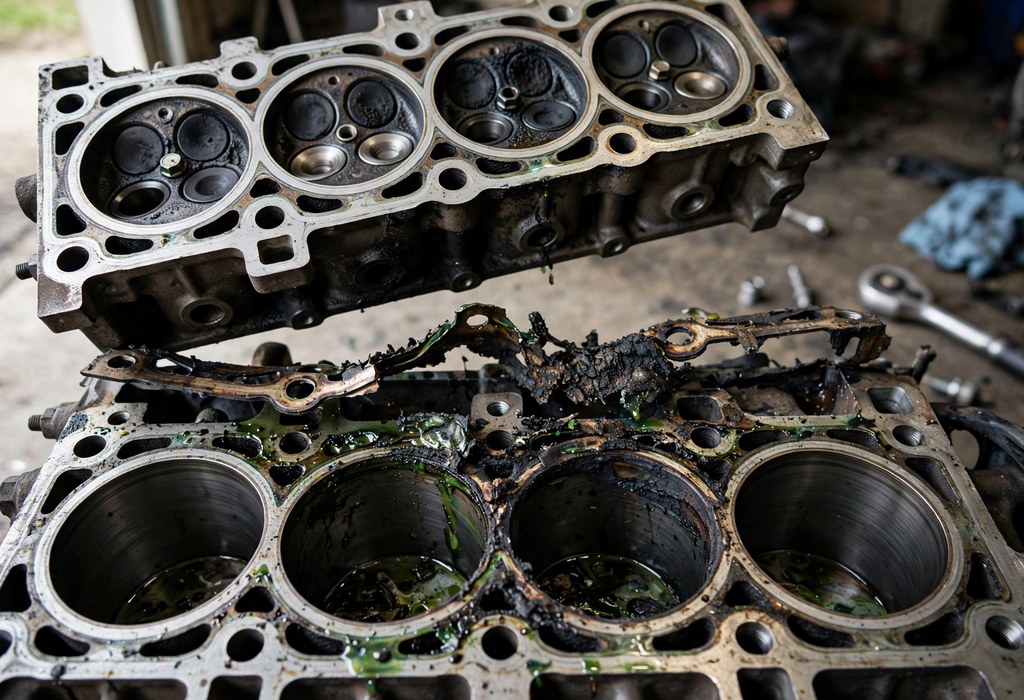
The head gasket seals the joint between the cylinder head and the engine block. In addition, it separates combustion pressure, coolant passages, and oil passages inside the engine. This thin seal therefore handles extreme heat, pressure, and vibration during every drive.
First, combustion gases stay inside each cylinder and push the piston down with force. Next, coolant flows through nearby passages and carries excess heat away from hot metal. Meanwhile, oil lubricates moving parts through its own sealed channels without mixing fluids.
How a Blown Head Gasket Fails
Severe overheating ranks among the most common triggers for head gasket failure. Extreme heat expands metal unevenly and weakens the seal at the gasket edges.
Overheating and Warping
A warped cylinder head creates tiny gaps that coolant and combustion gases can cross. Consequently, even a small warp can break the seal and start a persistent leak. A cracked cylinder head or engine block can cause similar leaks under high pressure.
Age, Pressure, and Poor Cooling
Age alone can harden gasket material and make it less flexible over time. Meanwhile, combustion pressure constantly pushes against the seal during acceleration and heavy loads. Low coolant, a stuck thermostat, or a failing water pump can trigger dangerous overheating.
Why Coolant Burns as Blown Head Gasket Smoke
A breach near a cylinder lets coolant seep directly into the combustion chamber. The piston then compresses the coolant along with air and fuel during combustion. Intense heat turns that coolant into steam and pushes it out through the exhaust.
Steam looks thick and white, especially after the engine reaches normal operating temperature. Unlike light condensation, this smoke persists, smells sweet, and often grows under acceleration. In addition, the coolant level drops steadily even though no puddle appears underneath.
Coolant can also enter the oil passages and contaminate the lubrication system. Therefore, white smoke plus falling coolant deserves prompt attention, not continued driving.
Symptoms That Confirm a Blown Head Gasket
White smoke alone does not prove a head gasket failure, so look for matching clues. Persistent thick smoke after warm-up points strongly toward coolant entering the cylinders. A sweet smell from the exhaust often accompanies coolant burning in the chamber.
Check the oil dipstick and oil filler cap for a milky, light brown residue. This residue signals coolant mixing with oil inside the engine lubrication system. Also watch the temperature gauge, because frequent overheating often accompanies gasket failure.
Bubbles in the coolant reservoir can reveal exhaust gases entering the cooling system. Similarly, a rough idle or misfire on startup can signal coolant fouling a spark plug. A technician confirms the diagnosis with a combustion leak test or cooling system pressure test.
Compression tests and leak-down tests further pinpoint which cylinder loses pressure. Learn how to diagnose white smoke from exhaust carefully before you approve any major repair. Accurate testing prevents unnecessary teardown and identifies related damage early.
What a Real Shop Repair Involves
A proper repair starts with draining coolant and oil and disconnecting attached components. Technicians remove the intake manifold, exhaust manifold, timing components, and cylinder head.
Inspection and Machining
Next, the shop inspects the cylinder head and engine block surfaces for warping or cracks. A machine shop pressure-tests the head and resurfaces it to restore a perfectly flat seal. If cracks run too deep, the shop may recommend replacing the cylinder head instead.
Reassembly and Final Checks
Technicians install a new multi-layer steel gasket set and fresh torque-to-yield head bolts. They follow a precise torque sequence and angle specifications to clamp the head evenly. Finally, they refill fresh oil and coolant, bleed trapped air, and test for leaks.
The complete job typically takes one to several days, including machine shop turnaround time. Compare the full cost to fix white exhaust smoke before you decide between repair and replacement. Labor dominates the bill, because reaching the gasket requires extensive disassembly and careful reassembly.
Why Quick-Fix Sealants Fall Short
Bottle sealants circulate through the cooling system and harden inside small leak paths. For tiny external seeps, a sealant may slow the leak for a short period. However, sealants cannot restore a crushed gasket, a warped head, or a cracked surface.
Sealants also struggle against combustion pressure pushing gases through the breach. In addition, sealant particles can clog narrow coolant passages, radiators, and heater cores.
When Repair Makes Sense
Repair usually makes sense when the vehicle holds good overall condition and value. A sound engine block and undamaged cylinder head also support a successful gasket replacement.
Replacement may prove wiser when repair costs approach the vehicle market value. Similarly, a cracked block or multiple major failures can make repair impractical. Ask the shop for a written inspection report before you commit to either option.
Stop driving immediately if white smoke, milky oil, or rising temperatures appear together. Arrange towing to a trusted shop and share every symptom you noticed.
Frequently Asked Questions
Can I Drive With a Blown Head Gasket?
No, driving risks severe engine damage and turns a repairable gasket job into replacement.
How Long Does Head Gasket Repair Take?
Most shops need one to several days, including inspection and machine shop work.
Can Head Gasket Sealer Fix White Smoke?
Sealer may slow a tiny leak briefly, but it cannot permanently fix a blown gasket.
How Much Does a Blown Head Gasket Repair Cost?
Costs vary widely by engine type, labor time, and machine shop work needed.
What Causes White Smoke From a Blown Head Gasket?
Coolant leaks into the combustion chamber, turns into steam, and exits through the exhaust.
Conclusion
A blown head gasket demands a thorough repair, not a quick bottle fix. Confirm the diagnosis, inspect the cylinder head, and replace the gasket correctly. Prompt action protects your engine and prevents a manageable repair from escalating.
Book an inspection with a trusted repair shop today and describe your white smoke symptoms. Ask for test results, a written estimate, and a clear repair timeline before authorizing work.
Watch for blown head gasket smoke every time you start a cold engine. This blown head gasket smoke checklist helps you catch leaks early. Remember blown head gasket smoke as the top warning sign of coolant burning.

Thomas Walker is an accomplished writer with expertise in the basics of car accessories. With a keen eye for detail, Thomas has established himself as an authority on the subject, with a passion for all things automotive. Based in Jasper, Thomas is dedicated to providing readers with the information they need to make informed decisions when it comes to their car accessories.