
This beginner guide exhaust smoke overview shows what your engine burns besides fuel and air. White smoke often means steam or coolant, blue smoke signals oil, and black smoke signals excess fuel. You can read the color, timing, and smell to judge urgency quickly.
First, your tailpipe releases gases after combustion inside the engine. Normally, you see little or nothing once the engine warms fully. However, a new color, strong smell, or thick cloud deserves a closer look.
This guide explains each color in plain language for new owners. Also, you will learn simple checks, warning signs, and smart next steps. Then you can talk clearly with a mechanic and avoid needless worry.
Beginner Guide To Exhaust Smoke: What It Actually Is
Your engine mixes fuel and air, ignites the mixture, and pushes gases out. One of the first things new owners notice is white smoke from exhaust, so let’s cover that in detail. Therefore, smoke color reveals which extra substance joins that exhaust flow.
Next, hot gases travel through the exhaust system and leave through the tailpipe. Along the way, the muffler quiets sound and the catalytic converter cleans gases. In addition, small amounts of water vapor form during normal combustion.
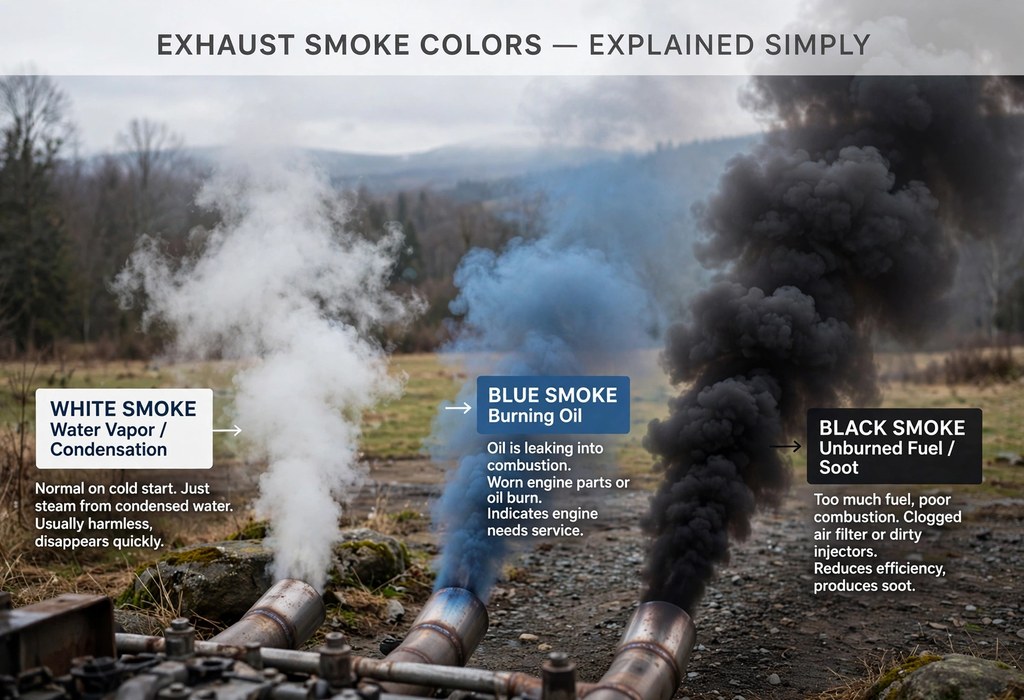
Color changes when oil, coolant, or extra fuel enters the exhaust stream. For example, oil burns with a blue tint, coolant steams white, and excess fuel turns black. Thus, color gives you a fast clue, not a final diagnosis.
White Exhaust Smoke In Simple Terms
Thin white vapor usually means harmless steam from overnight condensation. Cold metal and cold air trap moisture inside the exhaust pipes. Then heat turns that moisture into steam at startup.
On cold mornings, you may notice more vapor than on warm days. That pattern matches cold weather white exhaust smoke in most beginner guides. Usually, the vapor fades within a few minutes as parts warm up.
Thin Vapor Versus Thick Smoke
Thick white smoke looks denser, lasts longer, and often smells sweet. Coolant can leak past a damaged head gasket into the combustion chamber. Also, a cracked cylinder head can let coolant enter the same space.
Watch for falling coolant level, rising temperature, or rough running. Meanwhile, milky residue under the oil cap can signal coolant mixing with oil. Finally, stop driving and seek help if thick smoke stays after warm-up.
Blue Exhaust Smoke In Simple Terms
Blue or blue-gray smoke usually signals burning engine oil. Oil normally lubricates moving parts and stays out of combustion. However, worn piston rings or valve seals can let oil slip inside.
A faulty PCV valve can also push oil vapor toward the intake. Similarly, a turbocharger with worn seals can leak oil into exhaust gases. Pay attention to timing, since startup puffs and acceleration clouds differ.
First, note whether smoke appears at startup, at idle, or under acceleration. Next, check your oil level regularly and note any fast drops. Then share that timing detail with your mechanic for faster help.
Black Exhaust Smoke In Simple Terms
Black smoke usually means the engine burns too much fuel. A rich mixture contains more fuel than air for clean combustion. Also, soot from incomplete burning darkens the exhaust plume.
Common triggers include a clogged air filter, a faulty sensor, or leaking injectors. For example, a dirty air filter restricts airflow and upsets the fuel balance. Similarly, a faulty oxygen sensor can misread exhaust gases and overfuel the engine.
Watch for poor fuel economy, a strong fuel smell, or rough idling. Diesel engines may puff dark smoke under heavy load more often. However, persistent black smoke still deserves prompt attention from a professional.
Checks Any Beginner Can Do For Exhaust Smoke
Start with calm observation before you touch anything under the hood. Learn when normal or warning sign applies before you worry. Then compare what you see with the simple patterns above.
Check Exhaust Smoke Color, Timing, And Smell
First, stand behind the car safely and note the smoke color. Next, note whether smoke appears only at startup or keeps flowing. Also, notice any sweet, oily, or fuel-like smell near the tailpipe.
Check Fluids And Gauges For Exhaust Smoke
Wait until the engine cools before you open any fluid cap. After cooling, check the coolant reservoir level against its marked lines. Similarly, pull the dipstick, wipe it clean, and recheck oil level.
Glance at the temperature gauge during a short, careful drive. In addition, watch dashboard warning lights for oil pressure or overheating. Finally, write down what you saw, when it happened, and any smells.
When Exhaust Smoke Means Ask A Mechanic
Book a visit promptly if thick smoke continues after warm-up. Also, seek help quickly for falling fluid levels or warning lights. Mechanics can pressure-test cooling, inspect seals, and scan sensors.
Stop driving right away if power drops sharply or temperature climbs fast. Similarly, pull over safely if smoke blocks your view or smells strong inside. Then call for roadside help rather than forcing a longer drive.
This beginner car exhaust smoke guide keeps every explanation short and practical. Bring your notes, photos, and fluid observations to the appointment. Clear details help a mechanic diagnose faster and avoid guesswork.
Then compare today’s notes with earlier entries for clear changes. Also, photograph the tailpipe only from a safe distance. Finally, share the log at your next service visit.
Use this short routine each time you notice new smoke. First, park safely and watch the tailpipe for one minute. Next, record color, thickness, timing, and smell in your phone notes.
Frequently Asked Questions
Is Thin White Smoke Normal At Startup?
Thin vapor at startup often counts as normal, while thick persistent smoke needs prompt checks.
Is It Safe To Drive With Exhaust Smoke?
Stop driving if thick smoke, warning lights, power loss, or strong smells appear suddenly.
What Does Blue Smoke From Exhaust Mean?
Blue smoke usually means the engine burns oil past worn seals or rings.
What Does Black Smoke From Exhaust Mean?
Black smoke usually means excess fuel or restricted air disrupts clean combustion.
Why Does My Car Smoke Only On Startup?
Cold exhaust parts create condensation steam that fades quickly after warm-up.
Conclusion
Exhaust smoke gives beginners a simple visual clue about engine health. First, identify the color, timing, and smell before you panic. Then use the safe checks above and share clear notes with a professional.
Start today by watching your next cold start with fresh eyes. Finally, book a mechanic visit promptly if any warning sign persists. Stay curious, stay safe, and keep your car running smoothly.
Use this beginner guide exhaust smoke routine every month. Keep this beginner guide exhaust smoke checklist in your glove box.

Thomas Walker is an accomplished writer with expertise in the basics of car accessories. With a keen eye for detail, Thomas has established himself as an authority on the subject, with a passion for all things automotive. Based in Jasper, Thomas is dedicated to providing readers with the information they need to make informed decisions when it comes to their car accessories.