

A normal white smoke warning check takes two minutes and separates harmless vapor from engine trouble. Thick white smoke that continues after warm-up signals a deeper problem instead. You can tell the difference quickly by checking thickness, smell, and duration together. Also, a steady coolant level and a normal temperature gauge support that calmer verdict.
First, watch the tailpipe for two minutes after a cold start. Before you panic, it helps to understand the full picture of white smoke from exhaust and what actually causes it. Next, note whether the vapor fades, thickens, or gains a sweet smell. Finally, compare those clues before you decide your next step.
The Quick White Smoke Warning Check
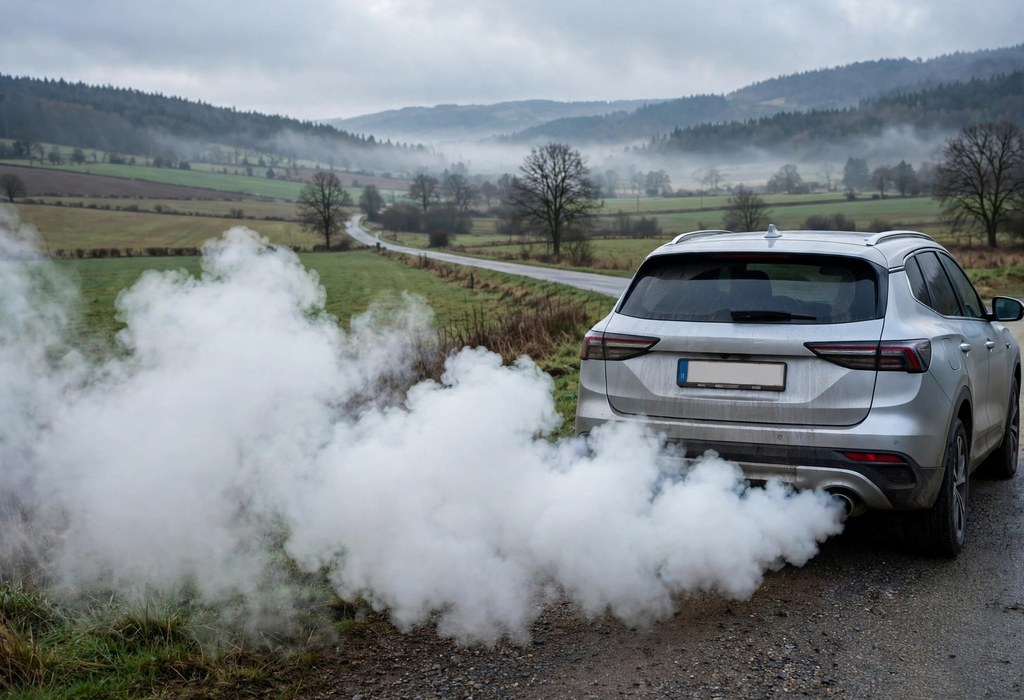
Start with three clues, and trust the pattern more than one clue alone. First, judge thickness, because thin vapor behaves very differently from dense smoke. Next, check duration, since normal vapor fades quickly once the exhaust warms up. Finally, notice smell, because sweet exhaust often points toward burning coolant instead.
Also, glance at the temperature gauge while the engine warms up. A steady needle supports a normal verdict, while a rising needle raises concern fast. Moreover, check the coolant reservoir only after the engine cools completely. A falling level over several days deserves attention, even without a visible puddle.
What Normal White Smoke Looks Like
Why Cold Exhausts Produce Vapor
Every gasoline engine produces water vapor as a natural byproduct of combustion. Cold metal in the exhaust system cools that vapor into visible droplets overnight. Heat then turns those droplets back into steam during the first minutes. Consequently, a brief white puff at startup reflects physics, not engine failure.
Short trips can leave extra moisture inside the muffler and tailpipe. Humid air also adds moisture, so vapor looks stronger on damp mornings. For example, a car parked outside overnight often shows more vapor than a garaged car. In contrast, a fully warmed exhaust usually releases vapor you barely notice.
Signs That Point To Condensation
Thin vapor tops the normal list, because it drifts apart and disappears quickly. It also lacks any strong smell, and it leaves no oily residue behind. Additionally, clear water drops at the tailpipe tip often accompany harmless vapor. The engine also runs smoothly, without misfires, shaking, or warning lights.
Crucially, the vapor clears once the engine reaches normal operating temperature. You can drive normally afterward, and the vapor should stay gone. Similarly, the coolant level stays steady across days and weeks. If all those clues line up, condensation offers the simplest explanation.
What Warning White Smoke Looks Like
Coolant Burning And White Smoke Warning Signs
Thick white smoke behaves differently, because it billows steadily and hangs longer. It often carries a sweet smell, similar to syrup or warm antifreeze. Coolant enters the combustion chamber through a failed seal or crack. Burning coolant then releases dense white steam through the exhaust.
A blown head gasket ranks among the most common internal coolant leaks. The gasket seals the cylinder head, engine block, coolant passages, and combustion chambers. A cracked cylinder head can produce the same pattern after severe overheating. Likewise, a cracked engine block or a failed intake manifold gasket can leak coolant inward.
Other White Smoke Warning Signs To Watch
Watch the coolant reservoir closely, because unexplained loss strongly suggests an internal leak. Overheating also warns you early, especially when the gauge climbs during normal driving. Rough idling or misfires can follow, because coolant disrupts clean combustion inside cylinders. Bubbles in the coolant reservoir can signal combustion gases entering the cooling system.
Check the oil filler cap and dipstick for a milky, coffee-colored residue. That residue suggests coolant mixing with oil, and it needs prompt professional attention. Additionally, white smoke under acceleration often looks denser than vapor at idle. Do not ignore that combination, because early action limits further engine damage.
How To Check Normal White Smoke Safely
Park on level ground, and let a hot engine cool before you open anything. Never open a hot radiator cap, because pressurized coolant can scald skin badly. Next, check the coolant level against the reservoir marks with the engine cold. Then, inspect the oil dipstick and filler cap for milky residue or unusual texture.
Use a step-by-step method to diagnose it at home before you replace any parts. Record smoke timing, smell, coolant level, and gauge readings in one short log. Mechanics spot patterns quickly from that log, and vague descriptions disappear. Finally, arrange a cooling system pressure test if coolant keeps disappearing without a puddle.
Diesel engines add one twist, because unburned fuel can also look white. Faulty glow plugs or injectors often cause that pattern during cold starts. A fuel smell, rough idle, and hard starting often accompany that diesel pattern.
When Normal White Smoke Turns Into A Warning
Cold mornings magnify normal vapor, so do not judge smoke from one frosty start alone. Meanwhile, read about cold weather white exhaust smoke if frost or humidity clouds your first check. Humidity, short trips, and overnight parking outside all increase visible vapor. Therefore, repeat your check after a longer drive on a milder day.
If vapor still clears after warm-up, cold weather likely explains the sight. However, thick smoke on a warm day breaks that pattern and needs prompt attention. Similarly, smoke that returns every drive deserves a closer look, regardless of temperature. Keep that distinction sharp, because it prevents both panic and delayed repairs.
Common White Smoke Warning Mix-Ups To Avoid
White vapor differs from blue smoke, because blue smoke usually signals burning oil. Worn valve seals, piston rings, or turbo seals often allow oil into combustion. Black smoke differs again, because it usually signals excess fuel or restricted airflow. A clogged air filter or faulty injector can create that darker exhaust pattern.
Steam also differs from smoke, because steam dissipates faster and feels lighter. True smoke hangs longer, looks denser, and often carries a distinct smell. Besides, tailpipe water alone rarely signals trouble when other clues stay normal. Focus on the full pattern, not a single puff, before you draw conclusions.
Frequently Asked Questions
Is White Smoke From Exhaust Normal On A Cold Morning?
Yes, thin vapor on a cold morning usually clears quickly and needs no repair.
How Long Should Normal White Vapor Last?
Normal vapor usually fades within a few minutes once the exhaust warms up.
What Does Sweet-Smelling White Smoke Mean?
Sweet-smelling smoke often signals burning coolant from an internal engine leak.
Can I Drive With White Smoke From Exhaust?
Drive only when thin vapor clears quickly, gauges stay normal, and coolant stays steady.
Does White Smoke Always Mean A Blown Head Gasket?
No, condensation, cold weather, and diesel fuel issues can also produce white exhaust.
Conclusion
Most white exhaust vapor deserves calm observation, not immediate panic. Check thickness, duration, smell, coolant level, and gauge readings together. That quick pattern usually separates harmless condensation from real engine trouble.
Book a professional inspection promptly if smoke persists, smells sweet, or coolant keeps dropping. Share your observations with the mechanic, including timing, smell, and coolant readings. Act today, and protect your engine before a small leak grows costly.
Use this normal white smoke warning check every cold morning. Remember this normal white smoke warning routine before every winter drive.

Thomas Walker is an accomplished writer with expertise in the basics of car accessories. With a keen eye for detail, Thomas has established himself as an authority on the subject, with a passion for all things automotive. Based in Jasper, Thomas is dedicated to providing readers with the information they need to make informed decisions when it comes to their car accessories.