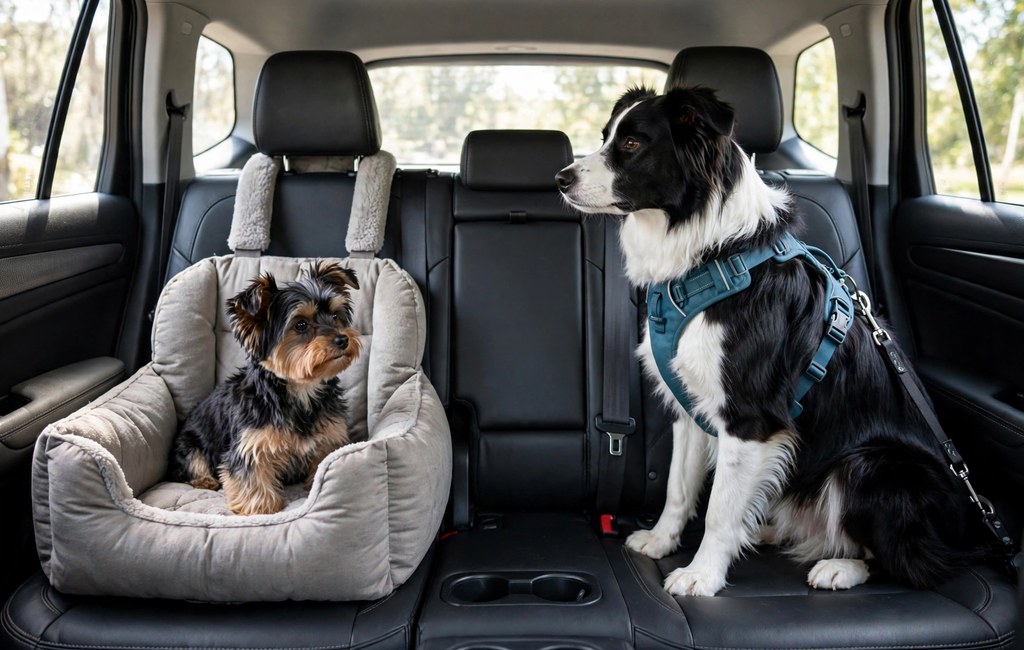
A dog car seat lifts a small dog into a padded, contained space for travel. A dog seat belt tethers a harnessed dog directly to the vehicle seat belt system. Therefore, seats suit visibility and containment, while belts suit freedom and simple restraint.
Both options reduce distraction and limit dangerous movement during sudden stops. Many owners compare a dog car seat with a belt system before choosing restraint for daily trips. In addition, each option works best for different sizes, temperaments, and vehicle layouts.
This guide compares comfort, restraint, compatibility, size suitability, and cleaning side by side. Finally, it helps you match the right option to your dog and your vehicle.
Dog Seat Belt and Car Seat Options Explained

A car seat creates a raised, walled resting area inside the vehicle. Straps anchor the seat base to the vehicle seat belt or headrest. Meanwhile, an internal tether clips to the dog harness inside the seat.
A seat belt system uses a short tether between the harness and the vehicle buckle. Alternatively, a headrest strap loops around the headrest and connects to the harness. Therefore, the dog sits or lies directly on the vehicle seat during travel.
Both systems limit roaming and reduce driver distraction on every trip. However, only a contained seat adds elevation, side walls, and a defined resting zone. In contrast, a belt system offers simpler setup and easier transfer between vehicles.
Dog Seat Belt Comfort and Visibility Explained
Small dogs often enjoy a raised view through the window from a car seat. For example, elevation helps anxious dogs watch the road and settle sooner. Similarly, padded walls cushion the dog during turns and gentle braking.
A belt system leaves the dog lower on the seat without a raised platform. Many owners compare that open setup with a dog booster seat for small, calm riders. In addition, larger dogs often prefer open space over a small, walled seat.
Soft bedding inside a seat adds warmth and a familiar resting place. Meanwhile, belt riders rest directly on a seat cover or vehicle upholstery. Consequently, comfort depends more on temperament and size than on marketing claims.
Dog Seat Belt Restraint and Safety Explained
Restraints reduce risk during sudden stops, but they never eliminate risk completely. Always attach any restraint to a harness, never to a collar alone. A collar concentrates force on the neck during a sudden stop or crash.
Follow the manufacturer instructions for your specific seat, harness, and vehicle. Also, keep tethers short enough for sitting or lying without reaching the front seat. Check straps, buckles, and stitching regularly for wear, fraying, or loose hardware.
Keep dogs in the back seat whenever possible for safer travel. Front airbags endanger dogs, so place a dog car seat belt in rear seats only. Moreover, local restraint laws vary, so check local rules before long trips.
Never leave a dog alone in a parked car in warm conditions. Interior heat rises quickly, even with windows partly open. Therefore, plan stops that keep your dog supervised and cool.
Dog Seat Belt Compatibility and Fit Explained
Seat shapes, buckle positions, and headrest styles differ across vehicles. For instance, some buckles sit deep between cushions and resist easy clipping. Similarly, narrow seats may squeeze a wide car seat against doors or consoles.
Measure the rear seat width and check strap reach before choosing either option. Also, test installation in your own vehicle rather than trusting generic fit claims. In addition, confirm that doors close freely and seat belts still buckle securely.
Belt systems usually transfer easily between sedans, hatchbacks, and sport utility vehicles. However, bulky seats need more planning for multiple vehicles or frequent swaps. Consequently, frequent travelers often favor the simpler belt system for flexibility.
Dog Size and Temperament Suitability
Small, calm dogs gain the most from elevation and containment. For example, a small dog sees the window view instead of seat backs. Meanwhile, containment discourages jumping between seats during stops.
Medium and large dogs usually need the open space of a belt system. A large dog may feel cramped inside a small, walled seat. Therefore, match the restraint size to chest, length, and weight limits.
Anxious dogs sometimes settle faster inside a snug, defined seat. In contrast, restless dogs may chew tethers or paw at seat walls. Additionally, practice short trips first and reward calm behavior after each ride.
Dog Seat Belt Cleaning and Everyday Use Explained
Removable seat covers simplify washing after muddy walks or shedding seasons. For instance, unzip the cover, shake out hair, and machine wash according to care labels. Similarly, wipe seat walls and bases after wet trips to prevent odor buildup.
Belt systems need less cleaning because dogs contact the vehicle seat directly. However, add a washable seat cover to protect upholstery from hair and dirt. Also, inspect tethers after messy trips for mud, moisture, or chew damage.
Storage also differs between the two options in daily use. A car seat occupies more trunk or garage space between trips. In contrast, a belt tether folds small and stores easily in a glove box.
When Each Option Fits Best
Choose the option that matches your dog, vehicle, and typical trip length. Also, consider combining both systems when your dog needs elevation plus strong restraint. For example, clip a harness tether inside a contained seat for added control.
- Short local trips: Use a belt system for quick setup and easy movement.
- Small calm dogs: Choose a raised seat for visibility, containment, and comfort.
- Large active dogs: Pick a belt system for open space and stronger direct restraint.
- Long highway trips: Combine a contained seat with a short harness tether for control.
- Multiple vehicles: Carry a belt tether for fast transfer between cars.
Frequently Asked Questions
Can a dog use a car seat and a seat belt together?
Yes, clip a short harness tether inside a contained seat for combined control.
Which option suits a small dog better?
A raised seat usually suits small, calm dogs better than a belt alone.
Should a restraint attach to a collar or a harness?
Always attach restraints to a harness, never to a collar alone.
Can a dog ride safely in the front seat with either option?
Keep dogs in the back seat because front airbags pose serious danger.
How do I choose between a seat and a belt for daily travel?
Match size, temperament, vehicle fit, and trip length before choosing restraint.
Conclusion
A car seat excels for small, calm dogs needing elevation and containment. Meanwhile, a belt system excels for larger dogs needing space and simple restraint. Therefore, weigh comfort, restraint strength, vehicle fit, and cleaning before deciding.
Measure your rear seat today and test both options with your dog. Then, choose the setup that keeps every trip calm, controlled, and safer. Finally, follow manufacturer instructions and check fit before each journey.

Thomas Walker is an accomplished writer with expertise in the basics of car accessories. With a keen eye for detail, Thomas has established himself as an authority on the subject, with a passion for all things automotive. Based in Jasper, Thomas is dedicated to providing readers with the information they need to make informed decisions when it comes to their car accessories.