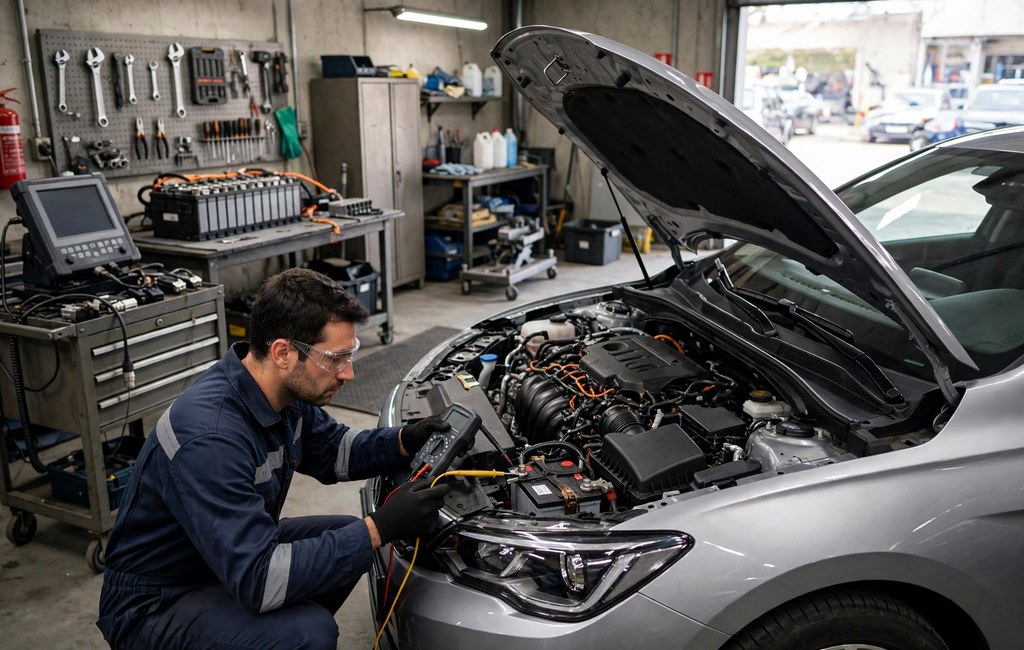
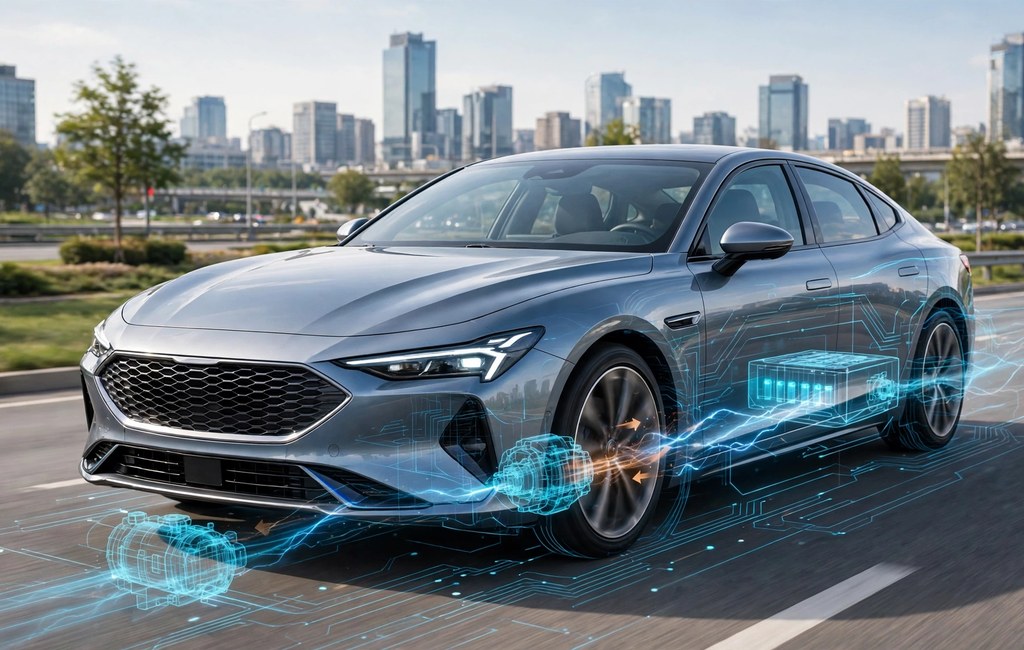
An automatic hybrid car pairs a gasoline engine with electric motors. Therefore, the car blends both power sources without driver input. For example, understanding how automatic hybrid cars work explains every later technology section clearly.
Also, the automatic system chooses electric, gasoline, or combined power continuously. Meanwhile, the driver simply selects drive and presses the pedals. Overall, this guide explains technology, efficiency, reliability, and daily driving.
Next, this guide covers transmissions, batteries, braking, and everyday maintenance. In addition, it compares hybrid ownership with conventional automatic ownership. Finally, practical tips help drivers protect efficiency and reliability daily.
What Is an Automatic Hybrid Car?
Two Power Sources, One Drivetrain
A hybrid car uses two distinct sources for propulsion. Specifically, a gasoline engine provides sustained power for longer trips. In addition, electric motors deliver instant torque from stored energy.
However, a conventional car relies on its engine alone. In contrast, a hybrid shares work between engine and motor. Consequently, the system wastes less energy during everyday driving.
Also, engineers describe this shared layout as a hybrid powertrain. Notably, the powertrain includes the engine, motors, battery, and controls. Together, these parts move the wheels smoothly and efficiently.
Why the Hybrid Car Transmission Stays Automatic
First, blending two power sources demands constant computer decisions. Therefore, an automatic layout suits hybrid technology particularly well. Meanwhile, drivers never manage power blending themselves at all.
For example, the system starts silently on electric power alone. Then, the engine joins seamlessly during stronger acceleration demands. After that, the system returns to electric help at cruise.
Still, the driving experience feels familiar to most drivers. Indeed, two pedals and a simple selector control everything. So, new owners adapt within a single short drive.
Core Parts Every Hybrid Car Shares
Every automatic hybrid includes several essential shared components. First, the gasoline engine burns fuel for primary power. Second, electric motors add torque and recover braking energy.
- Gasoline engine: It provides steady power during cruising and stronger acceleration.
- Electric motor: It launches the car quietly and assists the engine.
- Traction battery: It stores electrical energy for the motors between drives.
- Power electronics: They convert and direct electricity between battery and motors.
- Control computer: It coordinates every component for efficiency and smooth responses.
In addition, sensors feed speed and demand data constantly. Consequently, the computer adjusts power flow many times per second. Overall, coordinated parts create the defining hybrid advantage. In short, an automatic hybrid car treats both power sources as one system.
How Automatic Hybrid Cars Work
Hybrid Car Starting and Low-Speed Driving
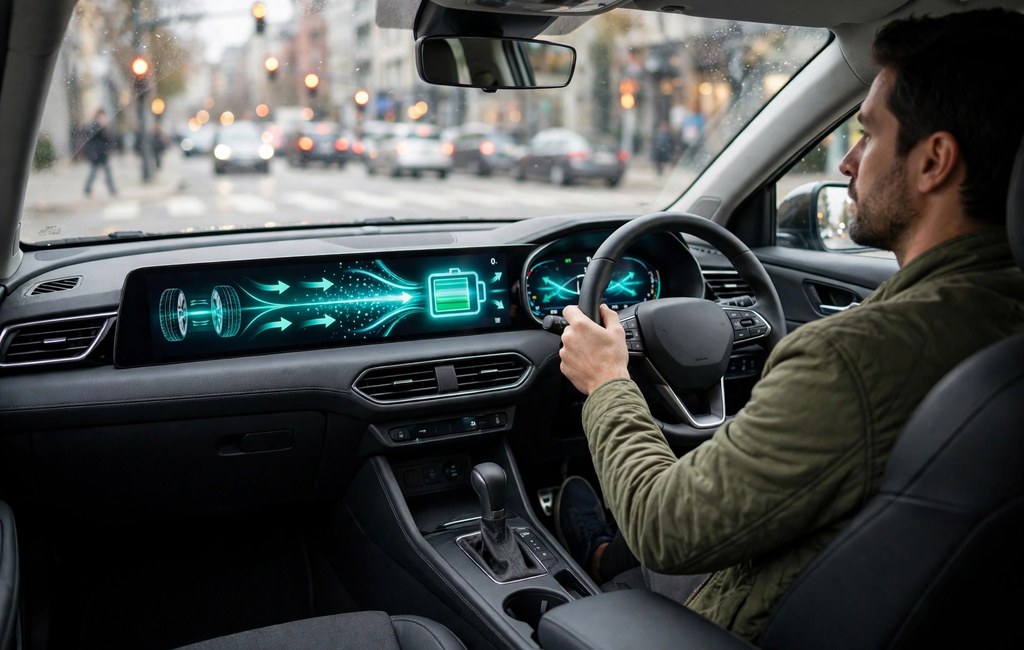
First, the car wakes silently when the driver presses start. Then, the traction battery supplies power to the motors. Meanwhile, the gasoline engine stays off during gentle starts.
For example, parking maneuvers use electric power almost exclusively. Similarly, slow traffic movement relies mainly on motor torque. As a result, the car saves fuel during creeping conditions.
However, a low battery charge changes this behavior quickly. In that case, the engine starts and recharges the pack. Therefore, the system always protects a minimum charge level.
Hybrid Car Cruising and Steady Speeds
Next, the engine handles most work during steady cruising. Also, highway speeds suit the engine efficiency range best. Meanwhile, the motors rest or add small assistance amounts.
Specifically, the control system holds engine speed near efficiency peaks. Consequently, the car burns less fuel across long distances. In addition, surplus engine power sometimes recharges the battery simultaneously.
Still, gentle cruising sometimes allows brief electric-only running. For instance, flat roads and light throttle support silent coasting. Then, the engine restarts smoothly when demand rises again.
Hybrid Car Acceleration and Combined Power
During hard acceleration, both power sources work together fully. First, the motor delivers instant torque from standstill. Second, the engine adds sustained power as speed builds.
As a result, acceleration feels stronger than engine size suggests. Indeed, electric torque fills gaps before engine power peaks. Therefore, merging and passing feel confident and responsive.
In addition, the battery supplies extra energy during these bursts. However, the system limits bursts to protect battery health. Meanwhile, the computer rebalances power once acceleration ends.
Hybrid Car Stopping, Idling, and Restarting
When the car stops, the engine shuts down automatically. Therefore, the car avoids wasteful idling at lights completely. Instead, electrical systems keep running from battery power quietly. That coordination lets an automatic hybrid car respond instantly to pedal input.
Next, pressing the accelerator restarts everything almost instantly. For example, the motor moves the car before engine engagement. Consequently, restarts feel smooth rather than abrupt or delayed.
Over time, automatic shutdown saves meaningful fuel in traffic. Also, frequent restarts suit hybrid starter systems by design. In short, stop-start operation defines everyday hybrid efficiency.
How the Hybrid Car Computer Coordinates Everything
A central controller monitors speed, throttle, and battery charge. In addition, sensors track temperatures across motors and electronics. Therefore, the controller chooses the most efficient operating mode.
- Electric mode: It moves the car silently during light demand periods.
- Engine mode: It sustains speed efficiently during steady open-road cruising.
- Combined mode: It merges both sources during demanding acceleration moments.
- Charging mode: It directs surplus energy back into the battery pack.
Meanwhile, mode changes happen without driver awareness or input. Notably, transitions stay smooth because software anticipates demand changes. Overall, intelligent coordination separates hybrids from conventional cars fundamentally.
Also, coasting extends electric running on gentle downhill stretches. During coasting, the engine often shuts down completely. Then, light throttle restarts propulsion without any noticeable delay.
Main Types of Automatic Hybrid Cars
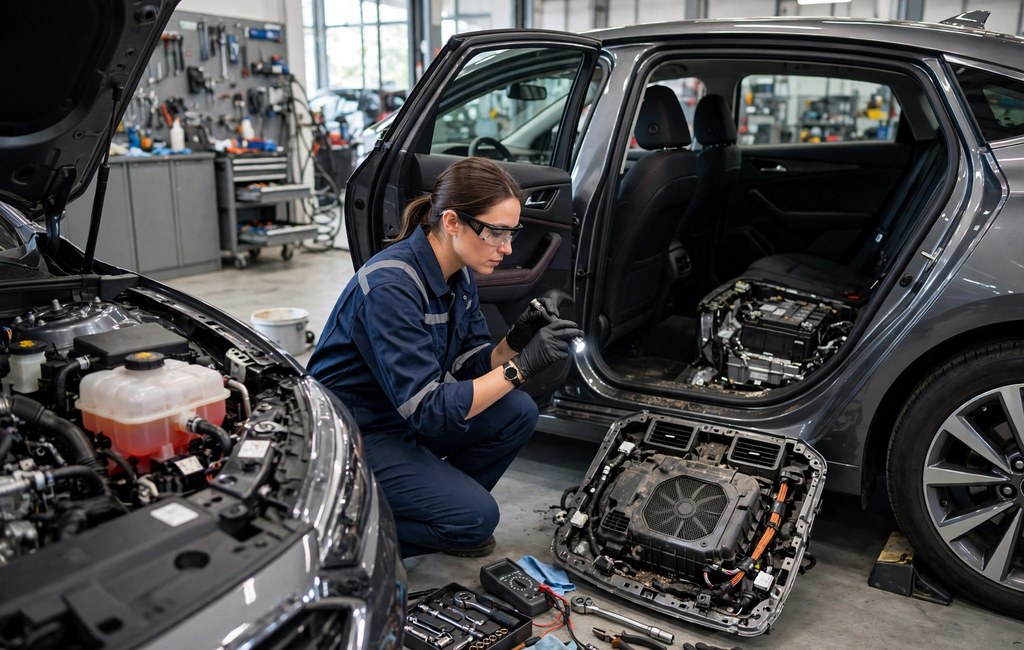
Full Hybrid Car Systems
A full hybrid drives on electric power alone briefly. Specifically, it moves silently at low speeds and light loads. Meanwhile, its larger motors support meaningful electric assistance.
Also, full hybrids recharge through braking and engine generation. Therefore, drivers never plug a full hybrid into outlets. Instead, the car manages its own charge entirely automatically.
For drivers comparing architectures, full, mild, and plug-in hybrid systems differ mainly in battery size. Indeed, motor strength and electric range also separate them clearly. Consequently, daily routes should guide the final choice.
Mild Hybrid Car Systems
In contrast, a mild hybrid never drives electrically alone. Instead, a small motor assists the gasoline engine continuously. For example, a 48-volt system supports stops and starts smoothly. Each automatic hybrid car balances these modes without any driver selection.
Also, the small motor adds torque during initial acceleration. As a result, the engine works slightly less hard overall. Still, fuel savings stay modest compared with full hybrids.
Meanwhile, mild systems keep conventional driving manners almost entirely. Notably, they often pair with familiar stepped automatic transmissions. Therefore, they suit drivers wanting subtle electrification benefits.
Plug-In Hybrid Car Systems
A plug-in hybrid carries a much larger battery pack. In addition, drivers recharge that pack from external power sources. Consequently, it covers daily trips on electricity alone frequently.
For instance, plug-in models travel tens of miles electrically. Then, the gasoline engine supports longer journeys without range worry. However, regular charging unlocks their best efficiency results.
When owners skip charging, efficiency drops toward full hybrid levels. Still, the system operates normally as a regular hybrid. Overall, charging habits determine plug-in ownership rewards.
Series and Parallel Hybrid Car Layouts
Engineers also classify hybrids by mechanical layout design. First, series layouts let motors drive the wheels exclusively. Meanwhile, the engine only generates electricity in series designs.
Second, parallel layouts connect both sources to the wheels. In addition, power-split layouts blend both approaches very flexibly. Therefore, most modern hybrids use power-split parallel arrangements.
- Mild hybrid: It assists the engine but never drives alone.
- Full hybrid: It drives electrically for short, gentle stretches.
- Plug-in hybrid: It drives electrically across typical daily trip distances.
Overall, each type balances efficiency, complexity, and driving feel. Specifically, battery size shapes capability more than any factor. In short, understanding types prevents mismatched purchase expectations later.
Overall, buyers should match system type to daily distance patterns. Specifically, short electric capability suits some drivers perfectly well. In contrast, larger plug-in capability suits regular charging routines better.
Automatic Hybrid Transmission Technology
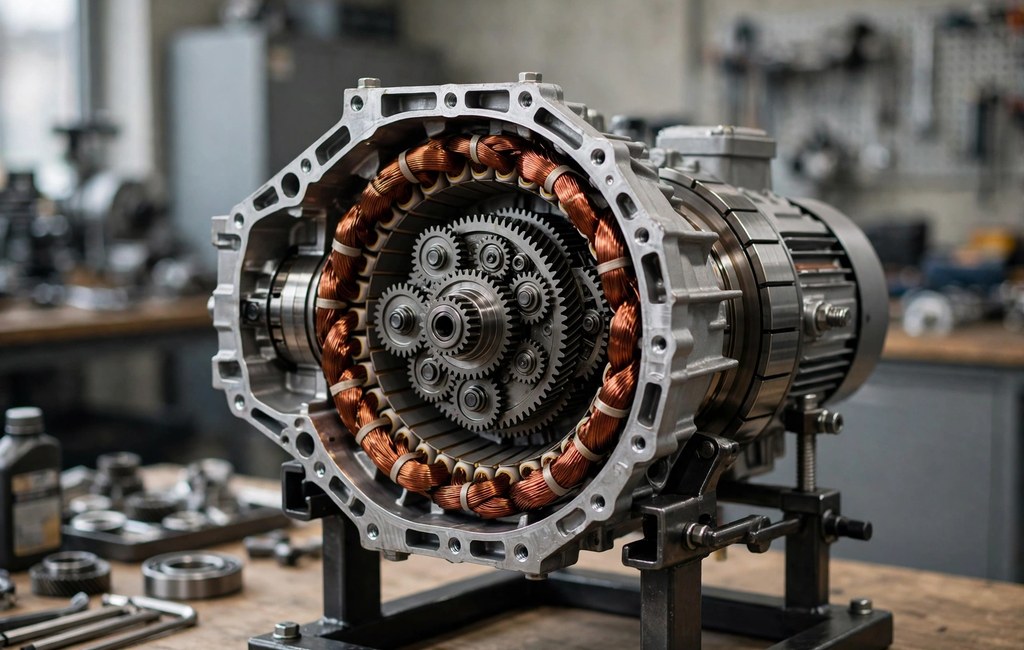
What Makes Hybrid Transmissions Different
Hybrid transmissions blend mechanical and electrical power paths together. Therefore, they differ fundamentally from conventional stepped automatic gearboxes. Meanwhile, they also manage energy recovery during slowing. An automatic hybrid car protects its transmission by blending torque smoothly.
For clarity on design differences, ecvt vs automatic transmission comparisons reveal contrasting mechanical philosophies. Indeed, one design uses gears and clutches heavily. In contrast, the other relies on planetary gears and motors.
Also, hybrid transmissions rarely use torque converters at all. Instead, electric motors smooth launches and fill torque gaps. Consequently, shifts feel nearly invisible to most passengers.
The eCVT and Power-Split Device
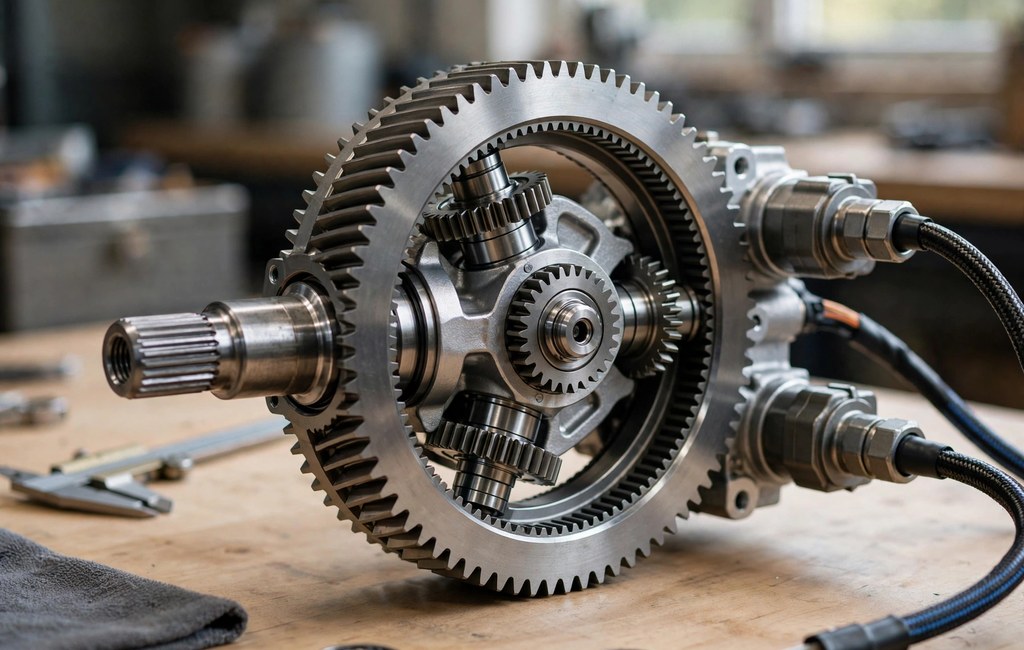
An eCVT uses a planetary gear set called power-split. Specifically, the device connects engine, generator, and drive motor. Therefore, it splits power between mechanical and electrical paths.
First, the engine drives the planetary carrier gear directly. Second, one motor-generator controls the sun gear speed precisely. Meanwhile, the second motor drives the wheels through the ring.
By varying motor speeds, the system changes effective ratios continuously. As a result, no belts or pulleys create the variation. Indeed, electronics, not friction parts, control ratio changes.
Consequently, the engine runs at efficient speeds almost constantly. However, engine sound sometimes rises before vehicle speed increases. Still, this behavior reflects efficiency tuning, not mechanical trouble.
Stepped Automatics in Some Hybrids
Some hybrids instead retain conventional stepped automatic transmissions. In those designs, a motor sits inside the gearbox housing. Therefore, drivers feel familiar stepped shifts during acceleration.
For example, mild hybrids commonly keep stepped automatic gearboxes. Similarly, some plug-in designs use multi-speed automatic layouts. In addition, dual-clutch designs appear in certain performance-oriented hybrids.
Nevertheless, eCVT designs dominate dedicated full hybrid models. Notably, their simplicity reduces wear-prone friction components significantly. Overall, transmission choice shapes character more than capability.
Gears, Modes, and Driver Controls
Most hybrids offer drive modes beyond simple drive selection. For instance, eco modes soften throttle and transmission responses noticeably. Meanwhile, sport modes hold higher engine speeds for responsiveness. Drivers feel an automatic hybrid car surge quietly when both sources combine.
- Eco mode: It prioritizes efficiency through gentler power delivery calibration.
- Sport mode: It sharpens responses and keeps combined power ready.
- Electric mode: It requests electric running when battery conditions allow.
- Brake mode: It increases regenerative slowing during long downhill stretches.
Also, many selectors include a brake position for descents. Consequently, stronger regeneration controls speed without heavy friction braking. In short, simple controls hide sophisticated transmission management underneath.
How Hybrid Car Batteries and Electric Motors Work
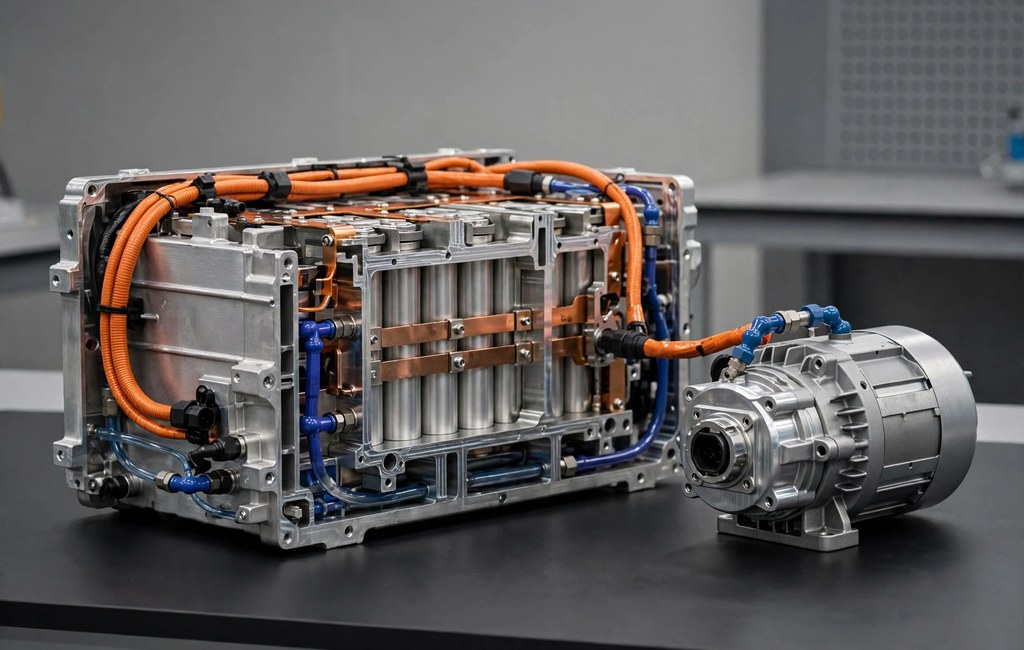
The Hybrid Car Traction Battery Pack
The traction battery stores energy for the electric motors. Specifically, full hybrids use high-voltage packs for meaningful assistance. In contrast, mild hybrids use smaller 48-volt packs instead.
Also, the pack sits low in the chassis usually. Therefore, placement improves balance and protects the pack structurally. Meanwhile, cooling systems manage pack temperature during hard use.
Notably, the system keeps charge within a protective middle range. Consequently, the pack rarely charges fully or empties completely. Over time, this careful management extends battery service life.
Battery Chemistries in Plain Terms
Most packs use nickel-metal hydride or lithium-ion cells. First, nickel-metal hydride chemistry offers proven durability and tolerance. Second, lithium-ion chemistry stores more energy per pound overall.
In addition, individual cells group into modules inside the pack. Therefore, technicians sometimes service modules rather than entire packs. Still, specialist training governs all high-voltage battery work.
Because temperature extremes stress every battery chemistry, cooling matters greatly. For example, blocked cooling vents raise pack temperatures quickly. As a result, clean vents protect longevity very directly.
Hybrid Car Electric Motors and Motor-Generators
Electric motors convert stored electricity into wheel torque instantly. However, the same machines also work backward as generators. During braking, they generate electricity and recharge the pack.
Specifically, many hybrids use two separate motor-generator units. First, one unit mainly starts the engine and generates power. Second, the larger unit mainly drives the wheels forward.
Meanwhile, power electronics convert direct current into alternating current. In addition, an inverter controls motor speed and torque precisely. Consequently, responses feel immediate, smooth, and remarkably quiet. An automatic hybrid car saves the most fuel during slow city trips.
The Separate 12-Volt Battery
Hybrids also keep a small conventional 12-volt battery aboard. Notably, it powers computers, lights, and cabin accessories reliably. Therefore, a weak 12-volt battery can prevent startup entirely.
- Traction battery: It supplies high-voltage power for propulsion and assistance.
- 12-volt battery: It wakes the electronics and runs everyday accessories.
- Inverter: It converts current types and commands motor behavior.
- Cooling system: It protects batteries and electronics from damaging heat.
Overall, batteries and motors form one integrated electrical system. Indeed, each part depends on the others for performance. In short, healthy electrics deliver the signature hybrid smoothness.
In addition, regenerative current flows back through the inverter smoothly. Meanwhile, battery software limits charging rates during cold conditions. Consequently, the pack accepts energy safely across changing weather.
Hybrid Car Fuel Economy and Driving Performance
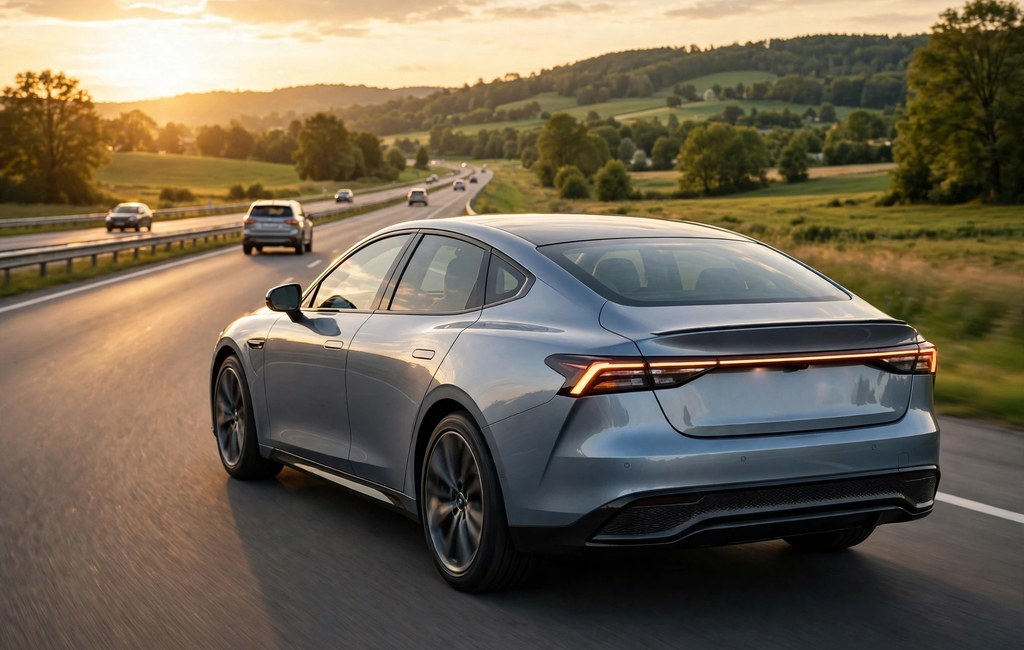
Why a Hybrid Car Uses Less Fuel
Hybrids save fuel by wasting far less energy overall. First, electric assistance lets engines avoid inefficient operating zones. Second, automatic shutdown eliminates fuel use during stops.
Understanding why hybrids save fuel in city traffic starts with repeated stops and restarts. Indeed, city driving creates constant recovery opportunities for hybrids. Consequently, city results often beat highway results noticeably.
Also, many hybrid engines use efficiency-focused combustion cycles. Specifically, these cycles trade some peak power for economy. Meanwhile, electric torque compensates for that traded power completely.
Hybrid Car City Driving Advantages
In stop-and-go traffic, electric motors shine most brightly. For example, launches use stored energy instead of gasoline. Then, braking returns part of that energy automatically.
However, conventional cars waste launch and braking energy entirely. In contrast, hybrids recycle energy across every traffic cycle. As a result, frequent commuters notice the largest savings.
Still, cold starts reduce efficiency during short winter trips. Because the engine warms its systems, it runs longer initially. Nevertheless, longer trips restore the usual hybrid advantage. An automatic hybrid car recaptures energy that friction brakes waste as heat.
Hybrid Car Highway Driving Realities
During highway cruising, the engine works almost continuously. Therefore, electric assistance contributes less at steady high speeds. Meanwhile, aerodynamics and speed dominate fuel use instead.
For instance, faster cruising raises air resistance very sharply. Consequently, moderate speeds protect highway economy in any car. Also, hybrids still benefit from efficient engine tuning here.
In addition, plug-in hybrids consume stored charge early on highways. Afterward, they operate like full hybrids for remaining miles. Overall, expectations should match route and speed patterns.
Performance Feel and Acceleration
Electric torque arrives instantly without waiting for engine revs. Therefore, hybrids respond eagerly from lights and junctions. Indeed, initial acceleration often surprises first-time hybrid drivers.
However, sustained acceleration leans more heavily on the engine. Meanwhile, transmission tuning sometimes holds steady high engine speeds. As a result, sound and speed feel slightly disconnected sometimes.
- Instant torque: It makes low-speed response feel brisk and effortless.
- Quiet launches: They reduce stress during dense, slow-moving traffic conditions.
- Smooth blending: It keeps power delivery continuous during mode changes.
- Steady cruising: It favors efficiency over dramatic engine sound effects.
Overall, hybrids prioritize effortless progress over theatrical performance feel. Specifically, smoothness and economy define their performance character best. In short, calm strength replaces noise and drama.
Notably, route choice influences results as much as vehicle design. For example, flowing routes beat congested routes for every powertrain. Still, hybrids lose less efficiency when congestion slows traffic.
Regenerative Braking Technology
Turning Motion Back Into Energy
Regenerative braking converts forward motion into stored electricity. Specifically, the drive motor reverses roles and becomes a generator. Therefore, slowing down simultaneously recharges the traction battery.
A detailed look at how regenerative braking works shows this energy loop clearly. Indeed, conventional brakes waste that same energy as heat. In contrast, hybrids recover a useful portion every stop.
However, regeneration never recovers all braking energy completely. Because conversion steps lose some energy as heat anyway. Still, recovered energy meaningfully improves overall efficiency results. Compared with conventional models, an automatic hybrid car idles far less.
Blending Regenerative and Friction Brakes
Hybrids still carry conventional friction brakes for complete safety. First, regeneration handles light and moderate slowing demands. Second, friction brakes add force during harder stops.
Meanwhile, a brake controller blends both systems almost invisibly. For example, pedal feel stays consistent across varying speeds. Consequently, drivers brake normally without learning special techniques.
When the battery reaches its charge limit, regeneration fades. Then, friction brakes assume nearly all stopping work automatically. As a result, stopping power remains dependable in all conditions.
How Regeneration Changes Brake Wear
Because motors handle much routine slowing, friction parts rest more. Therefore, pads and rotors often last considerably longer. Still, inspections remain essential for safety and performance.
However, lightly used brakes sometimes develop surface corrosion issues. For instance, moisture attacks rarely heated rotor surfaces overnight. Consequently, occasional firmer stops help keep surfaces clean.
Driving Feel and One-Pedal Sensations
Lifting the accelerator triggers noticeable regenerative slowing in hybrids. Notably, some models let drivers adjust regeneration strength levels. Therefore, downhill control improves without riding the brake pedal.
- Gentle lift-off: It produces mild slowing plus steady battery recovery.
- Strong settings: They slow the car firmly during downhill driving.
- Brake pedal: It blends regeneration and friction braking seamlessly together.
Overall, regenerative braking turns every slowdown into an opportunity. Indeed, wasted heat becomes useful stored energy instead. In short, this technology anchors hybrid efficiency gains.
Automatic Hybrid Cars vs Conventional Cars
Powertrain and Transmission Differences
Conventional cars rely on one engine and stepped gearboxes. In contrast, hybrids add motors, batteries, and intelligent controls. Therefore, hybrids manage energy actively throughout every journey.
A direct hybrid vs gasoline automatic cars comparison highlights everyday ownership differences clearly. Specifically, fuel use, noise, and maintenance patterns diverge most. Meanwhile, basic driving controls remain reassuringly familiar.
Also, conventional automatics shift through fixed gears with pauses. However, hybrid eCVT systems vary ratios without distinct steps. Consequently, hybrid progress feels smoother during gentle driving. Regular checks keep an automatic hybrid car reliable for many years.
Efficiency and Emissions Differences
Hybrids burn less fuel during most mixed driving patterns. As a result, they also produce lower tailpipe emissions overall. Indeed, engine shutdown at stops cuts urban emissions noticeably.
Nevertheless, highway-heavy drivers see smaller efficiency gaps sometimes. Because steady cruising favors conventional engine efficiency as well. Still, hybrids rarely lose their overall economy advantage.
Driving Character Differences
Conventional cars deliver power with familiar engine sounds. Meanwhile, hybrids move silently at low speeds very often. Therefore, parking and neighborhood driving feel calmer and quieter.
For example, electric launches eliminate initial engine strain noises. In addition, smooth blending removes most shift sensations entirely. Overall, refinement, not excitement, defines the hybrid character.
Ownership and Maintenance Differences
Hybrids add high-voltage parts needing knowledgeable service care. However, they reduce brake wear and some engine strain. Consequently, maintenance mixes familiar tasks with hybrid-specific checks.
- Fuel stops: They happen less often during typical hybrid ownership.
- Brake wear: It drops because regeneration handles routine slowing work.
- Engine use: It falls during stops and gentle city movement.
- Service needs: They include battery cooling and inverter care checks.
In short, hybrids modernize automatic driving without changing its basics. Indeed, drivers keep familiar controls and gain efficiency technology. Overall, the differences reward calm, regular daily use.
Still, both types share automatic convenience and familiar controls. Indeed, neither type demands new licenses or special skills. Therefore, switching between them feels easy for most drivers.
Maintenance and Long-Term Reliability
Routine Service Still Matters
Hybrids still need regular engine oil and filter changes. Indeed, the gasoline engine accumulates wear like any engine. Therefore, owners should follow scheduled service intervals faithfully.
Good hybrid maintenance and battery care habits protect both mechanical and electrical systems. Specifically, cooling care and fluid freshness matter enormously here. Meanwhile, neglect harms complex hybrid components surprisingly quickly.
Also, tires, suspension parts, and steering components wear normally. Consequently, routine inspections cover hybrids much like conventional cars. In addition, correct tire pressures protect fuel economy directly. Ignoring warnings lets small automatic hybrid car faults grow worse quickly.
Cooling Systems Need Special Attention
Hybrids run separate cooling circuits for electronics and batteries. First, the inverter generates substantial heat during power conversion. Second, battery packs perform best within moderate temperature ranges.
Therefore, coolant condition and pump health deserve regular checks. For example, a failing electric pump overheats electronics very rapidly. As a result, warning lights demand prompt professional attention.
However, blocked battery vents cause many avoidable overheating problems. Notably, cabin air often cools the battery pack directly. Still, owners must keep rear seat vents uncovered always.
Brake Service and Fluid Care
Regeneration reduces pad wear but never eliminates brake maintenance. Meanwhile, brake fluid still absorbs moisture over time steadily. Therefore, scheduled fluid replacement protects braking performance and components.
Also, calipers and rotors suffer when cars sit unused. For instance, corrosion builds quickly during long parking periods. Consequently, regular driving keeps brake surfaces healthier overall.
Long-Term Reliability Patterns
Overall, hybrid systems have earned strong long-term reliability reputations. Specifically, fewer friction parts reduce transmission wear significantly. In addition, electric assistance lowers engine stress during launches.
Still, age eventually affects every battery pack gradually. Over time, capacity fades and electric assistance weakens noticeably. However, gradual fading differs from sudden complete failure.
- Fluid checks: They protect the engine, inverter, and braking systems.
- Vent care: It keeps battery temperatures within safe operating ranges.
- Warning lights: They deserve diagnosis before small faults grow larger.
- Regular driving: It maintains batteries, brakes, and engine health together.
In short, disciplined maintenance rewards owners with dependable hybrid service. Indeed, most reliability stories reflect care habits, not luck. Overall, prevention always beats component replacement later.
Also, software updates occasionally refine hybrid system behavior noticeably. Therefore, service visits should include update checks for owners. In addition, technicians inspect high-voltage cabling for damage carefully. Smooth habits help every automatic hybrid car age gracefully.
Common Automatic Hybrid Car Problems
Battery Weakness and Cooling Faults
Aging battery packs gradually lose usable capacity over time. As a result, the engine runs more often than before. Meanwhile, fuel economy declines as electric assistance shrinks.
Also, failed battery cooling fans trigger warning lights quickly. For example, dust clogs filters and overheats pack cells. Therefore, cooling faults deserve attention before capacity damage follows.
Owners noticing strange hybrid engine noises should also consider battery cooling fans. Indeed, fan sounds sometimes mimic deeper mechanical faults misleadingly. Consequently, proper diagnosis separates minor faults from serious ones.
Starting Problems and 12-Volt Failures
A weak 12-volt battery causes many hybrid starting failures. Specifically, the small battery wakes computers before startup begins. When it fades, the car may refuse readiness entirely.
Guides explaining why a hybrid car won’t start usually begin with 12-volt checks. Indeed, jump procedures differ slightly on many hybrid models. Therefore, owners should follow model guidance before attempting restarts.
Still, other faults also prevent starting on occasion. For instance, key recognition and brake switch faults block readiness. As a result, systematic checks beat guesswork every time.
Inverter, Pump, and Sensor Faults
The inverter handles heavy electrical loads during every drive. However, cooling pump failures let inverter temperatures climb dangerously. Consequently, the system limits power or shuts down protectively.
Also, sensor faults confuse the power blending computer sometimes. For example, inaccurate speed readings disrupt transmission decisions noticeably. Meanwhile, warning lights usually announce these faults early.
Unusual Noises and Warning Lights
New whines, rattles, or grinding sounds always deserve investigation promptly. Notably, electric pumps and fans add unfamiliar hybrid sounds normally. Still, changing sounds signal developing problems quite reliably.
- Economy drops: They often signal battery weakness or engine issues.
- Warning lights: They flag faults across hybrid and engine systems.
- Power loss: It suggests inverter, battery, or cooling trouble.
- No-start events: They frequently trace back to 12-volt weakness.
Overall, early diagnosis keeps hybrid problems small and manageable. Indeed, most faults announce themselves through clear symptoms first. In short, attentive owners avoid most serious hybrid failures. Altogether, an automatic hybrid car rewards calm and attentive driving.
Hybrid Car Driving Tips
Accelerate and Brake With Foresight
Gentle acceleration lets electric motors handle more work efficiently. Therefore, smooth throttle inputs protect fuel economy every trip. Meanwhile, anticipation reduces unnecessary braking and acceleration cycles.
For example, easing off early maximizes regenerative energy recovery. Then, gradual braking keeps recovery within motor limits longer. As a result, less energy escapes as brake heat.
However, traffic safety always outweighs economy technique considerations. Indeed, drivers should brake firmly whenever conditions demand it. Still, calm planning usually creates gentle driving naturally.
Manage Speed, Loads, and Climate
Moderate speeds protect efficiency on highways and rural roads. Because air resistance rises sharply, small reductions help noticeably. Also, removing roof loads improves aerodynamics between trips.
In addition, climate settings influence engine running time significantly. For instance, strong heating requests keep engines running longer. Consequently, moderate settings balance comfort and efficiency sensibly.
Use Modes and Displays Wisely
Energy displays teach efficient habits through instant feedback clearly. Specifically, they show power flow between engine, motor, battery. Therefore, drivers learn which inputs waste energy quickly.
Also, eco modes suit relaxed traffic and cruising well. Meanwhile, normal modes balance response and economy for most drivers. Overall, sport modes deserve occasional, purposeful use only.
Care Habits That Support Efficiency
Correct tire pressure preserves economy and handling safety together. In addition, timely maintenance keeps engines and electronics efficient. Over time, small habits compound into meaningful savings.
- Plan ahead: It reduces sudden stops and wasteful acceleration bursts.
- Travel light: It lets motors and engines move less mass.
- Monitor displays: They reveal habits that waste energy silently.
- Drive regularly: It keeps batteries and brakes in healthy condition.
In short, efficient hybrid driving feels calm and deliberate. Indeed, the technology rewards patience far more than aggression. Overall, smooth drivers unlock the full hybrid advantage.
Next, drivers should warm cabins moderately during cold mornings. Because strong demands extend engine running, restraint saves fuel. Overall, patient habits consistently deliver the best hybrid results.
Frequently Asked Questions
Do automatic hybrid cars need plugging in?
However, only plug-in hybrids need external charging for best results.
How long do hybrid batteries usually last?
Overall, most hybrid batteries serve many years under normal care.
Why does the engine start and stop often?
Therefore, the system stops the engine whenever electric power suffices.
Does regenerative braking replace regular brakes completely?
Instead, friction brakes still handle hard stops and final stopping.
Can a hybrid run with a weak battery?
Still, a weak battery reduces assistance and hurts fuel economy.
Conclusion
Automatic hybrids blend gasoline and electric power with remarkable intelligence. Indeed, eCVT systems, regenerative braking, and smart controls cooperate continuously. Therefore, drivers gain efficiency without surrendering familiar automatic manners.
Also, understanding types, batteries, and maintenance prevents most ownership surprises. Meanwhile, attentive drivers recognize symptoms before faults become serious. Consequently, knowledge turns hybrid technology into everyday confidence.
Overall, the best ownership approach combines knowledge, care, and patience. Indeed, hybrids reward drivers who understand their systems well.
Finally, start applying one smooth driving habit on your next trip. Also, book a hybrid inspection whenever warning lights appear persistently. In short, keep learning about improving your hybrid fuel economy and enjoy calmer, cleaner, smarter driving daily.

Thomas Walker is an accomplished writer with expertise in the basics of car accessories. With a keen eye for detail, Thomas has established himself as an authority on the subject, with a passion for all things automotive. Based in Jasper, Thomas is dedicated to providing readers with the information they need to make informed decisions when it comes to their car accessories.