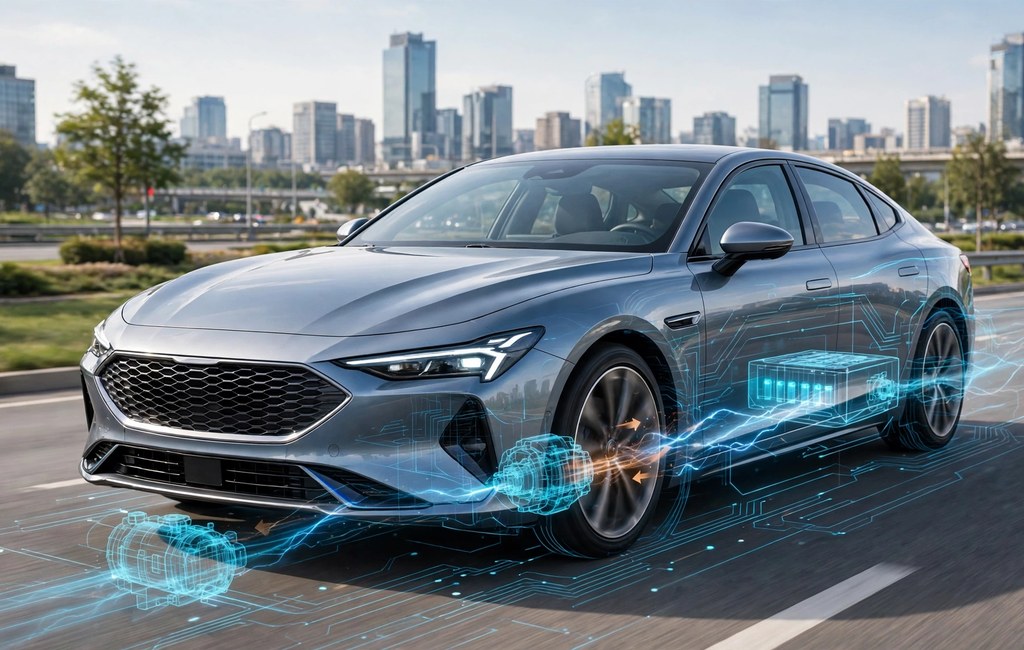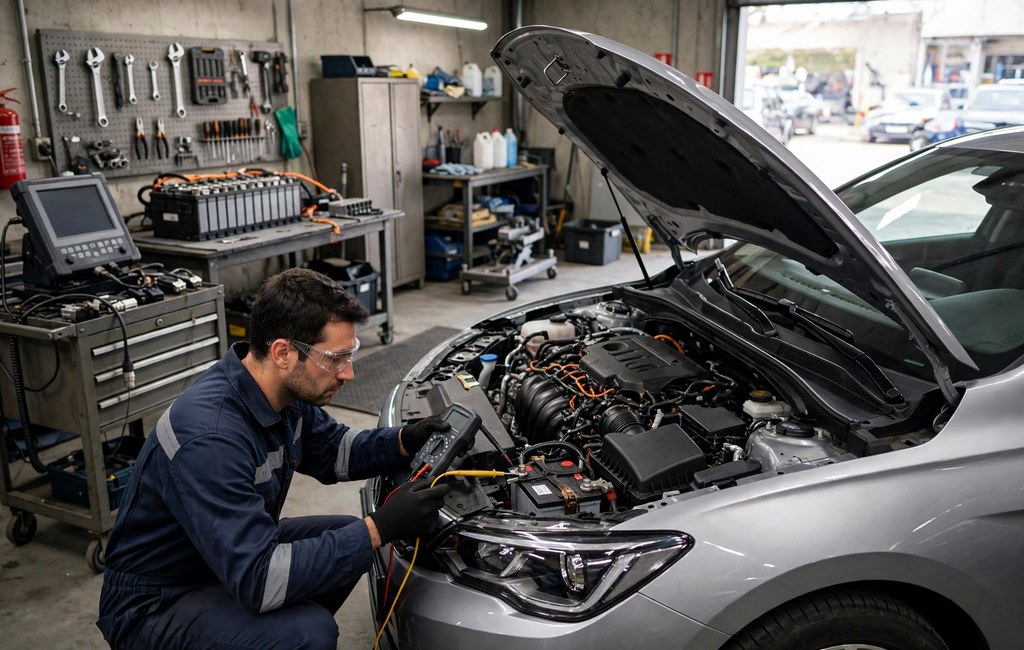
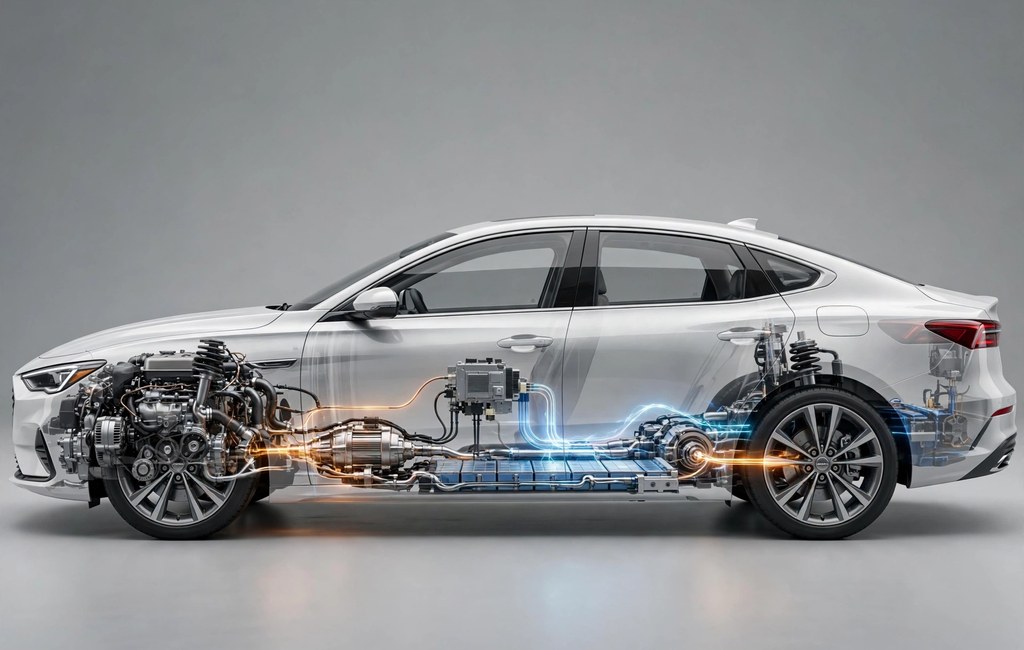
Automatic hybrid cars blend gasoline and electric power automatically during every drive. First, the electric motor moves the car quietly at low speeds. Then, the gasoline engine joins when stronger or sustained power becomes necessary.
For example, an automatic hybrid car coordinates its motor, engine, battery, and transmission without driver input. Meanwhile, sensors and controllers choose the most efficient power source every moment. As a result, your morning commute unfolds smoothly through several connected driving stages.
In addition, regenerative braking returns energy to the battery during each stop. In short, four main parts cooperate constantly to move the wheels efficiently.
What Happens When You Start Automatic Hybrid Cars?
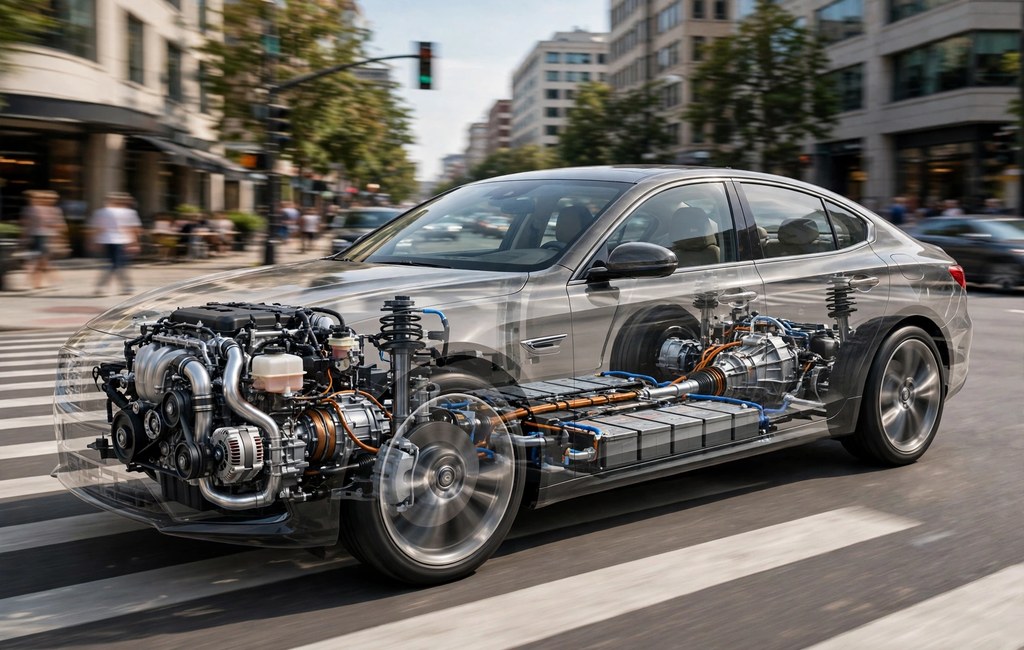
First, you press the start button and wake the control systems. Next, the high-voltage battery supplies electricity for the initial silent pull away. Meanwhile, the gasoline engine often stays off during this quiet low-speed departure.
Then, dashboard indicators confirm the system stands ready without engine noise. For example, cabin accessories draw battery power while the car waits briefly. However, the engine starts automatically when battery charge drops too low. In addition, cold conditions or cabin heating demands can trigger engine startup. Automatic hybrid cars repeat this sequence at every traffic light.
Leaving the Driveway Quietly
Specifically, gentle pedal pressure keeps the car in electric operation initially. As a result, neighbors hear almost nothing during an early morning departure. Still, firmer acceleration wakes the gasoline engine for extra pulling strength.
Before leaving, the system checks battery charge, temperatures, and driver demand. After checking, it selects electric drive when conditions allow efficient departure. Overall, startup feels calm because no starter motor cranks loudly.
How Electric Motors Assist the Gasoline Engine in Hybrid Cars
During acceleration, the electric motor delivers instant torque from a standstill. Therefore, the gasoline engine avoids its least efficient low-speed workload. For instance, merging traffic feels smoother because both sources push together. Automatic hybrid cars decide each switch in fractions of a second.
In addition, the motor fills power gaps while the engine builds speed. Similarly, climbing a gentle hill demands less effort from the engine alone. When demand falls, the motor reduces support and conserves stored battery energy.
- Instant launch support: It helps the car move promptly without engine strain.
- Steady hill assistance: It adds torque so the engine maintains efficient operation.
- Smooth passing boost: It supplements engine power during brief overtaking maneuvers.
During stop-and-go traffic, repeated motor assistance reduces engine cycling significantly. Also, instant torque closes small traffic gaps without harsh engine revving. Consequently, everyday driving feels responsive even when speeds stay quite low.
How the Battery Supplies Power in Automatic Hybrid Cars
First, the hybrid battery stores electricity for the electric motor. Then, an inverter converts stored direct current into usable alternating current. Meanwhile, a battery controller monitors charge level and temperature continuously. Automatic hybrid cars lean on electricity most at low speeds.
During braking, regenerative braking sends recovered energy back into the pack. Also, the gasoline engine can drive a generator for additional charging. However, the system protects the battery by avoiding full charges and discharges.
How Charge Stays Balanced Over Time
Over time, controllers alternate charging and discharging in small controlled cycles. Consequently, the pack stays within its most durable operating range daily. In fact, full hybrid packs supply longer electric assistance than mild systems.
Notably, plug-in versions store more energy for longer electric driving stretches. In particular, their larger packs accept charging from an external outlet. Otherwise, mild hybrid systems provide brief assistance from smaller 48-volt packs.
How the Transmission Controls Movement in Hybrid Cars
First, many hybrids use an electronically controlled continuously variable transmission design. Instead, a power-split device blends engine and motor power through planetary gears. As a result, the wheels receive smooth power without distinct gear steps. Automatic hybrid cars recharge quietly while they slow down.
During driving, the transmission varies effective ratios continuously for changing speeds. Similarly, the controller coordinates engine speed independently from actual road speed. For example, the engine can charge the battery while the wheels turn slowly.
Meanwhile, other automatic designs use stepped gears with integrated electric motors. Overall, in both designs, software manages torque delivery without driver shifting.
Notably, the power-split arrangement also lets one motor act as generator. Then, the second motor primarily drives the wheels during electric operation. Overall, this coordination replaces conventional shifting with continuous electronic control.
How Hybrid Cars Switch Between Electric and Gasoline Power
When traffic slows, the controller favors electric drive for quiet crawling. Then, the engine shuts down automatically at complete stops to save fuel. Next, moderate acceleration often blends both sources for balanced efficient progress. Automatic hybrid cars need no shifting from the driver at all.
During steady cruising, the gasoline engine usually handles most sustained propulsion. However, downhill stretches let the motor recover energy and recharge quietly. Similarly, gentle braking begins regeneration before friction brakes add stopping force.
In contrast, hard acceleration commands maximum combined output from both sources immediately. Finally, parking maneuvers return to silent electric operation at very low speeds. In short, switching happens automatically and follows speed, load, and charge.
Before arrival, low-speed streets again favor electric drive and quieter operation. After parking, the system preserves remaining charge for the next departure. Indeed, the whole commute requires no manual selection between power sources.
Frequently Asked Questions
Can a hybrid car start moving without the gasoline engine running?
Yes, it can, because the battery powers the electric motor initially.
How does regenerative braking recharge the hybrid battery during driving?
During braking, the motor becomes a generator and stores recovered energy.
When does a hybrid car switch from electric to gasoline power?
It switches automatically when speed, load, or low charge demands more power.
Does the driver need to shift gears in an automatic hybrid?
No, the transmission manages ratios and power blending without driver shifting.
Why does the gasoline engine sometimes run while the car is stopped?
In fact, it sometimes runs to recharge the battery or provide heat.
Conclusion
Overall, an everyday commute shows four components cooperating in constant sequence. First, the battery feeds the motor for quiet starts and low speeds. Then, the engine adds sustained power while the transmission blends everything smoothly.
Next, watch your energy display during tomorrow’s commute and notice each switch. For example, notice silent starts, blended acceleration, and energy recovery while braking. Finally, apply this awareness by accelerating gently and braking early each trip.

Thomas Walker is an accomplished writer with expertise in the basics of car accessories. With a keen eye for detail, Thomas has established himself as an authority on the subject, with a passion for all things automotive. Based in Jasper, Thomas is dedicated to providing readers with the information they need to make informed decisions when it comes to their car accessories.