
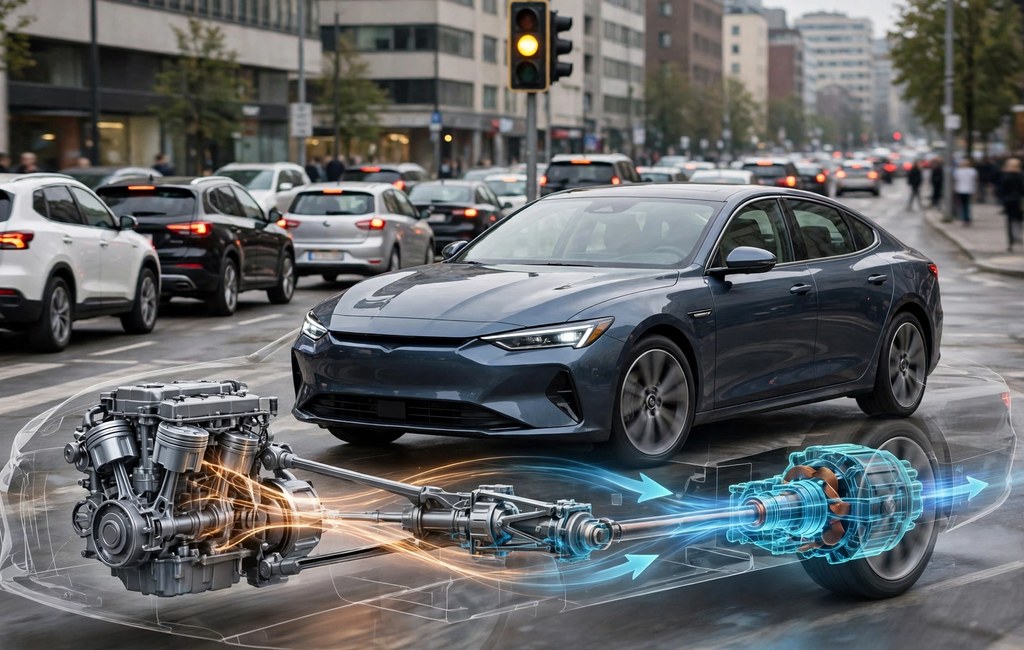
Hybrid cars earn their best city mileage in slow, stop-and-go traffic. Instead, electric assistance, engine shutoff, and regenerative braking turn stops into savings. Consequently, city driving becomes an advantage rather than a penalty.
For example, an automatic hybrid car pairs electric help with gasoline power during slow crawls. Therefore, the system avoids the waste that hurts conventional cars in traffic. Meanwhile, gasoline cars usually lose efficiency whenever traffic forces repeated stops.
However, three simple mechanisms explain this surprising flip in results. Next, this guide unpacks each mechanism step by step. Overall, slow streets let hybrid technology work most often.
How Stop-and-Go Traffic Shapes Hybrid Cars City Mileage
First, city traffic forces drivers to brake, wait, and accelerate repeatedly. During each cycle, a conventional engine burns fuel without covering distance. For example, idling at lights wastes fuel while wheels stay still.
Then, each launch from rest demands extra energy from the engine. Similarly, friction brakes throw away motion energy as heat. In contrast, hybrids treat these same moments as useful opportunities. Hybrid cars build city mileage through hundreds of small recoveries.
Still, traffic speed changes constantly across short city blocks. Before each stop, drivers release energy they just built. Then, they pay fuel again to regain that speed.
Why Hybrid Cars Beat Them on City Mileage
Specifically, low speeds keep conventional engines in inefficient operating ranges. Also, repeated acceleration rebuilds speed that braking just removed. As a result, city routes punish gasoline cars especially hard.
Why Electric Motors Help Hybrid Cars in the City
First, electric motors deliver strong pulling power immediately from rest. Therefore, the motor handles launches smoothly without straining the engine. For instance, gentle starts often need only brief electric assistance. Hybrid cars protect city mileage when drivers brake early.
Meanwhile, gasoline engines waste more fuel during slow, light-load driving. Instead, hybrid systems let the motor cover those inefficient moments. Consequently, the engine runs less often and under better conditions.
- Instant torque: It helps the car move promptly from rest.
- Quiet creeping: It lets the car crawl slowly through congestion.
- Light assistance: It reduces engine effort during gentle acceleration.
How Electric Help Changes Each Launch
Specifically, a power-split system blends motor and engine power smoothly. During light demand, the system favors quiet electric driving. When demand rises, both sources share work efficiently instead.
Notably, many hybrid engines use the Atkinson cycle for efficiency. In fact, this design favors efficiency over peak power output. Therefore, electric help offsets that tradeoff during brisk acceleration. Hybrid cars lose city mileage during short cold trips.
How Engine Shutoff Raises City Mileage for Hybrid Cars
When the car stops, the hybrid system shuts the engine off. Therefore, the car burns no fuel while waiting at lights. For example, long queues stop wasting fuel during every pause.
Next, the motor restarts movement instantly when traffic moves again. Also, the engine restarts quickly only when power demands it. In addition, stored battery energy powers accessories during each stop.
However, the system still restarts the engine when needed. For example, strong acceleration or low battery charge triggers restart. Overall, shutoff targets waste without removing available power.
Why Idling Hurts Conventional Cars
Meanwhile, a conventional engine keeps burning fuel at standstill. In contrast, that fuel produces heat and noise, not distance. Over time, repeated idling adds steady waste across short trips. Hybrid cars post city mileage that surprises many owners.
Regenerative Braking and City Mileage in Hybrid Cars
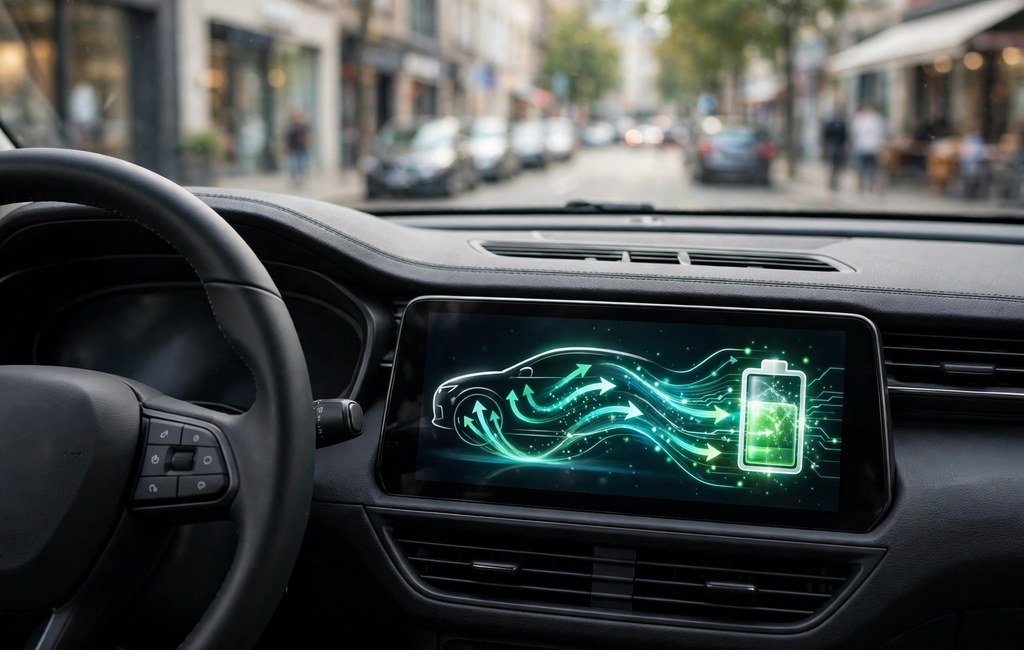
First, regenerative braking turns the motor into a generator while slowing. Therefore, the system captures motion energy instead of losing it. For instance, the battery stores recovered electricity for later launches.
Meanwhile, friction brakes still help during harder or final stops. Similarly, gentle braking usually recovers more energy than sudden braking. As a result, frequent city stops become repeated charging opportunities.
- Energy recovery: It captures a portion of braking energy.
- Battery support: It stores recovered energy for electric assistance.
- Brake balance: It works alongside friction brakes for safety.
Why Gentle Slowing Raises Hybrid Cars City Mileage
Next, recovered energy reduces how often the engine charges. In addition, smoother slowing helps drivers preserve momentum around traffic. Over time, small recoveries add up across busy routes.
Why Highway Mileage Can Be Different
On highways, drivers hold steady speeds for long stretches instead. Therefore, cars face fewer stops and fewer braking events. Consequently, hybrids gain fewer chances to recover braking energy. Hybrid cars defend city mileage with automatic engine shutoff.
Meanwhile, air resistance rises sharply as speed increases steadily. Therefore, the gasoline engine does most highway cruising work. Also, the motor offers smaller assistance at sustained speeds.
However, hybrids still use efficient engines and smart power management. In fact, the system still chooses the most efficient source. In contrast, the advantage simply narrows outside stop-and-go conditions.
- Steady cruising: It favors the engine over electric power.
- Less braking: It limits chances for regenerative energy recovery.
- Higher drag: It forces the powertrain to work harder.
Overall, highway mileage remains strong without matching city results. Specifically, uninterrupted flow removes the conditions hybrids exploit best. Still, efficient engine tuning helps during long highway drives.
Frequently Asked Questions
Why do hybrid cars use less fuel for city mileage?
Because frequent stops let hybrids recover energy, shut off, and restart electrically.
Do hybrids use electric power at highway speeds?
Also, motors assist on highways, but engines handle most sustained cruising.
What does regenerative braking do in a hybrid?
For example, it converts slowing motion into electricity and stores it.
Why does idling waste fuel in conventional cars?
Meanwhile, an idling engine burns fuel while the car gains no distance.
Can gentle braking improve hybrid efficiency in traffic?
Indeed, gentle braking gives the system more time to recover energy.
Conclusion
In short, city traffic plays directly to hybrid strengths. Electric help, automatic shutoff, and regenerative braking reduce repeated waste. Therefore, slow streets often reward hybrids more than highways.
Next, watch your own driving pattern during one week. Then, notice how often you brake, idle, and accelerate gently. Finally, choose smooth, gentle driving whenever your next trip allows.

Thomas Walker is an accomplished writer with expertise in the basics of car accessories. With a keen eye for detail, Thomas has established himself as an authority on the subject, with a passion for all things automotive. Based in Jasper, Thomas is dedicated to providing readers with the information they need to make informed decisions when it comes to their car accessories.