

White blue black smoke tells you which fluid burns inside your engine. White smoke usually signals condensation or burning coolant. Blue smoke signals burning oil, while black smoke signals excess fuel. Color alone never proves the exact failed part.
Each color also carries different smells, timing clues, and repair urgency for drivers. Therefore, this comparison separates the three colors clearly and shows practical next steps. You will learn how to spot harmless vapor, catch oil burning early, and recognize rich fuel mixtures. Finally, simple checks help you decide between monitoring the car and booking a repair.
How to Compare White, Blue, and Black Smoke
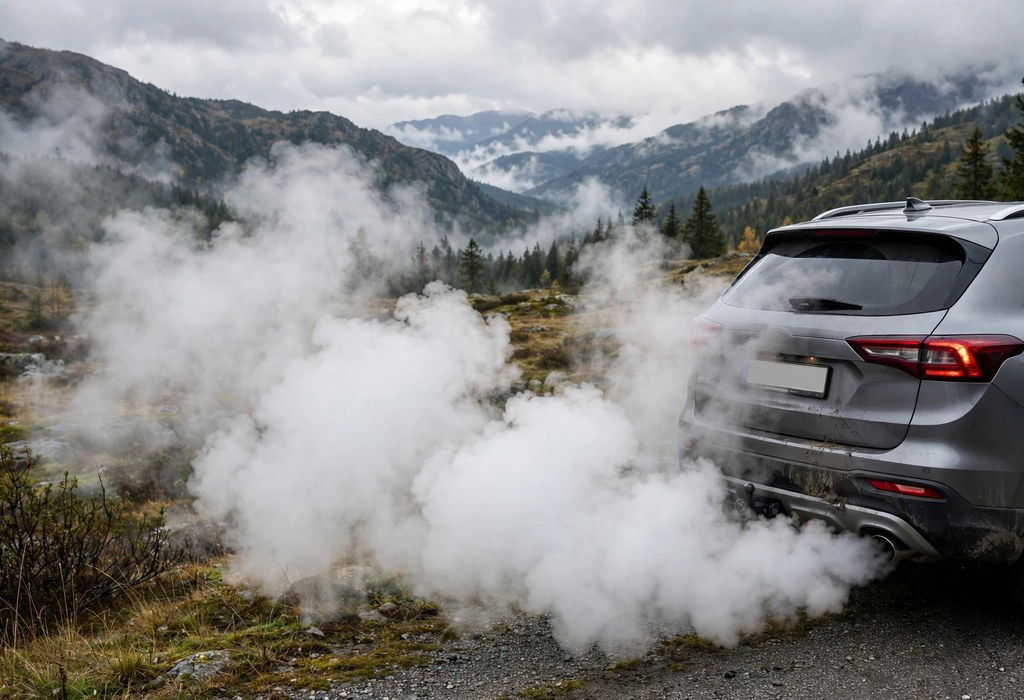
If you landed here confused, start with the complete breakdown of white smoke from exhaust first. Next, compare thickness, smell, timing, and fluid levels before you draw conclusions. Also, note whether smoke appears at startup, idle, acceleration, or steady cruising.
Thin vapor that clears quickly usually deserves less worry than thick, persistent smoke. In contrast, heavy smoke that lingers, smells strong, or pairs with warning lights needs prompt attention. Moreover, fluid loss, rough running, and falling fuel economy sharpen the diagnosis considerably.
White Smoke vs Blue and Black Smoke: Condensation or Coolant
What Causes White, Blue, and Black Smoke
Cold exhaust systems collect moisture overnight, so thin white vapor often clears after warm-up. However, a failing head gasket lets coolant slip into cylinders and burn as thick steam. Similarly, a cracked cylinder head or intake gasket leak can push coolant into combustion chambers.
What White Smoke Smells Like
Coolant smoke often smells sweet, almost like syrup, and feels damp in the air. In contrast, harmless condensation carries almost no smell and disappears within minutes. Drivers often compare white smoke from exhaust normal patterns before they suspect coolant trouble.
What to Do About White Smoke
First, check the coolant reservoir level and watch for steady drops over several drives. Next, watch the temperature gauge closely and stop driving if overheating starts. Also, inspect the oil dipstick for milky residue, since coolant contamination changes oil appearance. Finally, book a cooling system pressure test promptly when thick smoke persists after warm-up.
Blue Smoke vs White and Black Smoke: Burning Engine Oil
What Causes Blue, White, and Black Smoke
Worn piston rings let oil slip past pistons into combustion chambers during normal driving. Similarly, aging valve seals allow oil to seep down valve guides and burn at startup. Additionally, a stuck PCV valve or failing turbo seal can push oil toward hot exhaust parts.
What Blue Smoke Smells Like
Burning oil often smells acrid and harsh, much like overheated cooking oil. In contrast, the smell differs sharply from sweet coolant steam and fuel-rich exhaust. Also, blue-gray haze often looks thinner than black soot but thicker than light steam.
What to Do About Blue Smoke
Check the oil level regularly and track how quickly it drops between top-ups. Note when smoke appears, since startup puffs often point toward valve seals. Meanwhile, steady smoke under acceleration often points toward piston rings or turbo seals. Schedule an inspection promptly, because low oil levels damage bearings and catalytic converters.
Black Smoke vs White and Blue Smoke: Excess Fuel
What Causes Black, White, and Blue Smoke
A rich mixture feeds too much fuel for available air, so unburned fuel exits as soot. Clogged air filters, leaking injectors, and faulty oxygen sensors commonly upset that balance. Similarly, a faulty mass airflow sensor, boost leak, or fuel pressure fault can enrich mixtures.
What Black Smoke Smells Like
Black smoke often smells strongly of raw fuel and leaves soot around the tailpipe. In contrast, drivers rarely notice sweetness, since fuel dominates the exhaust odor. Also, fuel economy often drops noticeably, while the engine may idle roughly or hesitate.
What to Do About Black Smoke
Inspect the air filter and replace it when dirt blocks airflow into the engine. A beginner guide car exhaust smoke overview explains tailpipe basics for new drivers clearly. Next, ask a technician to test injectors, sensors, and fuel pressure for faults. Finally, avoid long delays, because excess fuel fouls spark plugs and damages catalytic converters.
White vs Blue vs Black: Side-by-Side Differences
White smoke centers on water or coolant, blue smoke centers on oil, and black centers on fuel. Therefore, smell offers a fast shortcut: sweet suggests coolant, acrid suggests oil, fuel suggests richness. Timing adds another clue, since condensation clears quickly and fuel smoke persists under load.
Also, check fluid trends alongside color, because coolant loss, oil loss, and fuel waste differ sharply. For example, falling coolant with sweet steam points one way, while falling oil points another. Consequently, you can describe color, smell, timing, and fluid loss clearly to a technician.
How Timing Helps You Tell White, Blue, and Black Smoke Apart
Startup-only smoke often signals valve seals, condensation, or cold fuel enrichment. In contrast, smoke under hard acceleration often signals piston rings or turbo seal wear. Meanwhile, steady smoke at idle often signals PCV trouble, valve seals, or a persistent leak.
Also, note weather effects, because cold mornings exaggerate harmless vapor considerably. However, warm engines should produce nearly invisible exhaust during steady driving. Therefore, persistent color after full warm-up deserves investigation rather than waiting.
When White, Blue, or Black Smoke Means Stop Driving
Stop driving promptly when thick smoke pairs with overheating, power loss, or warning lights. Similarly, stop quickly when coolant or oil levels drop fast during a short drive. Also, pull over safely when the engine knocks, stalls, or smells strongly of burning fluid.
Let the engine cool fully before you check coolant or oil levels. Never open a hot cooling system cap, since pressurized coolant can cause serious burns. Finally, call for roadside help rather than risking severe engine damage on the road.
Frequently Asked Questions
What Does White Smoke From the Exhaust Mean?
Thin white vapor usually means condensation, while thick sweet smoke usually means burning coolant.
What Does Blue Smoke From the Exhaust Mean?
Blue smoke means the engine burns oil through worn rings, seals, or turbo components.
What Does Black Smoke From the Exhaust Mean?
Black smoke means the engine runs rich with too much fuel for available air.
Is It Safe to Drive With Colored Exhaust Smoke?
Light vapor often stays safe briefly, but thick persistent smoke needs prompt professional inspection.
Can Exhaust Smoke Color Identify the Exact Failed Part?
Color narrows the faulty system quickly, but technicians confirm the exact part through testing.
Conclusion
Color gives you a powerful first clue, but smell, timing, and fluid levels complete the picture. White points toward water or coolant, blue points toward oil, and black points toward fuel. Therefore, act early on persistent smoke instead of waiting for a small fault to grow.
Check your fluid levels today, note the smoke color and timing, and record any unusual smells. Then book a diagnostic inspection promptly and share those details with your technician. Early action protects your engine, preserves fuel economy, and prevents costly roadside breakdowns.
Use this white blue black smoke comparison to identify the burning fluid fast. Keep this white blue black smoke guide handy for your next tailpipe check.

Thomas Walker is an accomplished writer with expertise in the basics of car accessories. With a keen eye for detail, Thomas has established himself as an authority on the subject, with a passion for all things automotive. Based in Jasper, Thomas is dedicated to providing readers with the information they need to make informed decisions when it comes to their car accessories.