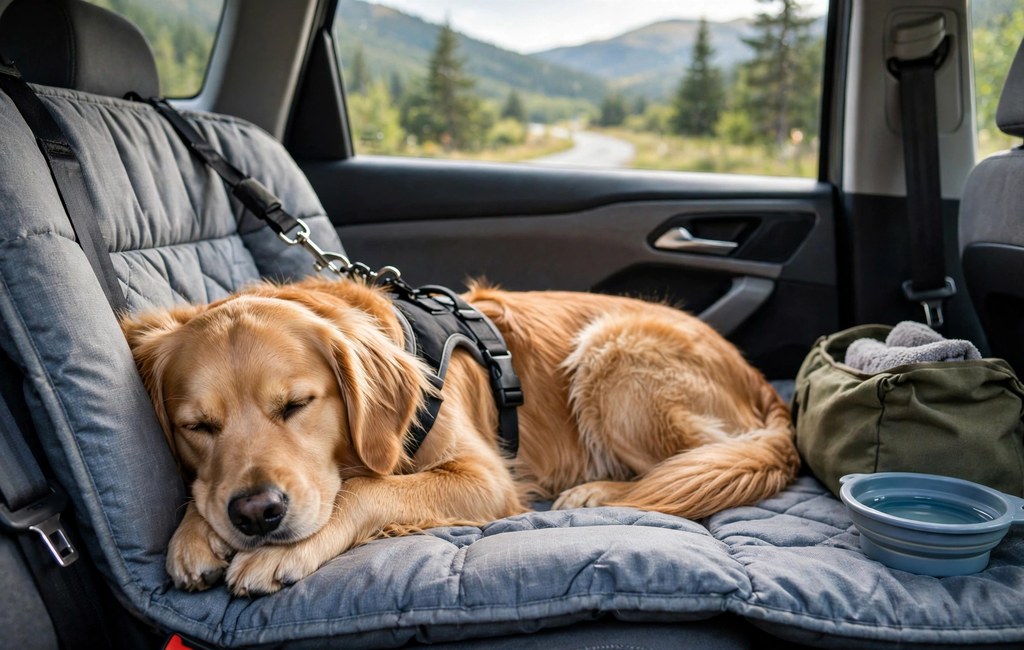
Large dogs travel best with a wide, flat resting area and a secure harness fit. A spacious back seat or cargo area gives your dog room to stretch, settle, and shift position. Supportive padding, non-slip footing, and steady restraint keep longer rides calmer and safer.
First, measure your dog from nose to tail base while your dog stands naturally. You can shape a comfortable dog car seat around your dog’s size, habits, and vehicle layout. Then compare that length with the seat width, headroom, and door opening in your vehicle.
Additionally, watch how your dog settles during a short test ride before a long journey. Calm breathing, relaxed posture, and easy position changes signal a workable setup for travel.
How Much Space Does a Large Dog Seat Need?
Big breeds often sprawl, stretch their legs, and turn around before they settle down. Therefore, allow enough floor length for a full stretch plus a small margin at each end. Also leave headroom for sitting upright without touching the roof.
Measure chest width, shoulder height, and resting length before you choose any layout. Meanwhile, check door width and seat height, because entry space matters as much as resting space.
What Changes With Giant Breeds
Giant breeds like Great Danes need broader surfaces and wider turning room. However, even a medium-large dog benefits from extra width on bumpy roads. Consequently, size the setup for your largest expected passenger, not just your current dog alone.
Supportive Large Dog Seat Surfaces Protect Joints
Firm padding spreads weight evenly and reduces pressure on hips and shoulders. In contrast, soft sagging surfaces let heavy bodies sink, slide, and strain joints during turns. Choose a dense foam base with a grippy, washable top layer for daily use and muddy trips.
Orthopedic-style foam helps senior dogs rise, lie down, and rest without sinking into gaps. Furthermore, a flat surface beats a lumpy fold, because gaps tilt hips and interrupt restful sleep. Check seams, edges, and anchor straps regularly, and replace worn padding before trips grow uncomfortable.
- Surface test: Press the centre firmly with both hands first. Next watch whether the foam rebounds quickly and evenly.
- Joint check: Watch your dog stand, turn, and lie down slowly. Afterward note any hesitation, slipping, or uneven weight bearing.
- Cleaning routine: Shake loose hair and dirt outside after every trip. Later wipe the top layer clean before odours settle deeply.
- Fit reminder: Recheck strap tension after your dog settles into position. Before driving, adjust any loose edge carefully.
Back-Seat Setups for Large Dogs
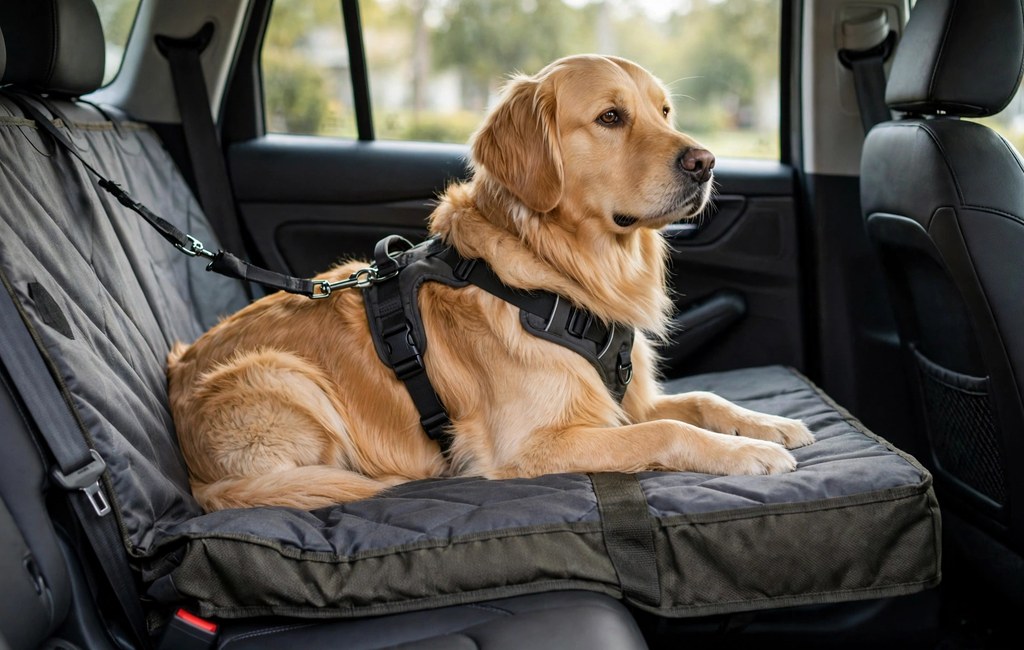
The back seat suits most large dogs and keeps them away from front airbags. A bench layout spans the full width and gives a large dog continuous resting space. Similarly, a hammock layout blocks the footwell gap and creates a level, contained resting area.
Start with a full-width base and side flaps for door protection. A sturdy dog car seat cover also protects upholstery from claws, mud, and shedding during travel. Moreover, anchor straps and non-slip backing stop the base from bunching under shifting weight.
Bench Versus Hammock Layouts
Bench layouts suit dogs that sprawl sideways, rest their heads low, and shift positions often. Hammock layouts suit restless dogs, because raised sides discourage stepping into the footwell gap. Nevertheless, test both layouts briefly, because your dog’s habits matter more than general layout claims.
SUV and Cargo-Area Setups
SUV cargo areas offer flat floors, tall headroom, and generous length for giant breeds. However, cargo setups still need restraint, because an unrestrained dog can slide during sudden stops. A cargo barrier prevents forward movement into the cabin during stops.
Use a flat, non-slip mat across the cargo floor, and secure loose edges before loading. Additionally, place familiar bedding on top, because familiar scent calms many dogs during travel. Keep ventilation flowing and avoid stacking luggage beside your dog.
Ramps and Easy Entry
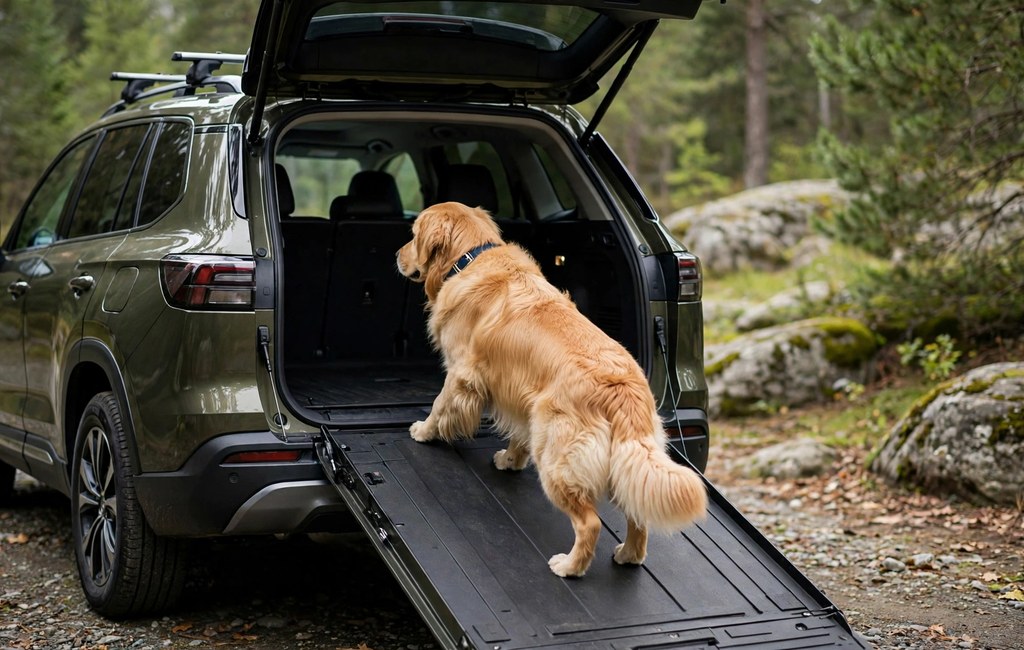
Many Labradors, Shepherds, and seniors struggle with high lift-over heights, especially dogs with stiff joints. Therefore, use a sturdy ramp with a non-slip surface and a gentle slope for loading. Train ramp use with treats at ground level before vehicle loading.
Fitting a Large Dog Seat Restraint
Restraints reduce risk during sudden stops, but they do not eliminate risk entirely in crashes. Attach every restraint to a well-fitted harness, never to a collar alone during travel. A collar alone concentrates force on the neck during sudden deceleration.
Fit the harness snugly, leaving room for two fingers under each strap without slack. Connect a suitable dog car seat belt to the harness loop and the vehicle seat belt anchor. Then adjust tether length so your dog can sit, stand, and lie down without roaming.
Follow the manufacturer’s instructions for the specific seat, harness, and vehicle combination you use. Moreover, check vehicle compatibility, anchor locations, and buckle types before travel. Inspect straps after ten minutes, because movement and settling can loosen an initially snug fit.
Keep large dogs in the back seat whenever possible, because front airbags pose serious danger. An inflating airbag can strike a dog with great force, even during a low-speed collision. Consequently, avoid front seating for dogs whenever a back seat option exists.
Large Dog Seat Tips for Long Trips and Heat
Plan regular breaks on long trips, ideally every two to three hours for water and toileting. During breaks, clip the leash on before opening doors. Additionally, offer water in small amounts, because large dogs can drink too quickly after excitement.
Never leave a dog alone in a parked car in warm conditions, even with windows partly open. Interior temperatures rise quickly and can overwhelm a heavy-coated dog fast. Therefore, keep your dog with you at stops, or choose destinations that welcome dogs inside.
Local restraint laws vary, so check rules for your destination before you start driving. Some areas require harness restraint or secured crates for dogs. Meanwhile, follow posted guidance at rest stops, because rules differ across regions and routes.
Frequently Asked Questions
Can a Large Dog Use a Regular Car Seat?
Most large dogs fit better on a spacious back-seat setup than in a small booster seat.
What Is the Safest Way for a Large Dog to Travel in a Car?
A snug harness, short tether, and back-seat position offer strong protection during everyday travel.
How Much Room Does a Large Dog Need in a Car?
Your dog needs enough length to stretch fully, plus headroom for sitting upright comfortably.
Can a Large Dog Ride in the Front Seat?
Avoid front seating when possible, because airbags create serious danger for dogs.
How Often Should I Stop on a Long Trip With a Large Dog?
Stop every two to three hours for water, toileting, and a short, leashed stretch.
Plan a Roomier Large Dog Seat Setup
Start with accurate measurements, a flat supportive surface, and a harness that fits snugly. Then test the setup on short trips, adjust straps and padding, and watch your dog settle. Measure your back seat today, choose a supportive layout, and book your next dog-friendly outing now.

Thomas Walker is an accomplished writer with expertise in the basics of car accessories. With a keen eye for detail, Thomas has established himself as an authority on the subject, with a passion for all things automotive. Based in Jasper, Thomas is dedicated to providing readers with the information they need to make informed decisions when it comes to their car accessories.