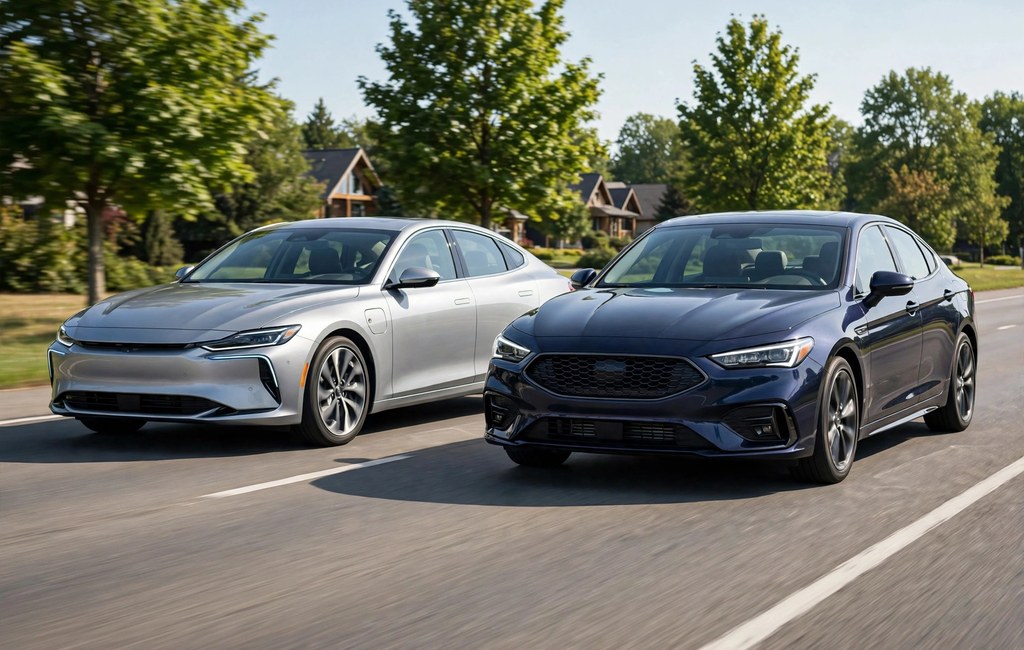
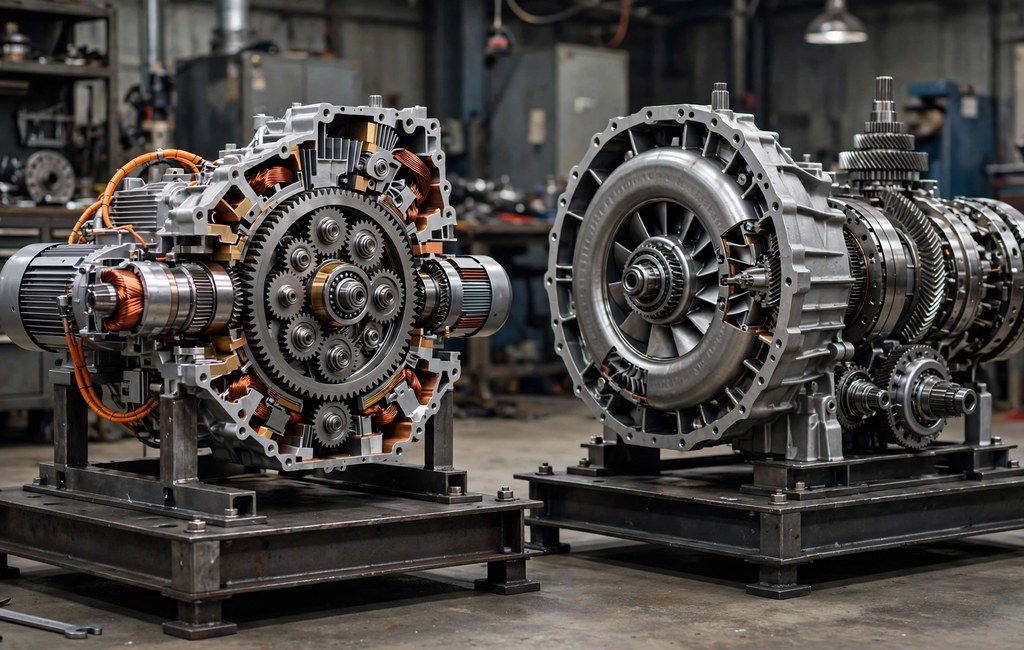
eCVT hybrid cars blend power electronically, while conventional automatics shift fixed gears mechanically. Therefore, the eCVT feels smooth and stepless, whereas the automatic feels stepped and familiar.
When you drive an automatic hybrid car daily, consequently, that difference shapes every launch and cruise. However, both systems still deliver power efficiently to the front or rear wheels.
This guide opens both gearboxes conceptually, then compares their parts, feel, and upkeep. For example, you will see why an eCVT uses no belt or pulley. In addition, you will learn how each design handles stop-and-go driving.
What Is an eCVT in a Hybrid Vehicle?
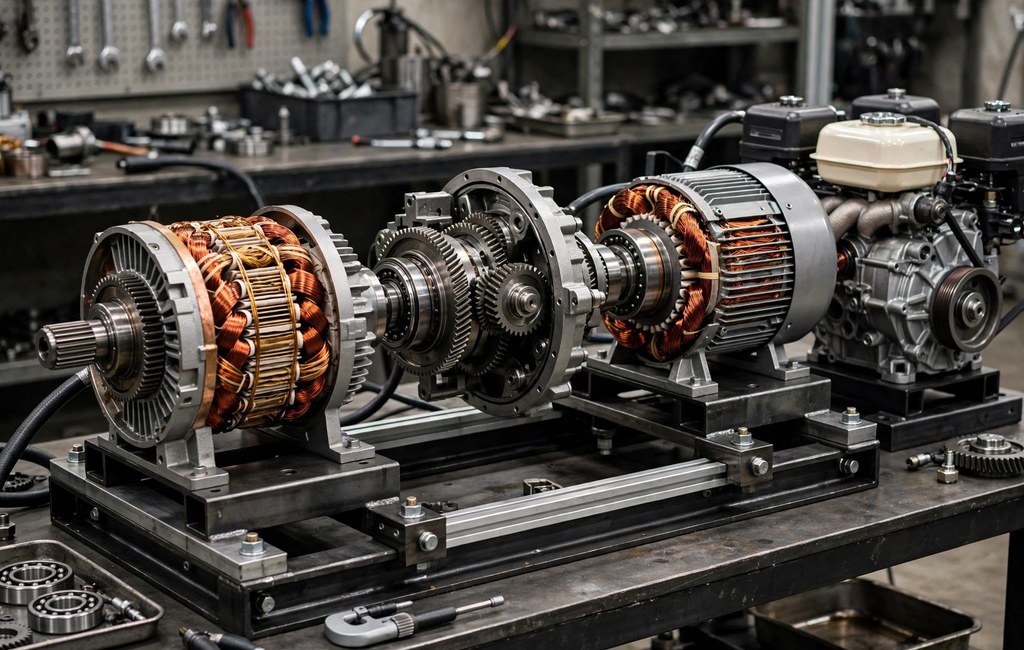
First, an eCVT centers on one planetary gearset called a power-split device. Meanwhile, a sun gear, planet gears, and ring gear stay permanently meshed. Specifically, the engine connects to the planet carrier inside that gearset. Overall, that compact layout replaces several separate gearbox assemblies entirely. Most eCVT hybrid cars use one planetary gearset as the splitter.
Inside the Power-Split Device of eCVT Hybrid Cars
Next, one motor-generator connects to the sun gear and starts the engine. Also, that unit generates electricity and controls engine speed precisely. Then, the larger motor-generator connects to the ring gear and drives wheels.
Because software varies motor speed continuously, the system creates endless effective ratios. However, the gearset itself keeps one fixed physical ratio throughout operation. In fact, no belt, pulley, or torque converter changes the ratio.
During electric-only driving, the larger motor drives the wheels alone quietly. When demand rises, the smaller motor starts the engine without a starter. Then, the system blends both sources and charges the battery when needed.
How a Traditional Automatic Transmission Works
First, a conventional automatic starts power flow through a fluid torque converter. Meanwhile, fluid coupling lets the engine idle while the vehicle stays stopped. Then, pressurized fluid and electronic controls manage every gear change automatically. Similarly, sensors report speed, load, and throttle position to the controller. Drivers notice eCVT hybrid cars holding revs during hard acceleration.
Next, clutch packs and brake bands lock different planetary gearsets in sequence. As a result, the transmission steps through fixed ratios like low, medium, high. For example, the gearbox holds one ratio, then shifts abruptly to another.
During each shift, the control unit briefly reduces engine torque for smoothness. Then, a lockup clutch may connect the converter directly at cruising speed. As a result, the automatic reduces fluid slip and improves highway efficiency.
Mechanical Differences in eCVT Hybrid Cars and Automatic Gearboxes
In contrast, the eCVT blends two power sources before power reaches wheels. Meanwhile, the automatic mainly passes single-engine power through successive gear ratios. Similarly, both designs use planetary gears, yet they use them very differently. Engineers tune eCVT hybrid cars for smoothness rather than steps.
Key eCVT Parts in Hybrid Cars
- Power source: In contrast, the eCVT mixes engine and motor torque continuously.
- Ratio control: However, software adjusts motor speed instead of swapping physical gears.
- Coupling method: Instead, the automatic relies on fluid coupling and locking clutches.
- Wear parts: Consequently, the eCVT avoids belt wear and repeated clutch engagement.
Therefore, the eCVT needs two motor-generators to function as designed. Otherwise, the planetary gearset cannot vary engine speed independently at all. In short, electronics create variability, while hardware keeps one simple layout.
Also, the eCVT splits power along mechanical and electrical paths simultaneously. Meanwhile, surplus engine power flows through one motor to the other. In fact, that split lets engine speed stay independent from wheel speed.
Acceleration and Driving Feel in eCVT Hybrid Cars
First, the eCVT delivers instant electric torque during initial launch from rest. As a result, the vehicle moves smoothly before the engine adds power. Meanwhile, engine speed may rise steadily and hold during hard acceleration. In addition, quiet electric help hides small engine vibrations at low speed. Many eCVT hybrid cars lack any belt or chain drive.
In contrast, the automatic delivers distinct steps as each gear engages sequentially. Consequently, drivers feel small pauses and surges during each ratio change. For instance, the automatic often feels more familiar during steady highway cruising.
Still, the eCVT may sound unfamiliar when engine speed stays high. However, that steady sound reflects efficient control, not wasted slipping power. Overall, personal preference often decides which feel drivers enjoy more.
When drivers accelerate gently, the eCVT usually feels calm and linear. Similarly, the automatic may downshift noticeably when drivers request quick passing power. Still, modern controls soften many automatic shifts during normal daily driving.
Transmission Efficiency in eCVT Hybrid Cars
First, the eCVT holds the engine near its most efficient speed. Therefore, it wastes less fuel during varied city and suburban driving. Also, regenerative braking returns energy while the drive motor slows the vehicle. In fact, it also lets the engine stop during coasting and idling. Owners praise eCVT hybrid cars for their seamless low-speed manners.
In addition, the eCVT contains fewer friction parts that wear during shifts. Meanwhile, the automatic needs fluid, filter, and clutch attention over time. However, both systems still need correct fluid and cooling system care.
Upkeep in Practice
Specifically, technicians inspect eCVT motor connections, cooling circuits, and control software. Similarly, technicians check automatic valve bodies, solenoids, and torque converter lockup. In short, simpler eCVT mechanics often reduce routine transmission upkeep overall.
Over time, clean cooling keeps eCVT electronics and motors within safe temperatures. Similarly, fresh automatic fluid protects valves and clutches from heat damage. Consequently, owners should follow scheduled inspections and address warning symptoms promptly.
Frequently Asked Questions
Is an eCVT the same as a belt CVT?
No, because an eCVT uses planetary gears and motors, not belts.
Does an eCVT have gears?
Yes, however, its single planetary gearset creates variable ratios electronically.
Why does an eCVT feel smooth during acceleration?
It feels smooth because motor control changes ratios continuously without steps.
How does a traditional automatic change gears?
It changes gears when clutch packs lock different gearsets in sequence.
Which transmission needs less maintenance in a hybrid?
Typically, the eCVT needs less upkeep because it has fewer friction parts.
Conclusion
Overall, the eCVT suits hybrid driving because it blends power sources seamlessly. In contrast, the automatic suits drivers who prefer distinct, familiar gear steps. Therefore, compare test drives back-to-back and notice launch, noise, and smoothness.
Next, apply this guide during your test drive and ask focused questions. Finally, book a hybrid inspection whenever any response feels unusual during driving.

Thomas Walker is an accomplished writer with expertise in the basics of car accessories. With a keen eye for detail, Thomas has established himself as an authority on the subject, with a passion for all things automotive. Based in Jasper, Thomas is dedicated to providing readers with the information they need to make informed decisions when it comes to their car accessories.