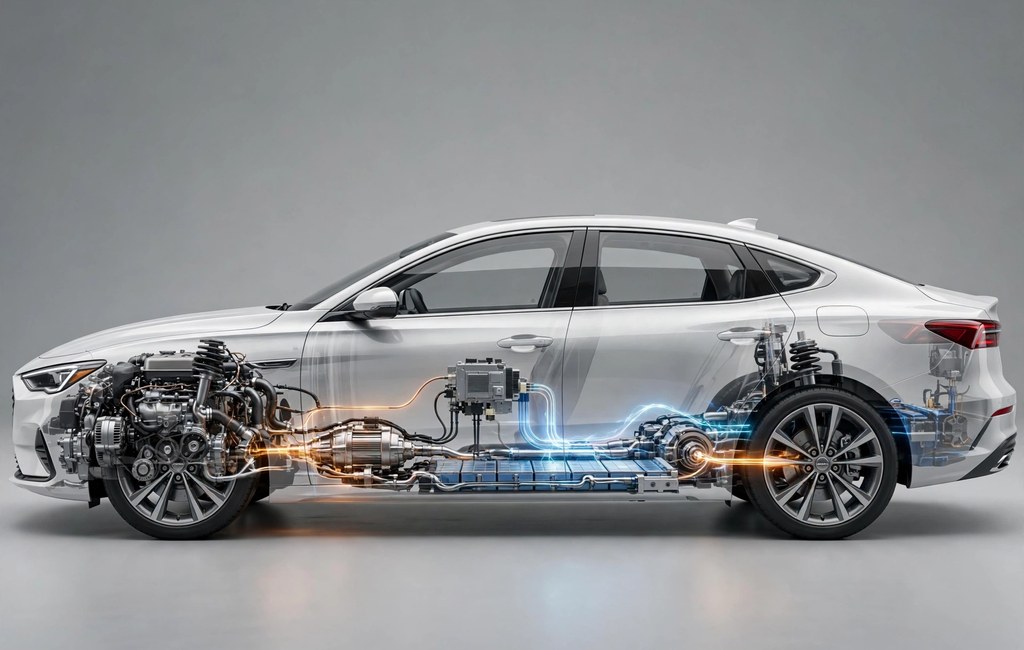
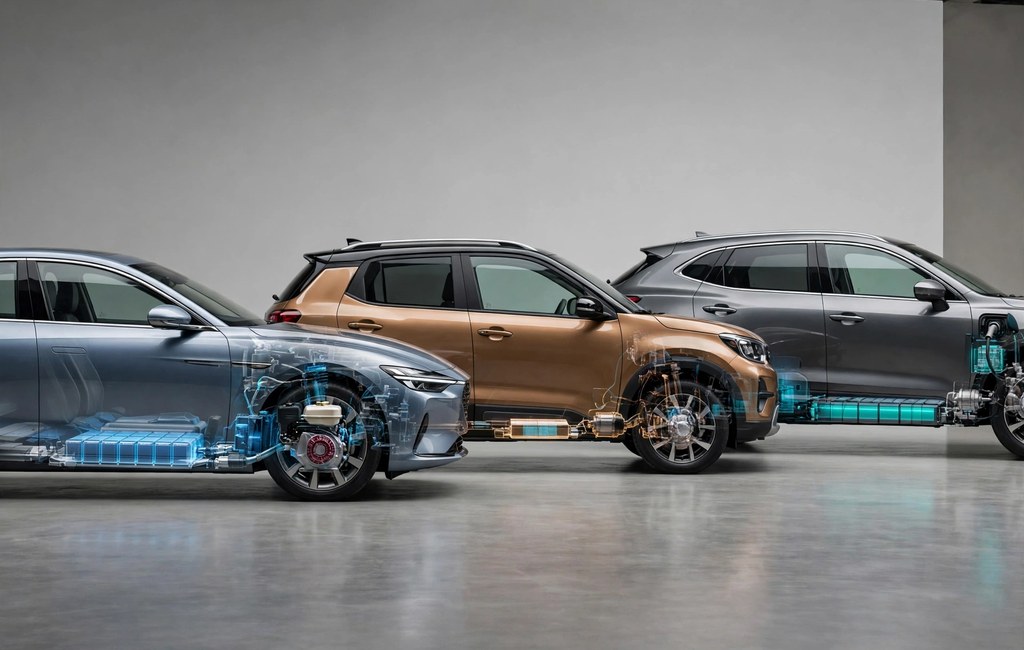
A mild hybrid only assists the engine, while a full hybrid drives briefly on electricity alone. However, plug-in hybrids travel much farther electrically and also recharge from an external outlet.
Therefore, battery size explains most differences in performance, efficiency, and daily driving feel. For example, a small 48-volt pack supports quick restarts and modest torque assistance. In contrast, a larger high-voltage pack powers sustained electric movement during city driving. Consequently, understanding each architecture first helps drivers match technology to real routines.
Also, charging needs separate the systems just as clearly as electric range does. Specifically, only plug-in designs need plugging in, while other hybrids recharge themselves automatically.
What Is a Mild Hybrid System?
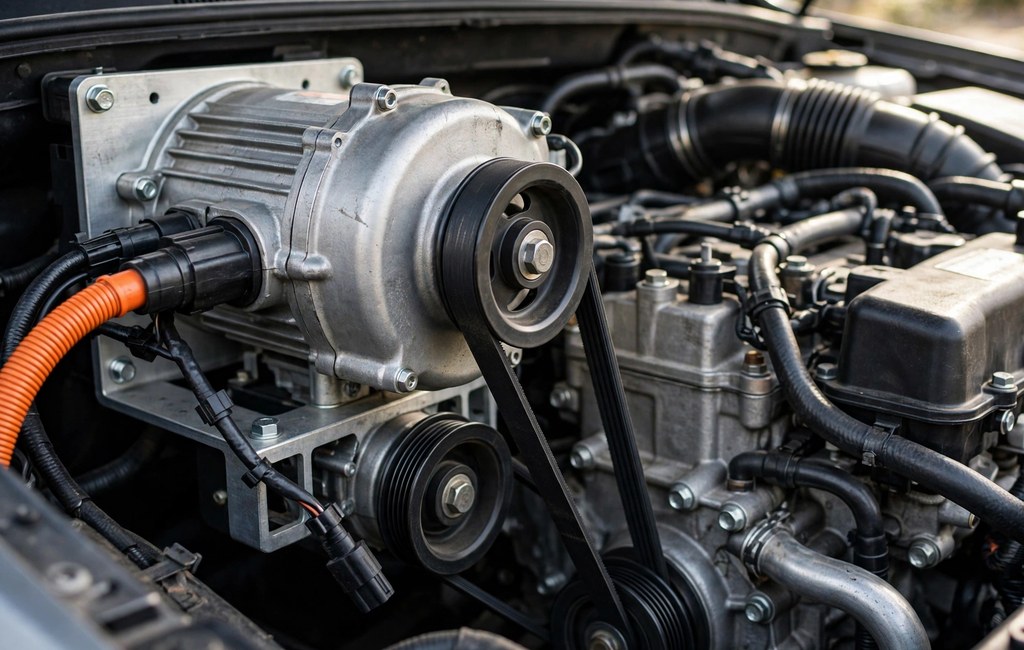
First, every mild system supports the engine inside an automatic hybrid car without driving wheels independently. Instead, a compact starter-generator restarts the engine quickly and adds torque during acceleration. Meanwhile, regenerative braking recovers some braking energy and stores it for later assistance.
However, the motor cannot move the car alone at any speed. Therefore, the engine stays responsible for propulsion whenever the vehicle moves. Also, drivers never plug this system in for charging. A full hybrid and a mild hybrid differ mainly in electric driving ability.
Also, the system can switch the engine off earlier during coasting stops. Consequently, fuel use drops modestly, especially during repeated urban stop-and-go driving.
Everyday Feel of a Mild Hybrid
For example, stop-and-go traffic feels smoother because restarts happen almost instantly. In addition, modest assistance reduces engine effort during launches and low-speed maneuvers.
How Full Hybrid Systems Operate
First, a full hybrid uses a stronger motor and a high-voltage battery. Consequently, the motor drives the car alone briefly at low speeds. For example, the car creeps silently through parking areas and slow traffic.
Next, a power-split device blends engine and motor power through an eCVT arrangement. Meanwhile, the system chooses electric drive, engine drive, or both automatically. As a result, drivers simply drive normally while software manages every transition. Every full hybrid outdrives a mild hybrid on battery power alone.
Also, regenerative braking and the engine recharge the battery during normal driving. Therefore, no external charging ever enters the routine for full hybrids.
In addition, the engine restarts seamlessly when drivers demand stronger acceleration quickly. Similarly, electric torque fills gaps while the engine reaches efficient operation.
What Makes a Plug-In Hybrid Different From Full and Mild Hybrid Systems?
First, a plug-in hybrid carries a much larger battery and stronger motor. Therefore, it drives electrically for tens of miles before needing gasoline power. In fact, many daily trips finish entirely without starting the engine.
However, owners must plug in regularly to unlock that electric ability. For instance, overnight home charging restores the battery before the next trip. Otherwise, the car operates like a full hybrid after charge depletion. Shoppers compare each full hybrid with each mild hybrid by battery size.
Still, regenerative braking adds recovered energy during every drive as well. Meanwhile, the engine provides backup for longer journeys beyond electric range.
In addition, drivers can schedule charging and depart with a full battery. As a result, weekday commutes often feel quiet, smooth, and largely electric.
Battery Capacity in Full and Mild Hybrid Driving
Overall, battery capacity rises steadily from mild to full to plug-in designs. Consequently, electric driving ability grows in exactly the same clear order. A full hybrid carries a larger battery than a mild hybrid carries.
First, mild packs prioritize light weight and quick energy cycling over capacity. Next, full packs balance capacity against weight for repeated electric assistance.
- Mild hybrid support: It also uses a small 48-volt battery and never drives electrically.
- Full hybrid movement: It therefore stores more energy and also drives briefly on electricity alone.
- Plug-in hybrid range: It consequently holds the largest pack and covers tens of electric miles.
- Charging requirement: Only plug-in systems recharge from outlets, while others recharge themselves automatically.
- Regenerative braking: All three systems also recover braking energy, although recovery amounts differ.
In contrast, voltage and capacity alone never tell the whole story. Specifically, motor strength and control software decide how stored energy becomes movement.
Also, larger batteries weigh more and therefore change packaging and handling slightly. However, stronger motors usually offset that weight during low-speed electric driving.
Which Full or Mild Hybrid Architecture Fits Your Driving?
First, drivers wanting simplicity often suit mild hybrids best for everyday assistance. However, drivers in slow traffic benefit more from full hybrid electric creep. Tests show each full hybrid beating each mild hybrid in city economy.
Similarly, commuters with home charging gain most from plug-in electric trips. Meanwhile, drivers without charging access still thrive with self-charging full hybrids.
In contrast, longer mixed routes reward full hybrids that recharge without driver effort. On the other hand, predictable short routines reward plug-ins charged every night.
For example, frequent short stops favor electric creep and repeated regenerative recovery. Instead, steady highway routines narrow differences because engines dominate sustained cruising.
Therefore, match the architecture to routines, charging access, and traffic patterns first. Then, test each system and notice restart smoothness and electric quietness.
Frequently Asked Questions
Can a mild hybrid drive on electricity alone?
However, a mild hybrid cannot drive electrically because its motor only assists.
Do full hybrids need to be plugged in?
Instead, full hybrids recharge themselves through regenerative braking and engine operation automatically.
How far can a plug-in hybrid drive electrically?
Overall, a plug-in hybrid typically travels tens of miles electrically before gasoline begins.
Which hybrid type is best for city driving?
Overall, full and plug-in hybrids suit city driving best through electric low-speed movement.
Do all hybrids use regenerative braking?
Yes, all three systems use regenerative braking, although recovery amounts differ by design.
Conclusion
In short, mild hybrids assist, full hybrids alternate, and plug-ins prioritize electric driving. Therefore, choose the architecture matching your charging access and daily distances first. Finally, apply this comparison during test drives and pick your best fit.
Overall, the right choice feels obvious once your daily pattern becomes clear. So, start by tracking distances, stops, and overnight parking for one week.

Thomas Walker is an accomplished writer with expertise in the basics of car accessories. With a keen eye for detail, Thomas has established himself as an authority on the subject, with a passion for all things automotive. Based in Jasper, Thomas is dedicated to providing readers with the information they need to make informed decisions when it comes to their car accessories.