

Garage doors protect vehicles, improve home security, and support energy efficiency in busy households. In fact, studies show that garage doors can make up nearly 30% of a home’s front exterior, which directly affects curb appeal and property value. Many homeowners in Miami also deal with humidity, salt air, and strong storms that place extra pressure on garage door systems. Therefore, understanding proper garage door alignment steps can help families prevent expensive repairs and improve daily safety. This guide explains practical adjustment methods that work well for homes in Miami, FL.
Why Garage Door Adjustments Matter in Miami
Miami weather creates unique challenges for garage doors throughout the year. High humidity often causes metal parts to rust faster than expected. In addition, tropical storms and heavy rain can weaken tracks, rollers, and springs over time. Families who inspect their garage doors regularly can often avoid sudden breakdowns.
A poorly adjusted garage door may become noisy, uneven, or difficult to open. Sometimes the door may stop halfway or reverse unexpectedly during operation. These problems can increase safety risks for children and pets around the home. Therefore, early adjustments help keep the system stable and reliable.
Garage door issues also affect energy efficiency in warm climates like South Florida. Gaps around the door allow heat and moisture to enter the garage space. Consequently, air conditioning systems may work harder to cool nearby rooms. Proper adjustments improve insulation and reduce indoor temperature fluctuations.
Safety Steps Before Starting Garage Door Adjustments
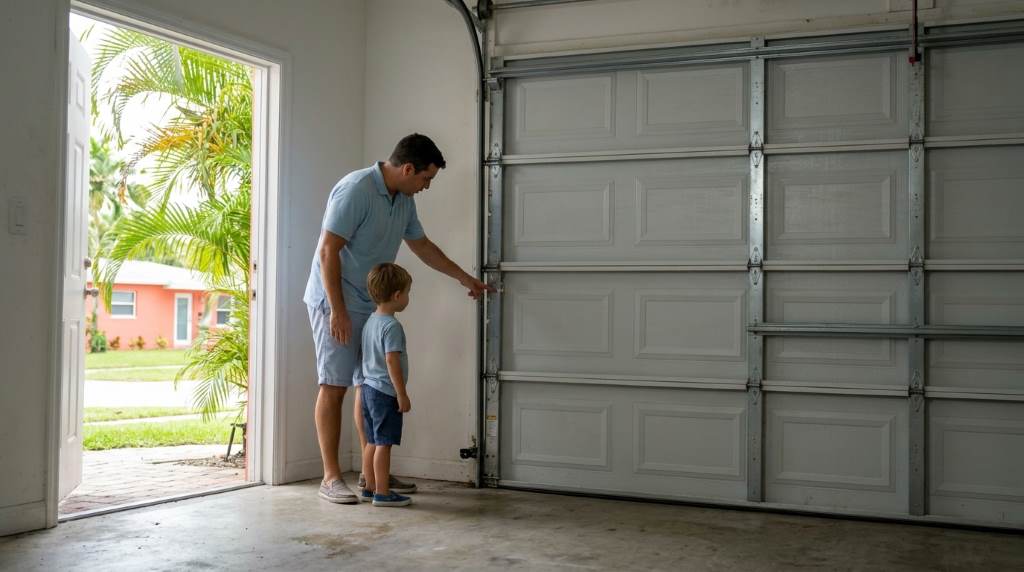
Safety should always come first before touching any garage door component. Garage doors use heavy springs and tension systems that can cause injuries without proper handling. Therefore, homeowners should disconnect the garage door opener before beginning adjustments. Wearing gloves and protective eyewear also improves safety during inspection work.
Families should keep children and pets away from the work area during repairs. Even small adjustments may cause the door to shift suddenly. In addition, loose hardware can fall while inspecting tracks or hinges. A clean and organized workspace helps prevent accidents.
It is also important to use the correct tools for the job. Most homeowners only need a ladder, wrench set, level, screwdriver, and lubricant for basic adjustments. However, spring repairs usually require professional support because of the high tension involved. Knowing personal limits can prevent costly damage and injuries.
Inspect the Garage Door for Common Problems
A careful inspection helps identify the source of most garage door problems. Begin by opening and closing the door manually to observe its movement. If the door shakes, sticks, or tilts to one side, alignment issues may exist. Unusual grinding sounds may also point to worn rollers or loose hardware.
Next, examine the tracks for dents, dirt buildup, or rust. Miami’s humid coastal air often speeds up corrosion on exposed metal surfaces. Even small obstructions can prevent smooth movement along the tracks. Cleaning the tracks with a dry cloth can improve operation immediately.
Check the springs, cables, and rollers for visible wear or fraying. Broken cables and weak springs often create uneven door movement. In some cases, homeowners may notice gaps in extension springs or loose mounting brackets. Addressing these issues early prevents larger mechanical failures later.
How to Adjust Garage Door Tracks
Tighten Loose Hardware
Garage door tracks can shift slowly due to daily vibrations and humidity exposure. Start by checking bolts and screws along the track system. Tightening loose hardware often corrects small alignment problems quickly. However, avoid overtightening because it may damage the brackets.
Use a socket wrench to secure the mounting brackets firmly against the wall. Additionally, inspect the ceiling supports for movement or rust. Stable tracks allow the door to travel smoothly without unnecessary strain. This simple adjustment improves both safety and performance.
Align the Vertical Tracks
Vertical tracks should remain perfectly straight on both sides of the garage door. Use a level to confirm the tracks align evenly from top to bottom. If one side leans inward or outward, loosen the mounting bolts slightly. Then gently tap the track into the correct position.
After alignment, tighten the bolts carefully while checking the level again. Even small adjustments can improve door balance significantly. Moreover, aligned tracks reduce roller wear and motor stress over time. Families often notice quieter operation after completing this step.
Adjust the Horizontal Tracks
Horizontal tracks guide the garage door along the ceiling during operation. These tracks should tilt slightly downward toward the back of the garage. If the angle changes, the door may stop or reverse unexpectedly. Therefore, proper positioning is essential for smooth performance.
Loosen the hanging brackets and adjust the track angle carefully. Measure both sides to ensure even alignment across the ceiling. Additionally, inspect for sagging supports caused by moisture damage or age. Secure all hardware tightly once the adjustment feels stable.
Lubricate Moving Garage Door Parts
Lubrication plays a major role in garage door maintenance in Miami’s humid environment. Moisture can cause rollers, hinges, and springs to dry out or corrode quickly. Therefore, homeowners should lubricate moving parts every few months. Silicone-based garage door lubricant usually works best for coastal climates.
Apply lubricant to rollers, hinges, bearings, and springs without overspraying nearby surfaces. Avoid using heavy grease because it attracts dirt and debris. Furthermore, wipe away old residue before applying fresh lubricant. Clean parts perform better and last longer.
Proper lubrication reduces noise and prevents unnecessary friction. Families often notice smoother operation immediately after maintenance. In addition, the opener motor experiences less strain during opening and closing cycles. This simple step can extend the entire system’s lifespan.
Balance the Garage Door Correctly
Garage door balance affects safety, efficiency, and long-term durability. An unbalanced door forces the opener to work harder during operation. Consequently, motors and springs may wear out faster than expected. Testing the balance regularly helps identify issues before major failures occur.
Disconnect the automatic opener and lift the door halfway manually. A balanced garage door should stay in place without moving up or down. If the door drops quickly or rises on its own, spring tension may need adjustment. Homeowners should contact professionals for major spring corrections.
Minor balance issues sometimes result from track misalignment or roller wear. Therefore, inspect all moving parts before assuming spring damage exists. Families who maintain proper balance often experience fewer emergency repairs. Consistent testing also improves overall safety around the home.
Adjust Garage Door Sensors for Safety
Modern garage doors include safety sensors near the bottom of each track. These sensors stop the door if objects or people block the opening. However, humidity, dust, and accidental bumps may affect sensor alignment. Misaligned sensors often cause blinking lights or unexpected door reversals.
Start by cleaning both sensor lenses with a soft cloth. Dirt and moisture buildup can interrupt the signal between sensors. Next, confirm both sensors face each other directly at the same height. Small adjustments usually restore proper communication quickly.
Tighten the sensor brackets carefully once alignment looks correct. Test the system by placing an object under the closing door. The door should reverse immediately when the sensor beam breaks. Families with children especially benefit from reliable sensor performance.
Weatherproof Your Garage Door in Miami
Miami homeowners face intense heat, heavy rain, and occasional hurricanes throughout the year. Therefore, weatherproofing helps protect garage door systems from environmental damage. Start by checking the bottom seal for cracks or gaps. Damaged seals allow water, insects, and hot air to enter the garage.
Replace worn weather stripping around the sides and top of the door. Fresh seals improve insulation and reduce indoor humidity levels. Additionally, proper sealing prevents rust from forming on nearby metal parts. This small upgrade supports both comfort and durability.
Storm preparation also matters in South Florida neighborhoods. Families should inspect garage doors before hurricane season begins each year. Reinforced brackets and wind-resistant systems offer extra protection during strong storms. Preventive maintenance reduces the chance of storm-related damage.
Related:
How to Choose a Budget Garage Vacuum Cleaner for Heavy-Duty Cleaning
Insulating Your Garage for Winter Car Maintenance
Signs You Need Professional Garage Door Help
Some garage door problems require professional attention immediately. Broken springs, snapped cables, and damaged panels can become dangerous without proper tools and experience. Therefore, homeowners should avoid attempting complex repairs alone. Safety always matters more than saving money.
Persistent grinding noises may indicate internal motor or bearing issues. In addition, doors that close unevenly despite adjustments may have structural damage. Professional technicians can inspect the system thoroughly and identify hidden problems quickly. Early service often prevents more expensive repairs later.
Families should also schedule yearly garage door inspections for long-term reliability. Regular maintenance helps extend the lifespan of major components. Moreover, professionals can spot wear before it becomes a serious hazard. Preventive care supports safer daily operation.
Seasonal Garage Door Maintenance Checklist
Routine maintenance keeps garage doors working efficiently throughout Miami’s changing weather conditions. A seasonal checklist helps families stay organized and avoid missed repairs. Small maintenance habits often prevent expensive emergency service calls. Consistency matters more than complicated repair work.
Here are simple seasonal tasks homeowners should follow:
- Clean garage door tracks and remove debris
- Lubricate rollers, hinges, and springs
- Test door balance and sensor alignment
- Inspect weather seals for moisture damage
- Tighten loose bolts and brackets
- Check opener settings and remote batteries
- Watch for rust caused by coastal humidity
Performing these tasks every few months improves reliability and safety. Additionally, regular inspections help homeowners notice unusual wear early. Families who follow maintenance schedules usually experience fewer sudden breakdowns. A well-maintained garage door also improves curb appeal.
Tips for Extending Garage Door Lifespan
Garage doors last longer when homeowners address small issues quickly. Ignoring unusual noises or jerky movement often leads to larger mechanical failures later. Therefore, quick inspections save money and reduce stress over time. Preventive maintenance remains the best long-term strategy.
Families should avoid slamming the garage door whenever possible. Sudden impact places unnecessary strain on tracks, rollers, and springs. In addition, keeping the garage area dry reduces moisture-related rust damage. Good airflow also helps protect metal components.
Using the garage door properly matters just as much as maintenance. Avoid hanging heavy objects from tracks or opener systems. Furthermore, teach children not to play near moving garage doors. Responsible daily use supports long-lasting performance and safer operation.
Conclusion
Garage door adjustments help Miami families maintain safety, convenience, and energy efficiency throughout the year. Simple tasks like track alignment, lubrication, and sensor checks can prevent expensive repairs and unexpected breakdowns. In addition, weatherproofing protects garage systems from humidity, storms, and coastal air exposure. Homeowners who inspect their garage doors regularly often enjoy smoother and quieter operation. Start applying these step-by-step garage door adjustment tips today to keep your home secure and your family safe.
FAQs
How often should I adjust my garage door in Miami?
Most homeowners should inspect and adjust their garage doors every three to six months.
Can humidity damage garage door parts?
Yes, Miami’s humidity can cause rust, corrosion, and faster wear on metal components.
Is it safe to adjust garage door springs alone?
No, garage door springs carry high tension and require professional handling for safety.
Why does my garage door reverse suddenly?
Misaligned safety sensors or track issues often cause unexpected reversing problems.
What lubricant works best for garage doors?
Silicone-based garage door lubricant works well because it resists moisture and dirt buildup.


