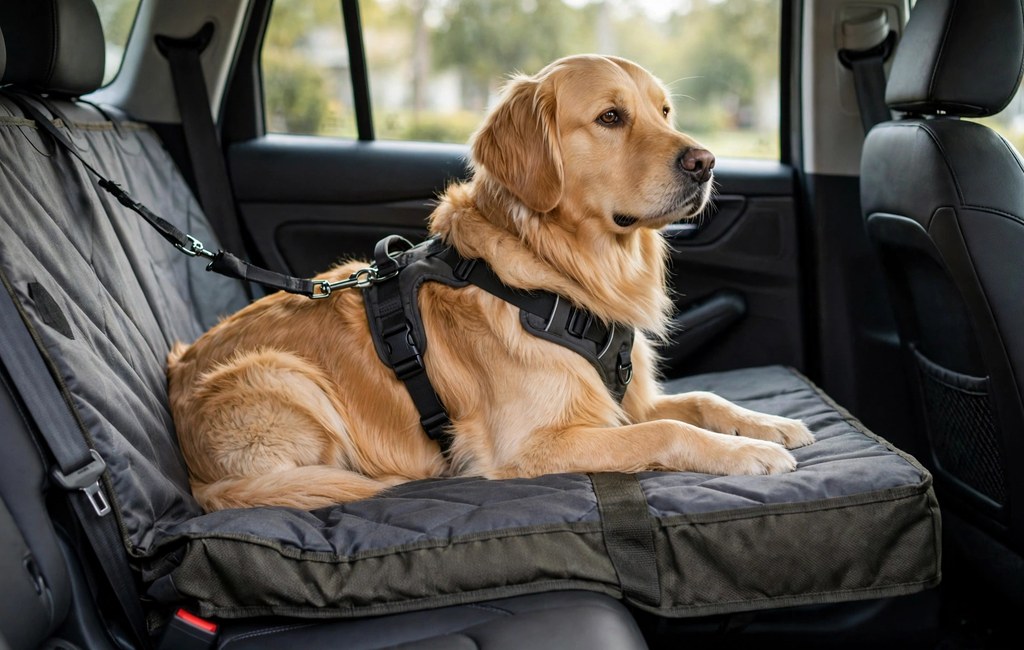

Install a dog car seat in the back seat for the safest ride. Thread the vehicle seat belt through the marked belt path and buckle it firmly. Then attach the headrest strap, tighten every strap, and connect the tether to a harness.
First, read the seat manual and check your vehicle manual for compatible seating positions. A correctly fitted dog car seat gives your dog a stable, raised, and comfortable travel space. Additionally, gather the harness, cushion, and straps before you start the installation process.
Next, park on level ground and clear loose items from the chosen rear seat. Finally, test the fit without your dog inside before the first real drive.
Choose the Right Spot to Install a Dog Car Seat
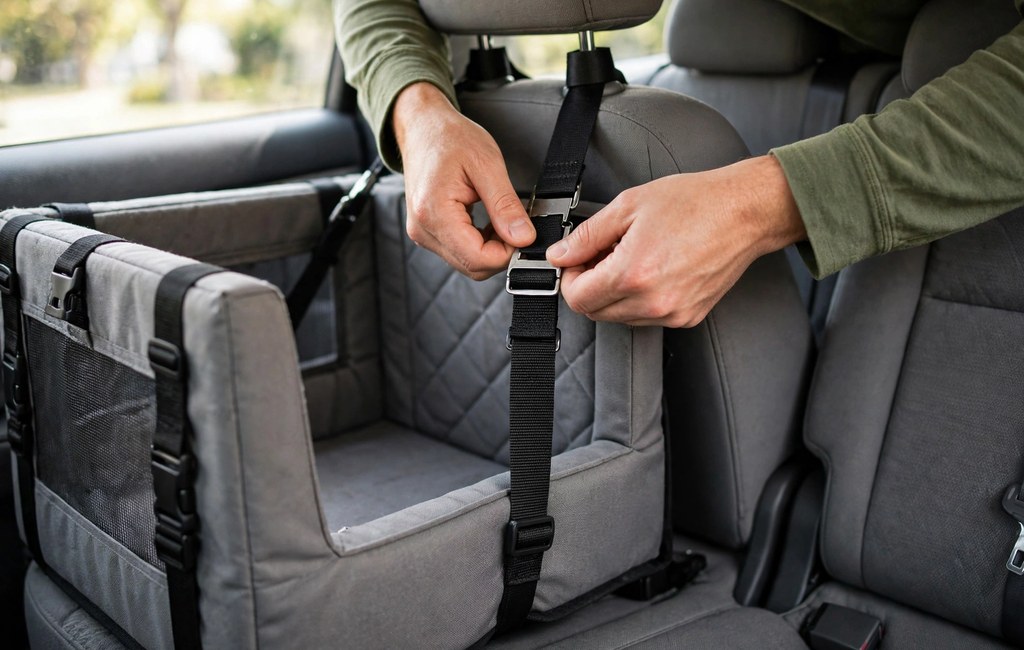
Choose the rear seat for most dogs and most vehicles. Rear seating keeps your dog farther from front airbags and sudden dashboard movement. Additionally, rear placement reduces driver distraction and gives you calmer control during traffic.
Measure the rear seat width and compare that measurement with the dog seat dimensions. Bench seats usually accept wider bases, while narrow bucket seats limit placement options considerably. Also check headrest posts, seat contours, and belt length before you commit to one position.
Smaller dogs often gain a better window view from an elevated seating position. Compare options for a dog booster seat for car that matches your rear seat width. Finally, keep the seat clear of side airbag zones and door controls during installation. Always install a dog car seat on a flat rear seating position.
Prepare the Seat and Vehicle
First, unpack the seat, cushion, straps, and tether on a clean indoor surface. Read the manufacturer instructions for your exact seat model and your exact vehicle model. Note weight limits, size limits, and any vehicle restrictions before you move outside.
Next, park on level ground, switch off the engine, and engage the parking brake. Clear loose items, floor mats, and toys from the chosen rear seating area. Then vacuum crumbs and wipe the seat surface for better grip and cleaner contact.
Fit the harness on your dog indoors and adjust every strap for snug, even pressure. Allow two fingers of space under each harness strap for comfort and safe breathing. Choose washable fabric and removable covers for easy cleaning after muddy trips. Before you install a dog car seat, clear buckles and loose items.
Install a Dog Car Seat Step by Step
Follow these steps slowly, and recheck each connection before you add your dog. Rushing one step often creates slack, tilt, or uneven pressure across the base. Work through the sequence in order for a stable and repeatable result.
- Base placement: Set the seat flat on the rear cushion with full base support.
- Seat belt routing: Thread the vehicle belt through the marked belt path without twists.
- Buckle connection: Push the buckle until you hear a clear click from the latch.
- Headrest strap: Loop the strap around both headrest posts and pull it snug.
- Anti-slip base: Press the base firmly into the cushion and smooth out any folds.
Pull the vehicle belt fully out to engage the locking retractor on many vehicles. Feed any extra belt slack back slowly while you press the dog seat downward. Finally, confirm the buckle sits flat and no belt edge digs into the seat fabric.
Route Straps and Check Stability
Route every strap exactly through the guides, loops, or slots from the manual. Avoid routing straps over sharp edges, buckles, or moving seat mechanisms. Keep straps flat, untwisted, and evenly tensioned across both sides of the seat.
Next, tighten the headrest strap first, then tighten the seat belt strap second. Push the seat side to side and front to back with firm, steady pressure. Allow less than one inch of movement in any direction after final tightening.
Some vehicles offer LATCH anchors or ISOFIX anchors near the rear seat crease. Use LATCH anchors only when the seat manual explicitly approves that attachment method. Never combine a seat belt and LATCH anchors unless the manual explicitly allows both systems. Once you install a dog car seat, push down and test for sliding.
Connect the Harness and Tether to the Dog Car Seat
Clip the internal safety tether to the harness back ring, not the front ring. Never attach a tether to a collar alone because sudden stops concentrate force on the neck. Adjust tether length so your dog sits, turns, and lies down without climbing out.
Check the harness fit again after you clip the tether into place. Tug the tether gently to confirm the clip locks and the harness stays centered. Additionally, keep the tether short enough to prevent jumping onto the front seats.
Restraints reduce risk during sudden stops, but restraints never eliminate all crash risk. Follow manufacturer instructions for your specific seat, harness, and vehicle combination. Note that local restraint laws vary, so check local rules before you travel with pets.
Dog Car Seat Installation Mistakes to Avoid
- Loose seat belt: Tighten the belt until the seat moves less than one inch.
- Twisted straps: Flatten every strap and reroute any strap with visible twists.
- Front seat placement: Move the seat rearward whenever front airbags create danger.
- Long tether: Shorten the tether so your dog cannot climb out during braking.
Recheck strap tension after ten minutes because fabric and cushions often settle during driving. Also inspect buckles, stitching, and webbing for fraying, cracks, or loose threads regularly. Replace worn parts promptly, and never use a damaged strap for a trip. Never install a dog car seat with twisted or loose straps.
Help Your Dog Settle Into the Installed Car Seat
Introduce the seat indoors first, and let your dog sniff, step in, and settle calmly. Reward calm behavior with treats, praise, and short, relaxed practice sessions indoors. Then move practice into a parked vehicle before you attempt any moving trip.
Start with short drives around your neighborhood for gradual confidence building. For extended journeys, review guidance on dog car seat for long trips before departure day. Plan regular comfort breaks, water access, and ventilation for longer travel days.
Never leave your dog alone in a parked car during warm conditions for any reason. Parked vehicles heat rapidly, and heat creates serious danger even with windows cracked slightly. Keep trips calm, watch for panting or restlessness, and stop safely when your dog needs relief. After you install a dog car seat, let your dog explore it parked.
Frequently Asked Questions
Can I install a dog car seat in the front seat?
Avoid the front seat because airbags create serious danger for dogs during deployment.
How tight should a dog car seat feel after installation?
Push the seat firmly, and allow less than one inch of movement in any direction.
Should I attach the tether to a collar or a harness?
Always attach the tether to a snug harness, never to a collar alone.
Does a dog car seat work in every vehicle?
Check seat width, seat shape, headrest posts, and belt length before each new vehicle installation.
How often should I check the installation?
Inspect straps, buckles, and tether clips before every trip for wear or loosening.
Conclusion
Recheck every strap today, and give your dog a calm first ride in the new seat. Plan your next trip now, and enjoy safer, calmer journeys together from today onward.

Thomas Walker is an accomplished writer with expertise in the basics of car accessories. With a keen eye for detail, Thomas has established himself as an authority on the subject, with a passion for all things automotive. Based in Jasper, Thomas is dedicated to providing readers with the information they need to make informed decisions when it comes to their car accessories.