Commute costs soar in Los Angeles, CA because drivers face expensive fuel, long trips, congestion, parking, and vehicle wear. Los Angeles County workers average 30.8 minutes traveling to work, while 66.4% drive alone.
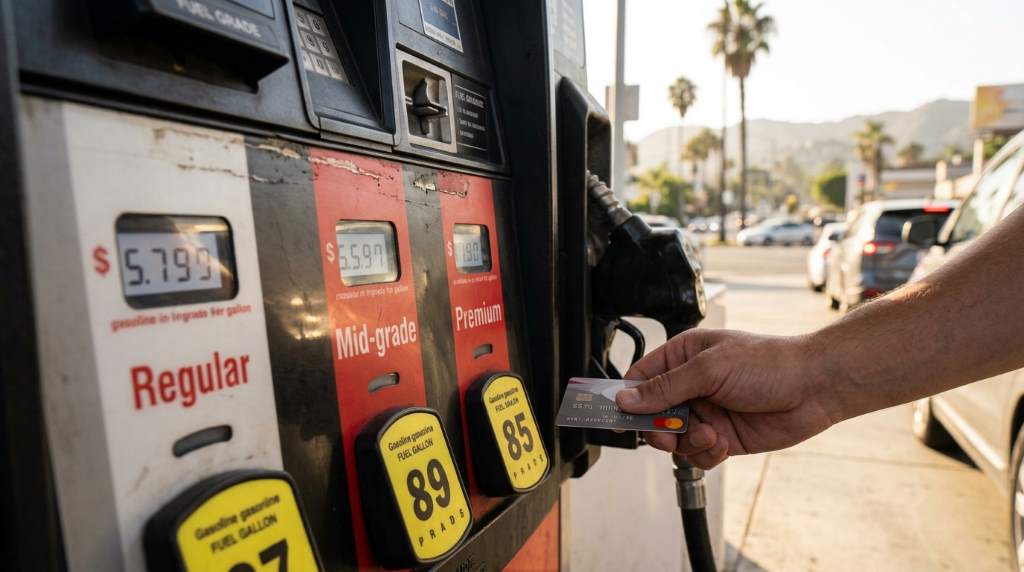
Meanwhile, AAA recently listed regular gasoline around $5.70 per gallon in the Los Angeles Long Beach market. That makes fuel efficiency especially valuable, including when comparing the most fuel efficient cars for regular commuting.
The Real Cost Starts Before You Enter Traffic
Many commuters calculate only gasoline when they estimate daily transportation costs. However, a long Los Angeles commute creates several expenses that quietly accumulate throughout the month.
First, drivers pay for fuel, oil changes, tires, brakes, insurance, repairs, depreciation, and parking. Therefore, a commute that seems affordable at the pump can cost considerably more over a full year.
Consider a driver traveling 40 miles each weekday in a vehicle averaging 25 miles per gallon. At $5.70 per gallon, fuel alone costs about $18 daily.
That figure reaches roughly $396 across 22 workdays before adding parking, maintenance, insurance, or vehicle depreciation. Consequently, distance matters just as much as the vehicle’s advertised fuel economy.

Why Los Angeles Makes Every Mile More Expensive
Los Angeles combines a huge employment region with a sprawling road network and heavy dependence on private vehicles. Census data shows that 76.3% of Los Angeles County workers use cars, trucks, or vans for commuting.
More importantly, 66.4% of county workers drive alone, which places most commuting costs on individual households.
Geography also matters because jobs, homes, schools, and services often sit far apart. As a result, commuters can spend substantial amounts simply connecting different parts of the region.
Traffic then increases the cost of every trip because engines continue consuming fuel while vehicles move slowly. Metro’s freeway service program estimates that congestion response efforts save motorists millions of hours and gallons annually.
Vehicle technology can also affect ownership costs during long commutes. For example, drivers may need calibrate windshield sensors after certain windshield repairs or sensor related work.
Although that expense does not occur every month, frequent highway driving increases exposure to road debris, windshield damage, tire wear, and minor repairs. Over time, those small expenses become part of the true commuting budget.
Gasoline Prices Add a Major Layer
Fuel prices represent one of the most visible reasons Los Angeles commuting feels expensive. AAA recently reported a Los Angeles Long Beach regular gasoline average near $5.70 per gallon.
California’s fuel market also has structural factors that keep gasoline prices above many other states. The California Energy Commission identifies the isolated fuel market, special gasoline blend, environmental program costs, and taxes as major factors.
California lacks pipelines bringing transportation fuel directly into the state from other major refining regions. Consequently, supply disruptions can affect prices more strongly because replacement fuel may require marine transportation.
The state also requires a cleaner gasoline formulation that costs more to produce than standard gasoline. Additionally, California’s gasoline taxes and environmental program costs add further pressure to pump prices.
Therefore, commuters cannot control the entire fuel market, but they can control how many gallons they consume. Reducing unnecessary miles often produces faster savings than focusing only on small fuel price differences.
Traffic Turns Time Into a Transportation Expense
Traffic does more than make commuters frustrated because it increases fuel use, vehicle wear, and lost personal time. A 30 minute commute can become much longer when congestion builds around major corridors.
Los Angeles County’s average travel time to work reached 30.8 minutes in recent Census estimates. That means a typical worker can spend more than an hour traveling during an ordinary workday.
Stop and go traffic also places different stresses on vehicles than steady highway travel. Frequent braking and acceleration can increase brake wear, tire wear, and fuel consumption.
Moreover, idling adds fuel consumption without producing meaningful travel progress. Therefore, reducing time spent in heavy traffic can lower both operating costs and commuting stress.
Some commuters can reduce those losses by shifting departure times. Even a modest schedule adjustment can help avoid the most congested portion of a regular route.
Vehicle Maintenance Can Raise the Monthly Total
A long commute increases the number of miles a vehicle accumulates each month. More miles naturally bring maintenance intervals closer together.
For instance, high mileage can accelerate tire replacement, oil service, brake service, fluid checks, and suspension repairs. Drivers who postpone these services may eventually face larger repair bills.
Electrical warning signs also deserve attention because small problems can become expensive disruptions. A vehicle showing a battery light amber warning should receive prompt attention.
Likewise, commuters should track maintenance according to mileage rather than waiting for obvious problems. Preventive service helps keep a high mileage commuter vehicle reliable and predictable.
Keeping tires properly inflated can also help because underinflated tires increase rolling resistance. Regular inspections therefore support both safety and fuel economy.
Parking Can Quietly Become a Second Commute Bill
Parking creates another major expense for commuters who work in dense commercial districts. Daily parking charges can easily rival fuel costs for workers who drive every weekday.
Suppose a commuter pays $12 for parking each workday. Across 22 workdays, parking alone reaches $264 before gasoline enters the calculation.
Monthly parking can sometimes reduce the daily rate, but that depends on workplace location and attendance frequency. Remote work days can also make a monthly parking contract less attractive.
Therefore, commuters should calculate parking alongside fuel instead of treating it as a separate expense. A slightly longer transit journey can sometimes save more money than a short drive into expensive parking.
Drivers should also compare free workplace parking, employer subsidies, shared parking, and nearby public facilities. Small changes in parking arrangements can produce substantial annual savings.
Insurance and Depreciation Matter Too
Commuting adds miles to a vehicle, and higher annual mileage can affect long term ownership costs. Insurance pricing can also depend on driving patterns, location, vehicle type, and other underwriting factors.
Depreciation represents another cost because frequent driving adds mileage and increases vehicle use. Even if drivers never make a separate payment for depreciation, the cost appears when they sell or trade the vehicle.
For that reason, commuters should compare the total cost of ownership rather than focusing only on monthly fuel spending. A reliable vehicle with reasonable maintenance costs can outperform a cheaper vehicle over several years.
Drivers can also reduce unnecessary mileage by combining errands with their work journey. Completing several tasks during one trip prevents additional cold starts, parking charges, and repeated traffic exposure.
Why Public Transit Can Change the Calculation
Public transportation does not eliminate every commuting problem, but it can reduce direct vehicle expenses. LA Metro currently charges $1.75 for a regular one way ride and caps fares at $5 daily.
The seven day fare cap currently stands at $18 for regular riders using eligible payment methods. Transfers also remain free within two hours under Metro’s fare structure.
Those caps can make transit financially attractive for commuters who live near useful rail or bus connections. Additionally, transit riders avoid many direct expenses associated with fuel, parking, tires, and vehicle depreciation.
However, transit only works well when the route matches the commuter’s schedule and destination. Therefore, workers should compare total door to door time rather than comparing driving time with vehicle travel time alone.
Low income riders may also qualify for LA County’s LIFE program, which provides 20 free Metro rides each month. Eligible students can access additional programs that reduce commuting costs.
How to Reduce Your Los Angeles Commute Costs
Lowering commute costs does not require abandoning your vehicle or moving closer to work. Instead, focus on reducing the largest expenses first.
Start with these practical steps:
- Track your weekly commuting miles and gasoline spending.
- Compare your vehicle’s actual miles per gallon against its rated economy.
- Combine errands with existing work trips.
- Check employer parking subsidies and commuter benefits.
- Compare driving costs with Metro fares for your regular route.
- Keep tires inflated according to the manufacturer’s recommended pressure.
- Follow the manufacturer’s maintenance schedule.
- Consider carpooling when schedules and destinations align.
- Test flexible work hours if your employer permits them.
- Compare nearby fuel stations before filling a large tank.
Next, calculate your full monthly commute cost using fuel, parking, maintenance, insurance, and depreciation. This approach reveals which expense deserves your attention first.
Carpooling Can Spread the Cost
Carpooling can reduce the cost per person without requiring another vehicle. Two commuters sharing one vehicle can divide fuel and parking expenses while reducing total traffic volume.
However, successful carpooling requires compatible schedules and clear pickup arrangements. Otherwise, waiting time can erase some of the financial benefit.
Express lanes can also affect commuting decisions because some routes provide faster travel for qualifying vehicles. Metro reports more than 500 lane miles of HOV infrastructure across the region.
Before paying for an express lane, compare the value of saved time against the toll. A faster trip does not automatically create financial savings.
Why Route Planning Has a Bigger Financial Impact Than Expected
Many commuters use the shortest route without considering traffic patterns, fuel consumption, tolls, and parking. The shortest distance can sometimes produce a more expensive trip when congestion remains severe.
Instead, compare several routes at different departure times. Look for a route that balances distance, traffic, tolls, predictable travel time, and parking costs.
Route planning also helps reduce unnecessary detours after work. A small reduction in daily mileage can become hundreds of miles over a year.
Drivers should also avoid unnecessary warm ups and long stationary periods. Modern vehicles generally need only brief preparation before normal driving.
The Hidden Cost of Lost Time
Money represents only part of the commuting burden because traffic also consumes valuable personal time. A longer commute can reduce time available for family, exercise, hobbies, rest, and household responsibilities.
That lost time has no simple price tag, but it still affects household quality of life. Consequently, a slightly more expensive transportation option may provide better overall value when it saves significant time.
For example, paying a modest transit fare could make sense if it allows productive work or reading during travel. Similarly, carpooling can turn driving time into social or planning time.
The best commuting decision therefore balances dollars, minutes, reliability, and convenience. Focusing on only one measurement can produce a misleading comparison.
What Commuters Should Watch Over the Long Term
Los Angeles transportation costs can change as fuel prices, workplace policies, transit services, and vehicle ownership patterns evolve. Drivers should review their commuting budget whenever one of those factors changes significantly.
Fuel prices deserve special attention because California’s isolated fuel market can experience sharper supply related movements. The California Energy Commission notes that refinery disruptions can affect prices because the state depends heavily on in state refining capacity.
Vehicle technology also continues changing the economics of commuting. Electric vehicles, hybrids, efficient gasoline vehicles, and public transportation can produce very different operating costs.
However, the cheapest option depends on each person’s route, parking situation, charging access, schedule, and vehicle needs. A simple comparison using real household numbers provides better guidance than general claims.
Even recreational driving can add mileage that affects a commuter vehicle’s annual operating cost. For example, planning around major automotive events such as the Street Rod Nationals East can help enthusiasts separate leisure mileage from essential commuting mileage.
A Simple Formula for Your Real Commute Cost
You can estimate your monthly commuting cost with a straightforward calculation. Add monthly fuel, parking, tolls, maintenance, insurance allocation, and estimated depreciation.
Use this formula: Monthly commute cost = fuel + parking + tolls + maintenance + insurance allocation + depreciation.
Then divide the total by your monthly commuting days. This gives you a more realistic daily cost than looking at gasoline alone.
For an even better comparison, calculate your cost per mile. Divide total commuting expenses by total commuting miles during the same period.
Finally, compare that figure with alternatives such as transit, carpooling, cycling, walking, hybrid work, or a more efficient vehicle. The result can show where your biggest savings opportunity actually sits.
Conclusion
Commute costs soar in Los Angeles because several expenses compound around every mile. High fuel prices, congestion, vehicle maintenance, parking, insurance, depreciation, and lost time all contribute.
The good news is that commuters can control many of these costs. Start by tracking your real monthly spending, then reduce mileage, compare transportation options, maintain your vehicle, and rethink expensive parking.
Most importantly, review your commute as a complete transportation system rather than a gasoline bill. Take one week to record every commute expense, then use those numbers to build a cheaper daily routine.
FAQs
Why is commuting in Los Angeles so expensive?
Los Angeles commuting costs rise because fuel, congestion, parking, vehicle ownership, maintenance, and long travel distances combine.
Is gasoline especially expensive in Los Angeles?
Yes, Los Angeles gasoline prices remain high because California has higher taxes, special fuel requirements, environmental costs, and an isolated fuel market.
Can public transportation reduce commute costs?
Yes, Metro’s fare caps can make public transportation significantly cheaper than driving for suitable routes.
Does traffic increase vehicle expenses?
Yes, stop and go traffic can increase fuel consumption and accelerate wear on brakes, tires, and other components.
What is the easiest way to lower commute costs?
Track your complete commute spending first, then reduce unnecessary miles, parking costs, fuel consumption, and maintenance expenses.