
Winter in Anchorage pushes vehicles to their limits every year. Temperatures often fall below 0°F, and Alaska drivers face some of the harshest road conditions in the United States. According to the National Weather Service, Anchorage receives nearly 75 inches of snowfall annually, which increases stress on engines, tires, and batteries. Many drivers also underestimate the dangers of freezing temperatures inside a car during long parking periods. Therefore, preparing your vehicle before severe winter weather arrives can improve safety, reduce repair costs, and prevent breakdowns in remote areas.
Understand Anchorage’s Unique Winter Driving Challenges
Anchorage winters create driving conditions that differ from most American cities. Snow-covered roads, black ice, and long hours of darkness increase accident risks for unprepared drivers. Moreover, extreme cold thickens engine fluids and weakens battery performance overnight. Vehicles parked outdoors also suffer from frozen door seals and cracked rubber components. Because of these factors, local winterization requires more than basic seasonal maintenance.
Many Anchorage drivers focus only on tire changes while ignoring steering and suspension health. However, rough winter roads can worsen hidden vibration problems that affect vehicle control on icy surfaces. Drivers can learn more through steering column vibration fixes before winter conditions make the issue more dangerous. Proper steering response becomes especially important during sudden snow squalls and emergency braking situations. Small repairs completed early often prevent expensive cold-weather failures later.
Inspect and Upgrade Your Vehicle Battery
Cold weather reduces battery efficiency faster than many drivers realize. In freezing temperatures, a weak battery may lose up to 50% of its starting power overnight. Consequently, older batteries struggle to crank engines after long outdoor parking periods. Anchorage residents should test battery voltage before the first major snowfall arrives. Replacing an aging battery early can prevent dangerous roadside emergencies.
Check Battery Age and Connections
Most car batteries last between three and five years under normal conditions. However, Alaska’s severe climate often shortens that lifespan significantly. Drivers should inspect battery terminals for corrosion, loose clamps, or cracked cables before winter begins. Cleaning corrosion with a baking soda mixture can improve electrical performance immediately. Tight electrical connections also help alternators charge batteries more effectively during short winter drives.
Use a Battery Blanket or Engine Block Heater
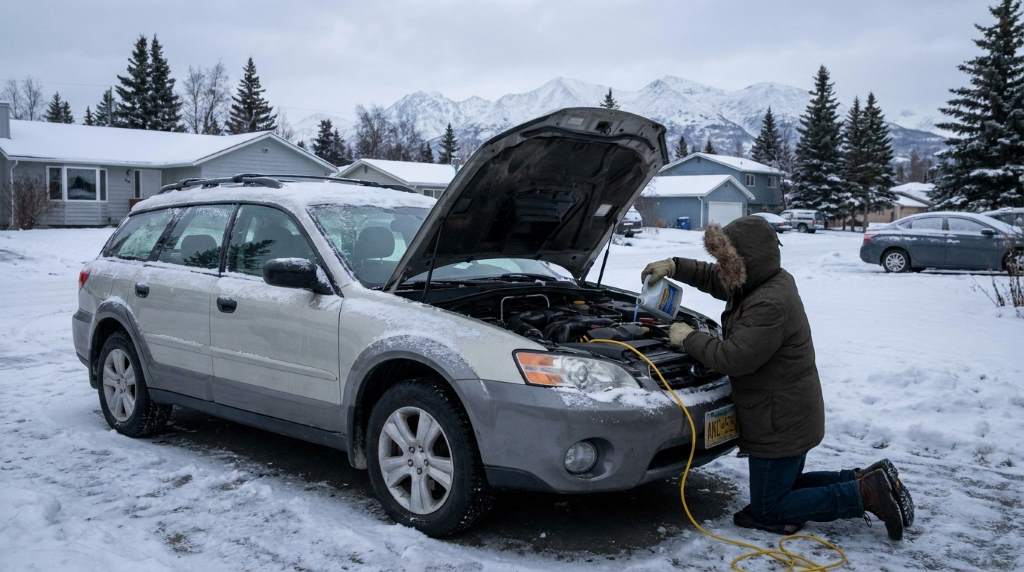
Many Anchorage residents rely on engine block heaters during winter months. These heaters warm engine fluids and reduce strain during cold starts every morning. Additionally, battery blankets help maintain stable temperatures overnight in exposed parking areas. Using both systems together can extend battery life and improve fuel efficiency during severe cold spells. Drivers without garage parking benefit the most from these winter tools.
Switch to Winter-Grade Engine Fluids
Engine fluids behave differently once temperatures drop below freezing. Thick oil moves slowly during startup and increases wear on internal engine components. Therefore, Anchorage drivers should switch to winter-grade synthetic oil before heavy snowfall arrives. Synthetic oil flows better in subzero temperatures and protects moving parts more efficiently. Mechanics often recommend lower viscosity oils for Alaskan winters because they improve cold-weather engine performance.
Replace Coolant and Check Antifreeze Levels
Coolant protects engines from freezing damage during long periods of extreme cold. Drivers should verify the antifreeze mixture before winter because improper ratios can crack engine blocks or radiators. Most experts recommend a 50/50 coolant blend for Anchorage conditions. Mechanics can test coolant strength using inexpensive hydrometers or refractometers. Fresh coolant also improves heater performance during long commutes in freezing weather.
Inspect Brake and Transmission Fluids
Brake systems must work perfectly on icy roads and snow-covered intersections. Moisture-contaminated brake fluid can freeze or reduce braking performance in severe cold conditions. Therefore, winter inspections should include fluid checks and brake line examinations. Transmission fluid should also remain clean and properly filled before temperatures drop sharply. Smooth shifting helps drivers maintain control during slippery winter driving situations.
Install Proper Winter Tires for Anchorage Roads
Winter tires remain one of the most important investments for safe Anchorage driving. All-season tires harden in freezing temperatures and lose grip on icy surfaces. Dedicated winter tires use softer rubber compounds that stay flexible in cold weather. As a result, they provide better traction, shorter stopping distances, and improved cornering control. Anchorage drivers who travel outside city limits benefit even more from winter tire upgrades.
Choose Studded or Studless Winter Tires
Drivers in Anchorage often debate whether studded tires outperform studless alternatives. Studded tires provide excellent traction on glare ice and packed snow surfaces. However, modern studless winter tires perform extremely well while creating less road noise and pavement wear. Vehicle type, driving routes, and weather exposure should guide the final decision. City commuters may prefer studless tires, while rural drivers often choose studded options.
Monitor Tire Pressure Frequently
Cold air reduces tire pressure quickly during Alaska winters. Tires can lose roughly one PSI for every 10-degree temperature drop outside. Underinflated tires decrease fuel efficiency and weaken traction on icy roads. Therefore, drivers should check tire pressure at least twice monthly during winter. Maintaining correct pressure improves stability and extends tire lifespan throughout the season.
Protect Your Vehicle From Salt, Snow, and Moisture
Winter roads expose vehicles to moisture, slush, and corrosive materials daily. Although Anchorage uses less road salt than many states, moisture still accelerates rust underneath vehicles. Snow accumulation around wheel wells can also damage brake lines and suspension components over time. Frequent cleaning helps reduce long-term corrosion risks significantly. Drivers who ignore undercarriage maintenance often face expensive repairs later.
Apply Protective Wax and Undercarriage Treatments
A quality wax coating helps shield vehicle paint from winter grime and moisture exposure. Additionally, undercarriage sprays create protective barriers against slush buildup and rust formation. Professional rust-proofing services remain popular among Alaska residents because vehicles endure extended winter seasons every year. Drivers should also wash wheel wells regularly to remove packed snow and debris. Consistent cleaning keeps hidden components in better condition throughout winter.
Prevent Frozen Door Locks and Seals
Frozen doors create major frustration during subzero mornings in Anchorage. Rubber door seals often stick after snow melts and refreezes overnight. Silicone lubricant helps prevent cracking and keeps seals flexible in cold conditions. Drivers should also carry lock deicer products for emergency situations during severe storms. Simple preventive maintenance saves time and reduces stress during winter commutes.
Prepare Your Heating and Visibility Systems
Visibility becomes critical during Alaska’s dark winter months. Snowfall, blowing ice, and foggy windshields reduce reaction time dramatically on busy roads. Therefore, drivers should inspect heating systems, defrosters, and windshield wipers before extreme weather arrives. Reliable visibility equipment improves safety during both short commutes and long-distance travel. Small visibility problems become dangerous quickly in severe winter storms.
Replace Wiper Blades and Washer Fluid
Standard windshield washer fluid freezes easily during Alaskan winters. Drivers should switch to winter-rated washer fluid designed for subzero temperatures before snowfall begins. Heavy-duty winter wiper blades also clear snow and ice more effectively than regular versions. Cracked or worn blades leave streaks that reduce visibility at night. Frequent windshield cleaning further improves safety on salted or slushy roads.
Check Cabin Heaters and Defrosters
Cabin heating systems protect both comfort and safety during winter driving. Weak defrosters allow frost buildup that blocks visibility in dangerous conditions. Drivers should inspect heater cores, blower motors, and cabin air filters before severe cold arrives. Strong airflow helps maintain clear windows during snowy commutes. Proper heating also prevents passengers from experiencing dangerous cold exposure during long drives.
Build an Anchorage-Specific Winter Emergency Kit
Anchorage drivers should always prepare for unexpected delays during winter travel. Snowstorms, accidents, and icy roads can leave motorists stranded for several hours. Therefore, emergency kits become essential safety tools during Alaska winters. Many experienced local drivers customize kits specifically for Anchorage’s climate and road conditions. Prepared drivers handle emergencies more safely and comfortably.
Essential Emergency Supplies
- Insulated blankets and extra winter clothing
- Flashlights with spare batteries
- Portable phone charger or power bank
- Jumper cables and portable jump starter
- Ice scraper and folding snow shovel
- Nonperishable snacks and bottled water
- First-aid kit and emergency flares
Drivers who travel outside Anchorage should also carry tire chains and traction mats. Remote roads may remain untreated for long periods after major snowstorms. Additionally, wildlife crossings and isolated highways increase risks during nighttime travel. Keeping survival gear inside the vehicle improves readiness for unexpected winter emergencies. Even short commutes can become dangerous when temperatures drop suddenly.
Pay Attention to Hybrid and Electric Vehicle Maintenance
Hybrid and electric vehicles require extra winter preparation in Anchorage. Cold temperatures reduce battery efficiency and shorten driving range significantly. Owners should monitor charging habits carefully during severe cold spells. Indoor charging and insulated parking areas help preserve battery performance. Regular inspections also reduce the risk of winter-related electrical issues.
Drivers using hybrid vehicles should understand how cold weather affects battery systems differently from standard gasoline engines. Specialized battery maintenance can improve reliability and extend battery lifespan during Alaska winters. Helpful information is available through hybrid battery maintenance tips for cold-weather driving conditions. Many hybrid owners also precondition batteries before driving to improve efficiency. Consistent charging habits remain important throughout the winter season.
Use Predictive Diagnostics Before Winter Arrives
One uncommon yet highly effective winter strategy involves predictive vehicle diagnostics. Many Anchorage drivers wait until warning lights appear before checking electrical systems or sensors. However, preventive diagnostics can identify weak components before they fail in extreme cold. Early detection often prevents towing expenses and dangerous roadside breakdowns during snowstorms. Modern diagnostic tools now make this process easier for everyday drivers.
Drivers can test battery voltage, alternator output, and fuse performance using basic automotive diagnostic tools at home. Learning how to use these tools improves winter preparedness and helps identify hidden electrical issues quickly. Vehicle owners can review automotive multimeter diagnostics before winter conditions intensify across Anchorage. Predictive testing also helps older vehicles survive long periods of subzero temperatures. This proactive approach remains surprisingly underused despite its practical value.
Conclusion
Preparing your vehicle for Anchorage winters requires more than installing snow tires or topping off fluids. Severe cold affects batteries, engines, tires, electronics, and visibility systems in ways many drivers underestimate. Therefore, complete winterization should include preventive maintenance, emergency planning, and regular inspections throughout the season. Drivers who act early often avoid expensive repairs and dangerous roadside situations later. Schedule a full winter inspection now so your vehicle stays reliable, safe, and efficient during Alaska’s harshest months.
FAQs
How often should I warm up my car in Anchorage during winter?
Most vehicles need only 30 seconds to one minute of warm-up before driving gently.
Do I really need winter tires in Anchorage?
Yes, winter tires provide significantly better traction and braking on snow and ice.
What temperature can damage a car battery?
Battery performance drops sharply once temperatures fall below 32°F and worsens near 0°F.
Should I keep my gas tank full during winter?
Yes, a fuller tank reduces condensation and helps prevent fuel line freezing.
Why do Anchorage drivers use engine block heaters?
Engine block heaters warm engine fluids and improve cold-start reliability in freezing conditions.