

A dirty garage can slow you down. Sawdust, debris, spilled liquids, and fine dust build up fast. A regular household vacuum simply cannot handle that kind of mess. You need something tougher, something built for the job.
The good news is that you do not need to spend a fortune. There are plenty of powerful options available at affordable prices. However, with so many models on the market, picking the right one takes a little know-how.
This guide will help you make a smart choice. You will learn what features matter most, what to avoid, and how to get the best value for your money.
Why a Regular Vacuum Will Not Cut It in the Garage
Your garage is not like the rest of your home. It collects heavy debris, wet spills, metal shavings, and thick layers of fine dust. A standard household vacuum is not designed for any of that.
Most home vacuums have filters and motors that clog or burn out quickly when exposed to coarse materials. They also lack the suction power needed to pull debris from cracks in concrete floors or tight corners around workbenches.
Therefore, a purpose-built garage vacuum is the right tool for the job. It is more durable, more powerful, and far easier to empty and clean.
What Makes a Good Budget Garage Vacuum
You do not have to spend a lot to get a capable machine. However, you do need to know which features actually matter. Here are the key things to look for.
Suction Power
Suction power is measured in horsepower or air watts. For a garage, you want at least 3 to 5 peak horsepower. This level of power can handle sawdust, gravel, and even small bolts or screws without struggling.
Do not be misled by peak horsepower ratings alone. Look for real-world reviews that describe how the vacuum performs on actual garage messes. A machine that claims 6 horsepower but underperforms in practice is not a good deal.
Tank Capacity
Tank size matters a lot in a garage setting. Small tanks fill up quickly, which means frequent stops to empty them. For heavy-duty work, look for a tank size of at least 5 to 6 gallons. If you are working on large projects or cleaning a big space, 10 gallons or more is even better.
Additionally, consider the tank material. Stainless steel tanks resist dents and last longer than plastic ones. However, plastic tanks are lighter and easier to carry, which is useful if you move the vacuum around often.
Wet and Dry Capability
A good garage vacuum should handle both wet and dry messes. Spilled oil, water from a leaky hose, or rainwater tracked inside — these are all common garage situations. A wet/dry vacuum, often called a shop vac, handles all of it without damage to the motor.
When shopping for a cheap shop vac, always confirm that it is rated for both wet and dry use. Some budget models are dry-only, which limits their usefulness significantly.
Filtration System
Fine dust is one of the biggest challenges in a garage environment. Wood dust, drywall dust, and concrete dust are not just messy — they can damage an unprotected motor over time.
Look for a vacuum with a high-efficiency filter or a HEPA-rated option. These filters trap tiny particles instead of blowing them back into the air. Some models include a foam sleeve for wet pickup and a cartridge filter for dry use. The ability to switch between the two is a major advantage.
Hose Length and Accessories
A short hose is frustrating. You end up moving the vacuum constantly rather than letting it stay in one spot while you clean. Look for a hose that is at least 6 to 8 feet long. Some models include an extension wand, which helps you reach under shelves and into corners.
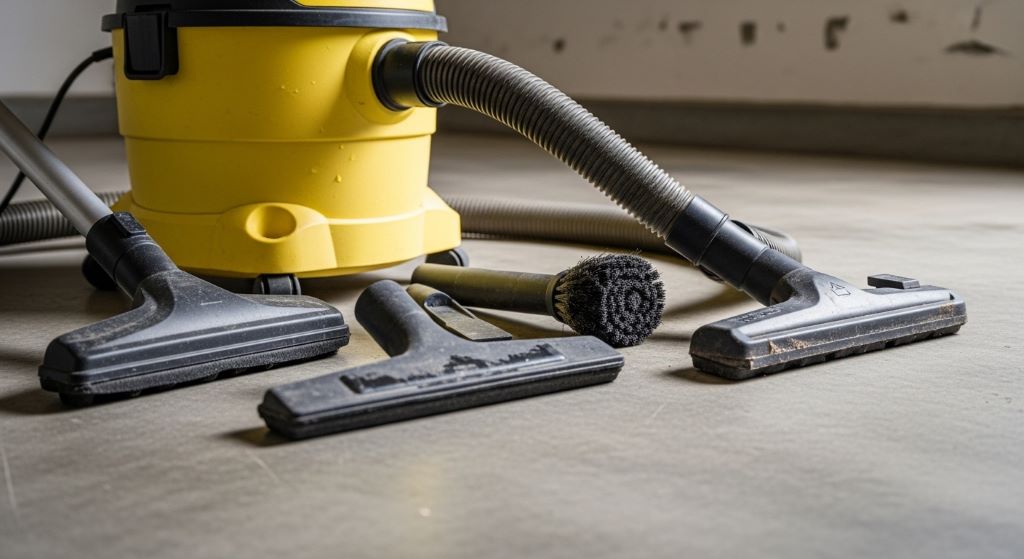
Accessories make a big difference too. A crevice tool lets you clean tight gaps. A floor nozzle covers wide areas quickly. A brush attachment is useful for cleaning shelving and workbenches. Many budget models include a basic accessory kit, which adds real value to the purchase.
Types of Garage Vacuums to Consider
Not all garage vacuums are built the same way. Understanding the main types will help you narrow down your options.
Canister or Drum Style
This is the most common type. It has a large drum-shaped tank that sits on wheels. You drag it behind you as you clean. These are excellent for large garages and heavy debris. They are simple to empty and easy to maintain.
Most cheap shop vac models fall into this category. They offer great value because the design is simple and the parts are standardized.
Wall-Mounted Vacuums
Some garages benefit from a wall-mounted vacuum system. These are installed permanently and include inlet ports at different spots in the garage. You plug in a hose wherever you need it.
These systems are more expensive upfront but keep your floor space clear. However, for most budget shoppers, a portable drum vacuum offers better flexibility and lower cost.
Handheld Garage Vacuums
Handheld models are compact and easy to store. They are great for quick cleanups — like sweeping sawdust off a workbench or picking up a spill near your car. They are not, however, a replacement for a full-size machine when doing heavy-duty cleaning.
Think of a handheld as a complement to your main garage cleaning tools, not a substitute.
Common Mistakes to Avoid When Buying
Even smart shoppers make mistakes when buying a garage vacuum. Here are a few pitfalls to watch out for.
Buying based on price alone is a common error. The cheapest model on the shelf may save you money today but cost you more in repairs or replacements later. Look for a balance between price and build quality.
Ignoring the noise level is another mistake. Garage vacuums can be loud, especially at high suction settings. If you work in an attached garage or have neighbors nearby, check the decibel rating before buying.
Additionally, overlooking the filter replacement cost is a problem many buyers encounter after purchase. Some filters are cheap and widely available. Others are proprietary and expensive. Always factor in the ongoing maintenance cost before making a decision.
Finally, do not skip reading the reviews. User reviews reveal real-world problems that product descriptions gloss over. Look for patterns — if multiple reviewers mention the hose cracking or the switch failing, take that seriously.
How to Get the Most Out of Your Garage Vacuum
Buying the right vacuum is only the first step. Using and maintaining it properly will extend its life and keep it performing well.
Empty the tank regularly. A full tank reduces suction significantly. Get in the habit of emptying it after each session rather than waiting until it is overflowing.
Clean or replace the filter often. A clogged filter reduces airflow and puts strain on the motor. Most manufacturers recommend cleaning the filter after every few uses and replacing it every few months depending on use frequency.
Store the hose and attachments in an organized way. Many drum vacuums have onboard storage for the hose and accessories. Use it. A tangled or misplaced hose is frustrating and can develop cracks over time if left on the floor.
Check the drum seal periodically. A poor seal allows air to escape, which reduces suction. If you notice a drop in performance, inspect the lid and gasket for damage or debris buildup.
Best Features to Prioritize on a Budget
When money is limited, you have to choose carefully. Here is a simple priority list to guide you.
- Wet and dry capability — this is non-negotiable for a garage
- At least 5 gallons of tank capacity
- A hose that is 6 feet or longer
- A reusable filter that is easy to clean
- At least 3 to 4 peak horsepower
- A built-in blower port for reversing airflow when needed
These features cover the essentials without pushing you toward premium pricing. Many models in the $40 to $80 range check most or all of these boxes.
Among the most versatile garage cleaning tools in this price range, drum-style wet/dry vacuums consistently deliver solid performance. They are widely available, easy to find replacement parts for, and tough enough for regular use.
Conclusion
Choosing a budget garage vacuum does not mean settling for poor performance. It means being strategic about what you buy. Focus on suction power, tank size, filtration quality, and wet/dry capability. These four factors will determine how useful the vacuum actually is in a real garage setting.
Avoid the temptation to buy the cheapest option without checking reviews or specifications. A slightly higher budget often buys significantly better durability and features. Additionally, proper maintenance will extend the life of any vacuum you choose, making your investment go further.
Whether you are tidying up after a weekend project or tackling a deep garage clean, the right vacuum makes the job faster and far less frustrating. With this guide, you now have what you need to make a confident, well-informed purchase.
Frequently Asked Questions
What is the difference between a cheap shop vac and a regular household vacuum?
A cheap shop vac is designed for heavy debris, wet spills, and coarse materials that would damage a regular household vacuum. It has a stronger motor, a larger tank, and more durable construction for garage and workshop environments.
How many gallons should a garage vacuum have?
For most garages, a 5 to 10 gallon tank is ideal. Smaller tanks need emptying too often, while very large tanks can become heavy and hard to move. A 6-gallon model is a great all-around choice for regular use.
Can I use garage cleaning tools like a shop vac to pick up water?
Yes, as long as the model is rated for wet pickup. Always remove the paper filter before using it to collect liquid. Replace it with a foam sleeve if one is included, or operate without a filter for wet-only pickup as directed by the manufacturer.
How often should I replace the filter on my garage vacuum?
Most filters should be cleaned after every two to three uses and replaced every three to six months, depending on how frequently you use the vacuum and what type of debris you collect. Always follow the manufacturer’s guidelines.
Is a wall-mounted garage vacuum worth the investment?
Wall-mounted systems are convenient and save floor space, but they cost significantly more upfront. For most homeowners on a budget, a portable drum-style wet/dry vacuum offers better value and greater flexibility for the same cleaning tasks.
Related Topics:
How to Extend Your Garage Door Opener Range: Expert Solutions That Actually Work
Why Should Regularly Lubricate Garage Door and Tracks: The Simple Fix That Saves Thousands

Thomas Walker is an accomplished writer with expertise in the basics of car accessories. With a keen eye for detail, Thomas has established himself as an authority on the subject, with a passion for all things automotive. Based in Jasper, Thomas is dedicated to providing readers with the information they need to make informed decisions when it comes to their car accessories.


