

You grip the wheel tighter as your car dives into a hairpin corner. Tires scream. Heart races. One wrong move, and you’re off the racing line. But hit the perfect apex line, and you exit like a pro. That’s the thrill of track days.
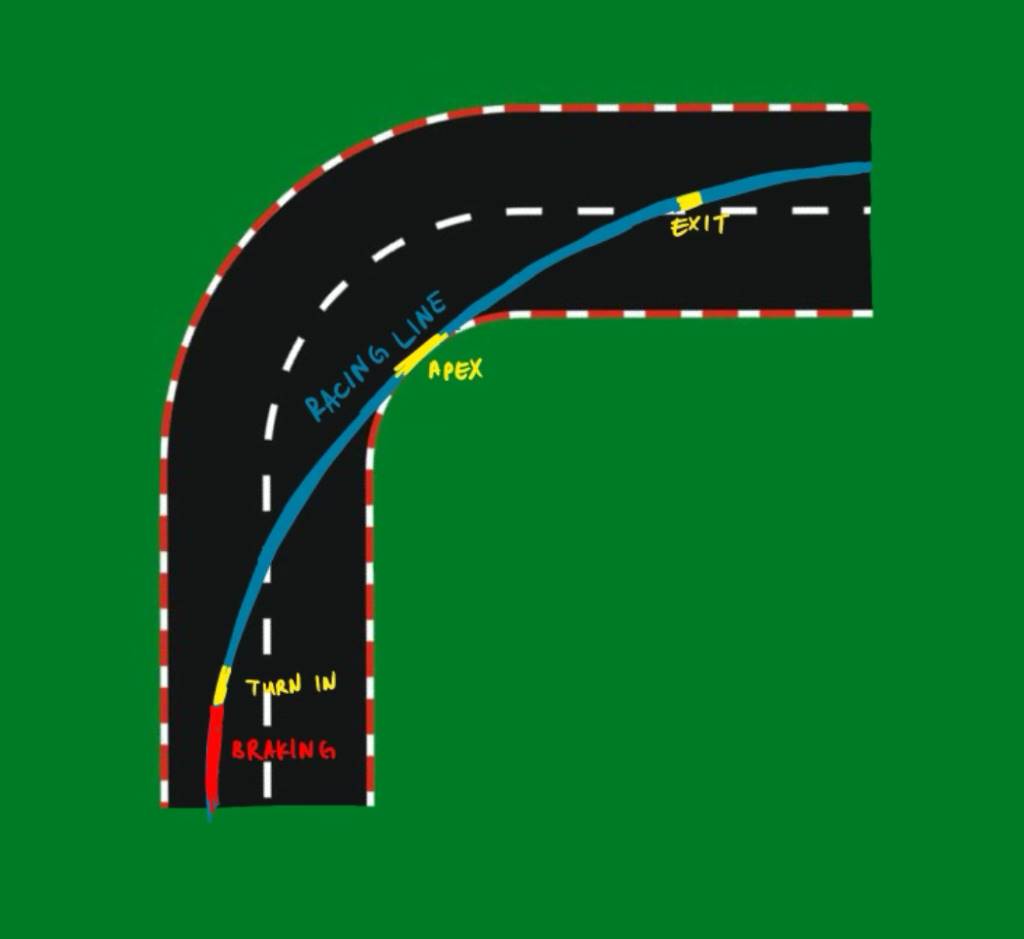
The apex line is the shortest path through a corner in racing. You clip the inside point – the apex – at the right moment. This keeps speed high and lap times low. Amateur drivers often miss it, losing seconds per turn.
Studies show proper line choice cuts lap times by 5-10%. NASA data from track events reveals drivers who nail the apex corner gain grip levels and confidence. FIA research backs this: optimal corner speed reduces tire wear by up to 15%.
Why the Apex Line Matters in Track Day Racing
Track day enthusiasts chase fun and improvement. Mastering the apex line transforms your driving. You move from surviving corners to dominating them. Picture a 90-degree corner. Enter wide, clip the apex, exit wide. This straightens the turn. Your car uses full track space. Result? Higher corner speed and smoother throttle control.
Without it, you brake late or early. You scrub speed. Tires lose tyre grip. Frustration builds. Real track day story: A beginner at Laguna Seca ignored the late apex line. He braked hard into Corkscrew. Car understeered off. After coaching on apex line, he dropped 3 seconds per lap.
Understanding Corner Types and Geometry
Tracks mix corner shapes. Know them to pick the right racing line. Hairpin corners are tight and slow. Use early apex for quick exit. Double-apex corners have two clips. Treat them as one flowing turn. Constant radius corners curve evenly. Classic apex sits in the middle.
Fast corners demand high speed. Late apex preserves momentum. Slow corners need low entry speed. Focus on trail braking. Track geometry dictates lines. Oval tracks favor outside entry. Street circuits demand precision in braking zone. Road circuits blend high-speed corner technique with tight sections.
Formula 1 pros adapt per track. Amateurs do too. Study track maps before your track day. Explore Why Does My Car Smell Like Burning Rubber?
Finding the Perfect Braking Point
Braking sets up everything. Miss the braking point, and corner entry fails. Drive the straight. Spot markers – cones, paint, trees. Brake hard but smooth. Aim for braking phase where car settles.
Use brake pressure progressively. Too much locks wheels. Too little, you overshoot. Practice trail braking. Ease off brakes into corner entry. This loads front tires for better grip. Data from iRacing simulations: Consistent braking points vary lap times by under 0.5 seconds. Inconsistent? Up to 2 seconds lost.
Mastering Corner Entry Speed
Enter too fast, you slide wide. Too slow, you crawl out. Balance speed with grip levels. Wet track? Lower corner entry speed. Technique: Turn in smooth. Look at apex. Unwind wheel early.
This hits apex corner dead on. Maintains tire grip. High-speed corner example: Eau Rouge at Spa. Enter wide, clip inner apex, power out.
The Art of Trail Braking
Trail braking bridges braking zone to mid-corner. You brake into the turn. Gradually release. Weight shifts forward. Front tires bite.
Benefits include rotating the car naturally, controlling corner speed, and setting up apex line. Avoid overdoing it. It upsets balance. Practice on empty lots first. Track day tip: Adjust brake bias settings for your car. Front-heavy? Shift rearward.
Hitting the Apex: Timing and Precision
The apex is your target. Clip it at peak corner speed. Late apex line delays the clip for straighter exit. Great for throttle position control. Early apex clips soon. Risky if exit tight.
Visualize: In a decreasing radius turn, late apex shines. Pro drivers use vision. Look ahead. Hands follow eyes.
Corner Exit: Powering Out with Throttle Control
Exit drives lap time. Nail apex, then unleash. Smooth throttle inputs roll on power. Avoid wheelspin. Throttle position matters. 50% mid-corner, full by exit.
In combination corners, link exits to next entry. Oval tracks carry speed wide.
Advanced Techniques for Grip and Speed
Build your track riding arsenal. Monitor tyre grip. Warm them properly. Adapt line variations for traffic or weather. Use data logging apps to review lines.
Favorite corners become weapons. Master one per session. Theory of track driving: Friction circle. Balance braking, turning, accelerating.
Common Mistakes and How to Fix Them
Amateurs err often. Early turn-in misses apex. Fix: Use reference points. Lifting mid-corner loses momentum. Fix: Commit to trail braking. Wrong line in double-apex treats them separate. Fix: Flow as one.
Track day coaching helps. Watch onboard videos.
Building Speed Session by Session
Start slow. Learn track. Session 1: Find braking points. Session 2: Hit apex line consistently. And Session 3: Optimize corner exit.
Progress to fast corners. Then shapes of corners. Join track day groups. Share tips on racing track layouts.
Tools and Setup for Better Lines
Car setup aids. Stiff suspension gives quick response. Sticky tires boost grip levels. Tune brake bias per corner.
No need for Formula 1 tech. Stock cars work with skill.
Real-World Examples from Track Days
At Silverstone, a Miata driver mastered late apex line in Becketts. Gained 4 seconds. Another at Nurburgring used trail braking in hairpin corners. Avoided spins.
You can too.
Adapting to Different Tracks
Street circuits are tight and bumpy. Demand precise braking zone. Road circuits flow. Carry corner speed. Oval tracks bank. Use wide lines.
Study track geometry. Walk the track if possible.
Psychology of Nailing the Apex
Stay calm. Breathe. Focus on next corner. Visualization: Mentally drive perfect apex line.
Confidence grows with laps.
Integrating All Elements
Combine braking point to corner entry, trail braking to apex, and throttle control to exit. This creates the ultimate racing line.
Practice in slow corners first. Build to high-speed.
Safety First on Track Days
Always wear helmet and harness. Check car: Brakes, tires. Follow flags.
Mastering apex reduces risks. Smoother driving means fewer offs.
Taking It to the Next Level
Join racing schools. Compete in amateur events. Theory evolves. Latest: AI simulations predict optimal lines.
But feel the car. Data helps, seat time wins.
You’ve learned the core. Now hit the track. Find your braking point. Clip that apex. Feel the rush. Start your next track day with one goal: Perfect the apex line. Your laps will thank you. Book that session today.
FAQs
What is the apex line in racing?
The apex line is the path that clips the inside of a corner at its tightest point. It maximizes speed and minimizes distance.
How does trail braking help hit the apex?
Trail braking shifts weight forward. This improves front tire grip. You rotate the car to reach the apex smoothly.
Why use a late apex line?
A late apex line straightens the exit. It allows earlier throttle application. Ideal for power out of corners.
How do I find braking points on a new track?
Use visual markers like cones or cracks. Start conservative. Adjust as you learn the braking zone.
Can I master apex lines in any car?
Yes. Any car benefits from proper lines. Focus on smooth inputs regardless of power.
References
- NASA Performance Driving: https://www.nasaproracing.com
- FIA Safety Research: https://www.fia.com/safety
- iRacing Data Studies: https://www.iracing.com